News On Japan

Anger Mounts Over Japan's Tax Policy

TOKYO - A demonstration demanding the abolition of the consumption tax and the restructuring of the Finance Ministry took place in front of the ministry’s headquarters in Tokyo’s Kasumigaseki district on February 24th. The scene at around 5 p.m. was markedly different from the usual atmosphere.

The protest, which began at 4 p.m., saw participants filling half of the sidewalk while police managed traffic in the area.

Many attendees said they were drawn to the demonstration after watching videos online. A woman who traveled two hours to join the rally said, “I saw on YouTube that it was happening at 4 p.m. today, so I rushed to get ready and came out.”

A man from Gunma Prefecture, attending his first protest, echoed similar sentiments.

“I watch YouTube a lot, and there's a channel that reads out online news articles,” he said.

Another protester in his 50s expressed frustration over the lack of media coverage.

“No media outlet is reporting this. I can’t help but feel that they’re deliberately hiding what’s happening in the world today,” he said.

Public discontent with the Finance Ministry intensified in November 2024, when the government released an estimate showing that increasing the income threshold for taxable earnings from 1.03 million yen to 1.78 million yen, as advocated by the Democratic Party for the People (DPP), would reduce tax revenues by more than 7 trillion yen. The projection sparked backlash on social media, with criticism directed at the ministry in charge of tax policy.

These developments appear to have fueled the growing wave of protests.

A participant from Nagoya remarked, “It would be great if the ministry could be reborn as an institution that truly works for the people.”

As tax policy debates heat up, DPP Secretary-General Kazuya Shimba was in Chiba Prefecture on February 24th. When asked about the Finance Ministry protest, he commented:

“A demonstration of around 1,000 people in front of the Finance Ministry would be a big news story. Apparently, it actually happened. That’s the sentiment of the people, isn’t it? They are at their breaking point. This is the people’s outcry. As a politician, I must take their pain seriously and act accordingly.”

With public interest surging, negotiations between the ruling and opposition parties over the income threshold are entering a decisive phase this week.

Source: FNN

News On Japan
POPULAR NEWS

As of 3 a.m. on May 31st, Typhoon No. 6 (Chan-hom) was moving north-northwest south of Okinawa and is forecast to pass near Okinawa Main Island between June 1st and June 2nd as a strong typhoon, with meteorologists warning of destructive winds, torrential rain and dangerous seas across Okinawa before the storm tracks northeastward along Japan's Pacific coast.

A series of false bear sighting reports posted to an online alert system operated by Aomori Prefecture has disrupted schools, prompted a police investigation, and raised concerns about the growing impact of misinformation on public safety.

A social media dispute between a 17-year-old high school student from Tokyo's Itabashi Ward and a 16-year-old boy from Edogawa Ward escalated into a planned group fight involving around 30 youths, some of whom allegedly brought weapons including a rusty saw, iron pipes, a special baton and even a shovel.

Japan's population stood at 123.05 million in 2025, according to preliminary results from the national census released by the Ministry of Internal Affairs and Communications, marking a decline of 3.097 million people over the past five years.

Volleyball player Shunichiro Sato, a member of Japan’s men’s national team, was arrested by the Tokyo Metropolitan Police Department on suspicion of possessing marijuana after allegedly leaving a bag containing the drug at a pachinko parlor in Tokyo.

MEDIA CHANNELS
         

MORE Politics NEWS

Defense Minister Shinji Koizumi met with U.S. Defense Secretary Pete Hegseth on May 30th while visiting Singapore for the Asian security forum known as the Shangri-La Dialogue, as the two sides discussed ways to further strengthen the Japan-U.S. alliance and expand defense cooperation.

Prime Minister Sanae Takaichi renewed her determination to resolve the long-standing abduction issue involving North Korea on May 30th, declaring her willingness to pursue a summit meeting with North Korean leader Kim Jong Un as families of the victims gathered in Tokyo to demand the return of their loved ones.

Japan's Defense Minister Shinji Koizumi held the first-ever trilateral meeting with his counterparts from Australia and New Zealand, where the three sides exchanged views on defense cooperation, including the potential export of the Maritime Self-Defense Force's latest frigate design.

Japan has enacted legislation allowing a sharp increase in fees charged to foreign residents for immigration procedures, with the cost of applying for permanent residence expected to rise from the current 10,000 yen to around 200,000 yen once the new system is implemented.

Japan's declining population is set to trigger another review of single-seat electoral districts for the House of Representatives, with new census data highlighting widening disparities in voter representation and adding momentum to discussions over reducing the number of lawmakers.

Health Minister Kenichiro Ueno apologized on May 29th after confusion spread over a new policy that will allow some medical institutions to charge cancellation fees for missed appointments from June, stressing that the fees will apply only in limited cases.

Prime Minister Sanae Takaichi met Philippine President Ferdinand Marcos Jr. on May 28th, agreeing to upgrade bilateral ties as the two countries deepen security cooperation in response to growing regional and global challenges.

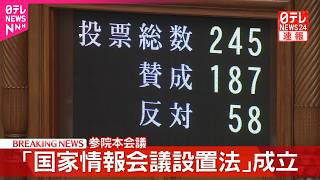
A law creating the National Intelligence Council to strengthen the Japanese government's intelligence-gathering and analysis capabilities was passed and enacted at a plenary session of the House of Councillors on May 27th.