News On Japan

How Wide is the Kanto v. Kansai Cultural Divide?

TOKYO - The cultural tapestry of Japan is rich and diverse, with the Kanto and Kansai regions offering a fascinating study in contrasts, from convenience store rice balls to public bath customs. What are the differences?
How Wide is the Kanto v. Kansai Cultural Divide?

Kumazaki Futo, a broadcaster, dives into one of the more delicious differences: the seaweed used in convenience store onigiri (rice balls). In Kanto, Seven-Eleven sells onigiri wrapped in "grilled nori" (seaweed), while in Kansai, the preference often leans towards "seasoned nori," depending on the filling.

Inoue Takahiro, another broadcaster, shares a personal preference for "seasoned nori," a sentiment echoed by many from the Kansai region, including obstetrician Song Mi Hyun. The seasoned nori's advantage? It adds flavor from the first bite, even if the filling is not immediately noticeable.

Seven-Eleven's public relations department notes that the preference for seasoned nori in Kansai led to a trial introduction of seasoned nori onigiri in the Kinki region in 2006, with a full-scale launch ten years later, in 2016.

Road Signs and Public Baths: Marking Regional Differences

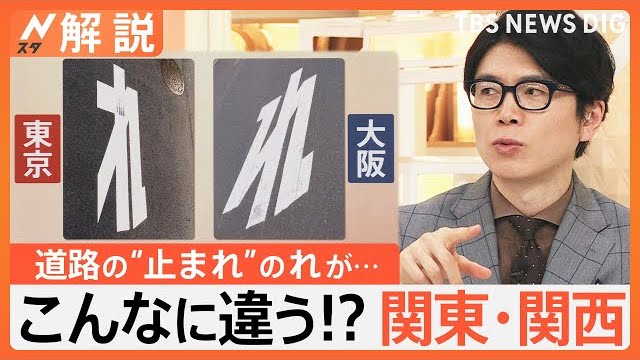
Even road signs bear the mark of regional identity, with differences in the typeface of the "Stop" sign observed between Tokyo and Osaka. Automotive critic Kuniyoshi Mitsuhiko explains that variances in font styles across prefectures were due to a lack of national uniformity. Although the National Police Agency standardized the "Stop" sign font in 2014, Osaka retains some old signs, citing budget and time constraints.

Public baths, too, reflect regional distinctions. In Kanto, baths are typically installed against the wall, whereas, in Kansai, they occupy the center of the bathhouse. The size of the iconic "Kerorin" bucket also varies: it's slightly larger in Kanto than in Kansai. Hiromichi Miyamae, president of the Osaka Prefecture Public Bath Association, suggests these differences stem from bathing habits—Kanto residents traditionally wash before soaking, while Kansai residents may soak before washing.

These cultural nuances underscore the diversity of Japan's regions, with each area offering its own unique traditions and preferences.

Source: TBS

News On Japan
POPULAR NEWS

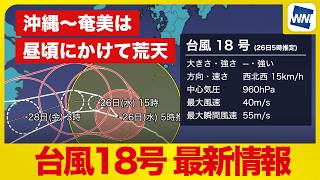
Strong Typhoon No. 18 was gradually moving away from Okinawa and the Amami Islands on August 26 after disrupting flights and bringing violent winds, rough seas and heavy rain, although Okinawa's main island and Amami Oshima remained at risk of sudden downpours, powerful gusts and waves exceeding 6 meters through around midday. As of 4 a.m. on August 26, the typhoon was located about 80 kilometers west-northwest of Okinoerabu Island and was moving west-northwest at 15 kilometers per hour.

A series of mysterious illegal dumping incidents involving about 39 kilograms of sliced bread has been reported around Mount Daisen and other parts of Tottori Prefecture in August, with officials investigating whether the food may have been deliberately placed to attract wild animals.

An 85-year-old couple have donated a combined 400 million yen to Osaka City with a request that the money be used to create a giant Myaku-Myaku statue about 20 meters tall at the former site of the Osaka-Kansai Expo, envisioning a landmark that could become a lasting symbol of the event and of renewed prosperity for Kansai and Japan.

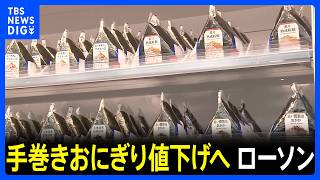
Lawson plans to cut prices on its main line of onigiri rice balls by 10 yen from September 29 as falling rice prices begin to feed through to retail costs.

Police have established a temporary police post in the whaling town of Taiji, Wakayama Prefecture, ahead of the September 1 opening of the annual drive hunt for whales and dolphins.

MEDIA CHANNELS
         

MORE Society NEWS

A 23-year-old man died after his car overturned and was badly damaged in Nemuro, Hokkaido, early on August 24, with police investigating whether the vehicle may have collided with a brown bear or another wild animal after black fur was found attached to the wreckage.

An 18-year-old high school student died after being trapped between a large festival lantern and a shopping arcade pillar during a traditional lantern-pushing event in Agano, Niigata Prefecture, on the evening of August 24, raising renewed questions about safety measures at festivals involving large crowds and heavy structures.

Nine people were injured, including two seriously, after a pleasure boat carrying 10 people ran aground near the mouth of the Tama River close to Haneda Airport on the evening of August 24.

Four teenage boys have been arrested in Tokyo on suspicion of stealing ketchup and other goods from a supermarket before splashing the ketchup on the face and body of a woman in her 70s, with one suspect telling police he had targeted around 10 people in similar attacks.

Aichi Prefecture is seeking private-sector ideas for a vast mountain property in Nishio that has remained unused for 27 years after the prefecture spent 5.5 billion yen to buy the land for a project linked to the construction of Chubu Centrair International Airport.

A 39-year-old woman from Taiwan has been arrested on suspicion of pouring an oil-like liquid on the national treasure Buddha Footprint Stone at Yakushiji Temple in Nara in April, police said.

Japan executed 58-year-old death row inmate Sunao Takami on August 21 for setting fire to a pachinko parlor in Osaka in 2009, killing five people and injuring 10 others, in the first execution carried out under the Takaichi administration.

A 46-year-old woman employed at a chemical-related company has been arrested on suspicion of attempted murder after allegedly giving a muffin containing the designated deleterious substance acrylamide to a 30-year-old male acquaintance in Kyoto, police said on August 22.