News On Japan

Takaichi Urges BOJ to Take Appropriate Steps on Inflation

TOKYO - Prime Minister Sanae Takaichi met with Bank of Japan Governor Kazuo Ueda at the Prime Minister’s Office on May 22nd, urging the central bank to implement appropriate monetary policies while taking into account the government’s efforts to combat rising prices and promote crisis-management and growth-related investment.

Following the meeting, Ueda explained that the talks were part of their regular discussions held every few months, adding that the two exchanged views on the economy, prices, and financial markets in light of the worsening situation in the Middle East. He also said he explained the BOJ’s current approach to monetary policy.

According to Ueda, Takaichi requested that the central bank fully understand the economic measures being advanced by the administration, including policies aimed at easing the burden of inflation on households and supporting strategic investment.

Ueda described the meeting as “a useful exchange of opinions on various issues,” while noting that no specific discussion took place regarding further interest rate hikes.

The meeting came as concerns continue to grow over inflationary pressures linked to instability in the Middle East, with indicators released on May 23rd showing that inflation is once again outpacing wage growth in Japan.

Economists appearing on a television discussion program said the current inflation rate may understate the actual burden facing households because government subsidies on gasoline, electricity, and education costs are temporarily suppressing headline consumer prices.

Professor Takeo Nodo of Keio University of Technology said April’s inflation data, which showed price growth slowing to 1.4%, may not accurately reflect underlying inflation trends because of policies such as gasoline subsidies, free high school tuition programs, and free school lunches.

Nodo warned that inflationary pressure could intensify again later this year as the effects of higher energy prices tied to Middle East tensions spread through the economy. He also pointed to sharp increases in corporate prices, saying those costs are likely to be passed on to consumers over time.

The government plans to subsidize electricity and gas bills from July through September, with support for a standard household expected to amount to roughly 1,000 yen per month. The fiscal 2026 reserve fund budget is scheduled to be approved on May 26th, with additional funding expected to be secured through a supplementary budget.

Some experts questioned whether the current subsidy-focused approach is sustainable, arguing that direct support should instead be concentrated on low- and middle-income households that are suffering most from rising living costs.

Criticism was also raised over gasoline subsidies, with some economists arguing that the policy merely masks higher fuel prices rather than lowering them fundamentally, while also reducing incentives for energy conservation.

Finance Minister Katayama said the government hopes to avoid relying on additional deficit-financing bonds when preparing future supplementary budgets, suggesting unused surplus funds from previous fiscal years may instead be utilized.

Source: FNN

News On Japan
POPULAR NEWS

Japan began applying a new numerical alcohol threshold for dangerous driving offenses on July 21, introducing a clearer standard for cases involving impaired driving that could lead to fatal accidents.

Prime Minister Sanae Takaichi's government approved its first annual basic economic and fiscal policy on Tuesday, pledging "responsible and proactive fiscal policy" and envisioning about 370 trillion yen in public- and private-sector investment in strategic industries through fiscal 2040.

Breathtaking 4K footage filmed from a helicopter offers a sweeping aerial view of Mount Fuji and its majestic surrounding landscape.

A covert network of shuttle tankers is carrying crude through the increasingly dangerous Strait of Hormuz as renewed fighting between the United States and Iran disrupts shipping and raises concerns over how Japan will secure the oil it needs.

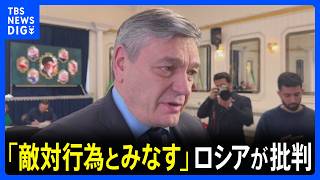
Russian Deputy Foreign Minister Andrey Rudenko has criticized moves by Japanese and Ukrainian companies to cooperate on drone technology, warning that such ties would be regarded by Moscow as a "clear hostile act."

MEDIA CHANNELS
         

MORE Politics NEWS

Prime Minister Sanae Takaichi’s first economic policy roadmap took center stage on July 21, setting out a long-term investment strategy aimed at reviving growth, but the plan was immediately overshadowed by concerns in the bond market over fiscal discipline and the Bank of Japan’s independence.

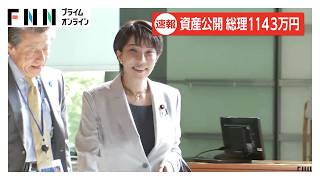
Asset reports for all 465 members of Japan's House of Representatives elected in February 2026 have been released, showing average declared assets of 32.78 million yen, up 6.09 million yen from the previous disclosure.

A covert network of shuttle tankers is carrying crude through the increasingly dangerous Strait of Hormuz as renewed fighting between the United States and Iran disrupts shipping and raises concerns over how Japan will secure the oil it needs.

Russian Deputy Foreign Minister Andrey Rudenko has criticized moves by Japanese and Ukrainian companies to cooperate on drone technology, warning that such ties would be regarded by Moscow as a "clear hostile act."

Prime Minister Sanae Takaichi entered the week of July 20 with her government facing a shortened but politically important stretch before the extended Diet session ends, as debate continued over Bank of Japan independence, domestic investment policy, the revised Imperial House Law and the ruling coalition’s unfinished legislative agenda.

Japan's revised Imperial House Law was enacted after clearing the House of Councillors with majority support, allowing female members to retain royal status after marriage and male-line descendants of former imperial family branches to enter the Imperial Household through adoption.

Prime Minister Sanae Takaichi closed the Diet session on July 17 under pressure from both parliament and financial markets, as lawmakers enacted a revised Imperial House Law while the government moved to clarify that monetary policy tools remain under the sole authority of the Bank of Japan.

A bill to revise the Imperial House Law was approved by an Upper House special committee on July 16, paving the way for its expected enactment on July 17.