

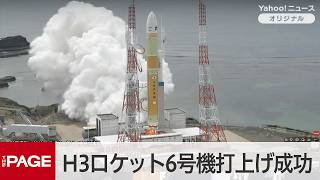
Japan's H3 Rocket No. 6 lifted off from the Tanegashima Space Center in Kagoshima Prefecture at 9:53 a.m. on June 12, marking the first launch in about six months since the failure of H3 Rocket No. 8 and a critical step toward the full resumption of operational flights.
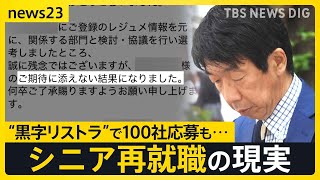
Restructuring is often associated with companies in financial trouble, but a growing number of profitable Japanese corporations are now encouraging employees to take early retirement as part of efforts to reshape their workforces for the future, creating both opportunities and significant risks for workers considering a second career.

Japan's restaurant industry is facing growing uncertainty after the government suspended the acceptance of new foreign workers under the Specified Skilled Worker visa program for the food service sector, a move that is affecting businesses, language schools, and students who had hoped to build careers in Japan.
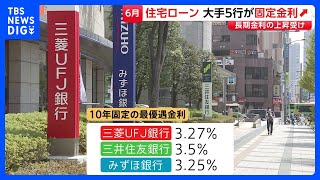
Fixed-rate mortgage costs in Japan are set to rise again in June as the country's five major banks increase home loan rates in response to higher long-term interest rates, with their flagship 10-year fixed-rate mortgages rising to preferential rates of 3.27% at Mitsubishi UFJ Bank, 3.5% at Sumitomo Mitsui Banking Corporation, and 3.25% at Mizuho Bank.

Sanmarc Holdings is betting on Kyoto's global appeal and the growing popularity of gyukatsu among foreign tourists as it accelerates overseas expansion, with President Yuki Fujikawa positioning the beef cutlet chain as a key driver of the restaurant group's inbound tourism and international growth strategy.

The National Police Agency announced on May 28th that it will launch a new framework in cooperation with nine financial institutions aimed at rapidly tracing money stolen through special fraud schemes and other scams, as damages from such crimes reached a record high last year.

An advanced artificial intelligence model developed by U.S.-based AI startup Anthropic is raising alarm worldwide over the growing threat of AI-powered cyberattacks, with experts warning that financial systems and critical infrastructure could become targets if the technology falls into the wrong hands.

The impact of Japan’s growing naphtha shortage is spreading across a widening range of industries, raising concerns about manufacturing, logistics, and even daily consumer life.

The number of Tokyo University students pursuing careers as government bureaucrats is declining, even as rising wages in skilled trades and shifts driven by artificial intelligence are reshaping perceptions of high-paying jobs.

A trial luggage storage service has begun at a bank in Kyoto, as part of efforts to address the growing number of tourists visiting the city.
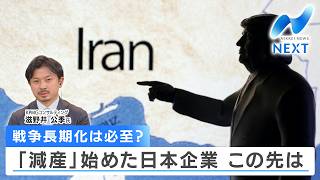
The situation surrounding the Strait of Hormuz, a critical chokepoint for global energy transport, is growing increasingly complex, with U.S. President Donald Trump urging Japan to assist in securing the waterway while Iran signals it may allow passage depending on negotiations, and as prospects for a swift resolution fade, Japanese industries including automobiles, ethylene, and polyvinyl chloride resin have begun scaling back production.

As tensions surrounding Iran intensify and global markets grow increasingly volatile, attention is turning to how the Bank of Japan will respond at its upcoming monetary policy meeting and what the developments could mean for stock prices and the yen.

The government has instructed domestic oil reserve bases to prepare for a possible release of stockpiled crude as tensions surrounding the Middle East raise concerns about energy supply and the broader industrial impact, including disruptions to ethylene production used in food packaging.

An AI startup that emerged almost overnight, Akari had long been known only to insiders due to its limited media exposure, but after receiving investment from Mitsubishi Electric at the end of January and seeing its corporate valuation surge past 100 billion yen, the Tokyo-born venture has rapidly positioned itself as a leading unicorn candidate in Japan’s AI sector.

China has placed 20 Japanese companies and institutions under export controls, in what appears to be a further escalation of countermeasures following remarks by Prime Minister Takaichi concerning a potential Taiwan contingency.

The three major Japanese banking groups posted consolidated net profits exceeding 1 trillion yen each for the April–December 2025 period, supported by improved interest margins following interest rate hikes by the Bank of Japan and steady corporate demand for funds.

Daihatsu unveiled a new light-type electric vehicle on Tuesday, marking the company’s first mass-produced EV, but rather than a passenger car, it has deliberately chosen a commercial vehicle used for transport and delivery, raising the question of whether “working vehicles” could hold the key to wider EV adoption.

Three major banks, including Mitsubishi UFJ Bank, announced that they will raise fixed mortgage rates applied from next month. The preferential rate for the standard 10-year fixed mortgage will be increased to 2.75% at Mitsubishi UFJ Bank and Mizuho Bank, while Sumitomo Mitsui Banking Corp. will raise the rate to 2.85%.

Sumitomo Mitsui Financial Group is set to acquire the naming rights to Chichibunomiya Rugby Stadium, often described as the spiritual home of Japanese rugby, in a deal worth around 100 billion yen in total.

More people in Japan are looking to change jobs as work styles and values shift in the post-pandemic era, pushing individuals to seek better roles that match their skills, experience, and lifestyle, while companies facing digital transformation and new business pressures are also reshaping hiring by expanding mid-career recruitment.

New vehicle sales by six Japanese automakers in the United States rose 2.4% from the previous year to 6,023,492 units in 2025, the companies announced on January 5th, as demand remained firm despite higher tariffs introduced under the Trump administration, with three manufacturers surpassing their year-earlier results.

The Philippines and Southeast Asia have created a vibrant sporting scene where heat, noise, and passion rise together like steam from a street court at dusk.

Japan’s auto industry, already facing mounting pressure, is preparing for another major challenge in 2026 as Taiwan-based manufacturing giant Foxconn steps up its push into the Japanese market. Following its earlier focus on Chinese electric vehicle makers, the company is now turning its attention to Japan, raising questions over whether it will become a partner or a rival to domestic automakers.

Japan faces a looming shortfall of nearly 790,000 IT workers by 2030 even as demand for digital operations continues to expand, while an estimated 15 million people nationwide are considered to have difficulty securing stable employment due to mental health conditions that have risen sharply in recent years.

Japan has become a shorthand for innovation and high-tech culture. In 2000, Sumimoto Bank became part of a historic moment in finance: the launch of the first-ever online banking system.