


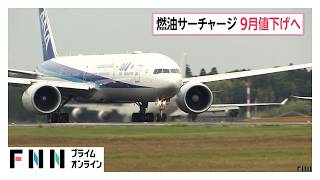
All Nippon Airways and Japan Airlines are expected to lower fuel surcharges on international tickets issued in September and October after a decline in the fuel prices used to calculate the additional fees.

A large and strong Typhoon No. 13 is expected to strike Okinawa's main island on August 7, bringing destructive winds, torrential rain and widespread flight cancellations, while a newly formed Typhoon No. 15 could approach the Pacific coast from Hokkaido to Kanto during the Obon holiday period.
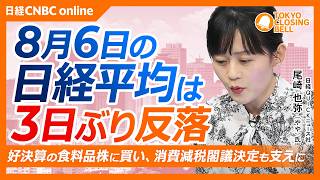
Tokyo stocks diverged on August 6, with the Nikkei 225 closing at 65,683.26, down 617.18 points, or 0.93%, as selling in artificial intelligence and semiconductor-related heavyweights outweighed broad gains across the wider market.
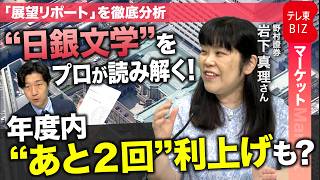
The Bank of Japan's latest economic outlook has strengthened expectations that another interest rate increase could come as early as September after the central bank kept its policy rate at around 1.0% at its July meeting following a June hike, while placing greater emphasis on the risk that inflation will rise above its 2% target.
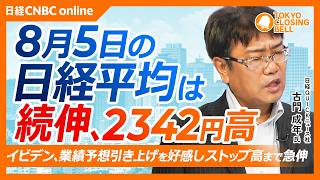
Tokyo stocks rebounded strongly on August 5, with the Nikkei 225 rising to about 66,300 in late-session trading as investors bought back artificial intelligence and semiconductor-related shares, while lower oil prices and a steadier yen helped ease concern over imported inflation.

Suntory Holdings is turning to a specialized corporate intelligence unit led by a former Mitsubishi Corporation researcher to assess the duration of Iran’s effective blockade of the Strait of Hormuz and protect supply chains threatened by soaring energy and raw-material prices.

Tokyo stocks edged higher on August 4, with the Nikkei 225 closing at 63,957.53, up 202.63 points, or 0.32%, as buybacks in artificial intelligence and semiconductor-related shares helped offset caution over further yen-buying intervention and a weaker tone in some exporters.

Tokyo stocks fell on August 3, with the Nikkei 225 closing at 63,445.53, down 1.4%, as electronics and auto shares were sold after coordinated U.S.-Japan yen-buying intervention drove the currency sharply higher, cutting into the weak-yen support that had underpinned exporters.

Tokyo's public bathhouses raised their adult admission fee by 50 yen to 600 yen on August 1 as operators struggle with rising fuel and other costs, prompting concerns that some customers may reduce their visits.

Prime Minister Sanae Takaichi entered August facing a sharper test of her economic leadership after Japan and the United States carried out a rare coordinated currency intervention to support the yen, turning the government’s cost-of-living agenda, fiscal policy and relationship with the Bank of Japan into one of the most politically sensitive issues of her administration.

Tokyo stocks surged on July 31, with the Nikkei 225 closing at 64,362.02, up 2,494.59 points, as a sharp rebound in Asian semiconductor shares and strong U.S. technology earnings outweighed caution over the Bank of Japan’s decision to keep interest rates unchanged while warning that inflation risks remain tilted to the upside.
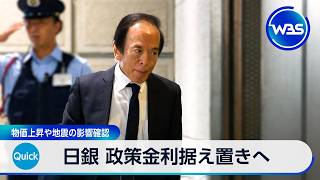
The Bank of Japan is expected to keep its policy interest rate unchanged at around 1.0% at its monetary policy meeting concluding July 31 as it assesses the effects of last month's rate increase on the economy and prices.

Tokyo stocks ended mixed on July 30, with the Nikkei 225 closing at 61,683.96, up 0.4%, as gains in electronics and selected semiconductor-related shares offset selling in financial stocks ahead of the Bank of Japan’s policy decision.

Japan's national average minimum wage is set to rise by 55 yen, or 4.9%, to 1,176 yen per hour in fiscal 2026 after a labor ministry panel agreed on guidelines for this year's increase.

Tokyo stocks diverged sharply on July 29, with the Nikkei 225 closing at 61,434.19, down 930.73 points, or 1.49%, as selling in artificial intelligence and semiconductor-related heavyweights continued, while the broader TOPIX rose as investors bought back banks, domestic-demand shares and selected value stocks.

Japan is unlikely to end its heavy reliance on Middle East crude oil, even as geopolitical tensions expose the risks of depending on the region for more than 90% of its imports, leaving the country to pursue a gradual mix of diversification, electrification, renewable energy and technological innovation.
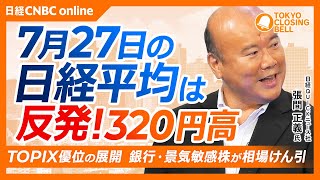
Tokyo stocks rebounded on July 27, with the Nikkei 225 closing at 64,931.19, up 320.04 points, or 0.50%, as easing concern over the Middle East conflict supported broad buying across domestic-demand and value shares, although semiconductor weakness continued to cap the market’s recovery.

Kozo Okamoto, a member of the Japanese Red Army who took part in a 1972 mass shooting at an Israeli airport, has died at age 78 in Lebanon, where he had lived for decades under political asylum.

Japanese investors may be starting to redirect money from semiconductor and memory-related stocks toward automakers and other value shares, as concerns grow that soaring memory prices, increased Chinese production and the search for cheaper suppliers could weaken the technology rally.

Ammonia, commonly associated with its pungent odor and its presence in urine, is gaining recognition as one of humanity's most important inventions and a potential foundation for a new energy system that could reduce the world's dependence on oil.

A government panel discussing Japan's minimum wage for fiscal 2026 ended its latest meeting on July 23 without an agreement between labor and management, pushing a decision back until its next session.

Tokyo stocks fell sharply on July 24, with the Nikkei 225 closing at 64,611.15, down 2.73%, as renewed concern over the cost of artificial intelligence investment triggered another technology selloff while oil above $100 a barrel and a yen near 40-year lows intensified fears of imported inflation.

Japan's finance minister signaled the government is prepared to intervene in the foreign exchange market after the yen briefly weakened into the 163 range against the dollar, its lowest level in about 40 years.

Japan's average retail price for regular gasoline rose to 170 yen per liter, while the government is considering reducing subsidies by raising its target price to around 175 yen after the peak travel season.

Tokyo stocks rose on July 23, with the Nikkei 225 closing at 66,422.60, up 307.00 points, as investors bought back semiconductor and artificial intelligence-related shares despite renewed concern over the yen’s weakness near 40-year lows and oil prices driven higher by Middle East tensions.