News On Japan

Japan Records Hottest July in History

TOKYO - Japan experienced its hottest July on record, with the nationwide average temperature exceeding the standard by 2.89°C, according to the Japan Meteorological Agency. This marks the third consecutive year of record-breaking July temperatures, and the second straight month of record highs following June.

The agency reported that the average temperature across 15 major observation points from Hokkaido to Okinawa was 2.89°C above the normal July level. This significantly surpassed last year’s previous record of 2.16°C, making it the highest July temperature since statistics began in 1898.

In addition to the heat, precipitation levels in July were unusually low. Rainfall on the Sea of Japan side of the Tohoku region and in the Hokuriku region was the lowest on record for the month, amounting to just 13% and 8% of the average, respectively.

Looking at specific locations, Wajima in Ishikawa Prefecture recorded just 1% of average rainfall, Niigata 2%, Yamagata 4%, and Sendai 10%. In total, 10 observation sites either broke or tied their lowest rainfall records for July.

The Meteorological Agency warned that intense heat is expected to continue for at least another month, particularly from northern to western Japan. It urged the public to stay alert to weather forecasts and heatstroke warnings, and to take preventive measures against heat-related illnesses.

The agency also stated that, given the consecutive record-breaking temperatures in June and July and the forecast for continued high temperatures in August, there is a strong possibility that the average annual temperature in Japan could exceed last year’s all-time high.

Concerns are also growing about the impact of the extreme weather on agriculture. The drought-stricken areas of Tohoku and Hokuriku—both key rice-producing regions—may face negative effects on crop growth, especially rice and other essential produce.

Source: TBS

News On Japan
POPULAR NEWS

As of 9 p.m. on May 30th, Typhoon No. 6 (Chanthu) was continuing to strengthen as it moved northwest over waters east of the Philippines, with Okinawa expected to face the worst conditions from June 1st to June 2nd as the storm passes nearby at strong intensity, while heavy rain is also forecast across western and eastern Japan, particularly along Pacific coastal regions.

A social media dispute between a 17-year-old high school student from Tokyo's Itabashi Ward and a 16-year-old boy from Edogawa Ward escalated into a planned group fight involving around 30 youths, some of whom allegedly brought weapons including a rusty saw, iron pipes, a special baton and even a shovel.

Japan's population stood at 123.05 million in 2025, according to preliminary results from the national census released by the Ministry of Internal Affairs and Communications, marking a decline of 3.097 million people over the past five years.

Volleyball player Shunichiro Sato, a member of Japan’s men’s national team, was arrested by the Tokyo Metropolitan Police Department on suspicion of possessing marijuana after allegedly leaving a bag containing the drug at a pachinko parlor in Tokyo.

The “naphtha shortage” triggered by escalating tensions in the Middle East is now spreading into Japan’s housing industry, with shortages of paint, thinner, insulation materials and other building products forcing construction delays across the country.

MEDIA CHANNELS
         

MORE Sci-Tech NEWS

A large solar power facility built on a mountainside in Fukushima City is generating reflected sunlight for far longer than originally projected, with a city survey finding that glare at some locations lasted up to 53 minutes per day—more than ten times the maximum duration predicted by the operator.

Japan’s largest space business exhibition opened at Tokyo Big Sight on May 27th, showcasing a growing wave of companies from outside the traditional aerospace sector entering the rapidly expanding space industry.

JR Tokai held its first-ever resident briefing session in Shizuoka City on May 26th regarding construction of the Linear Chuo Shinkansen, outlining measures for water resource management and environmental conservation as the company seeks to gain local support ahead of the start of construction in Shizuoka Prefecture.

A seasonal spectacle has begun on the Miwasaki coast in Shingu, Wakayama Prefecture, where tiny male chigogani crabs are emerging from their burrows at low tide and rhythmically waving their claws in a movement resembling a dance.

A small onshore wind turbine collapsed in Oga, Akita Prefecture, in March, raising fresh concerns among local residents following a series of wind turbine-related accidents in the city over recent years.

Japan's next-generation homegrown supercomputer, Fugaku NEXT, is being developed with a radically different strategy from its predecessors, abandoning the single-minded pursuit of the world's fastest calculation speed in favor of artificial intelligence capabilities expected to accelerate breakthroughs in fields ranging from drug development and batteries to disaster prevention and food production.

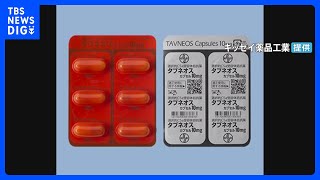
A safety alert is expected to be issued as early as May 21st over Tavneos, a drug used to treat vasculitis, after 20 patients who took the medication died from serious liver dysfunction, according to people familiar with the matter.

As aging underground infrastructure becomes an increasing concern across Japan, the city of Yokkaichi in Mie Prefecture has developed a digital underground map designed to improve the management of sewer, water, gas, and electrical systems.