News On Japan

Sixty Percent of Hospitals in Japan Operating in the Red

OSAKA - Around 60 percent of hospitals across Japan are operating in the red, creating a critical situation where closures and bankruptcies are no longer a distant threat. Behind the figures lies a deepening financial crisis that is raising questions about whether patients can continue to rely on stable access to medical care.

Five medical associations in Osaka Prefecture held a press conference on October 2nd to sound the alarm.

Osaka Medical Association President Yasushi Kano said: "Having hospitals and clinics you can always rely on nearby—can we still take that for granted? A quiet but serious shift is taking place in Osaka’s medical system. Both clinics and hospitals are facing a crisis in their operations."

An emergency survey by the Japan Hospital Association found that about six out of ten of the more than 1,800 hospitals that responded nationwide were running deficits.

A visit to Tsukuba University Hospital in Ibaraki Prefecture revealed the realities of this financial strain. In the outpatient waiting area, chairs were left in tatters, and walls near doors were patched with tape instead of repairs. Although the building, nearly 50 years old, is due for replacement, the budget is unavailable.

Tsukuba University Hospital Director Yuji Hiramatsu explained: "The deficit is about 2.8 billion yen, the largest since the hospital’s founding. The biggest factor is rising personnel costs, up roughly 1.8 billion yen compared to two years ago. In the past, we managed to cover expensive advanced medical care with revenue from other areas, but now expenses across the board are rising, upsetting the overall balance."

The strain extends to emergency care. At a hospital in Sakai City, Osaka Prefecture, doctors stressed the importance of sustaining services despite mounting losses.

Physician Michihiko Kosaka said: "Emergency care is absolutely essential. Recently, more people are stepping away from it, but it is necessary, so as a team we try to transform the effort into the joy of saving patients."

However, with budgets under pressure, even updating medical equipment has become difficult. "Normally machines are replaced every ten years, but in some cases we continue using old ones. Still, we must replace them when possible because precision is directly tied to the quality of care," Kosaka said.

Rising costs are also hitting other areas. The disposal of special medical waste generated when treating infectious patients rose by 6 million yen over the previous year due to higher labor costs at contractors.

To stay afloat, some medical corporations have been offsetting hospital deficits with profits from nursing care businesses within the group, but this is only a temporary solution.

Kyoko Tanaka, administrative director at the Sakai hospital, emphasized: "Even though management is tough, we still maintain staffing to ensure emergency and non-refusal care. For hospitals providing emergency services, finances are extremely severe. As long as we continue such essential care, deficits are inevitable. We strongly hope that medical service fees will be revised so that appropriate compensation is provided for proper medical treatment."

When asked about potential ways forward, Hiramatsu of Tsukuba University Hospital gave a grim assessment: "There really are no options left. We have done everything we can. Some might think if a university hospital goes bankrupt, another hospital can simply take over, but these institutions are crucial social infrastructure for training doctors. Everyone is desperately enduring to continue providing advanced medical care."

Source: YOMIURI

News On Japan
POPULAR NEWS

As of 3 a.m. on May 31st, Typhoon No. 6 (Chan-hom) was moving north-northwest south of Okinawa and is forecast to pass near Okinawa Main Island between June 1st and June 2nd as a strong typhoon, with meteorologists warning of destructive winds, torrential rain and dangerous seas across Okinawa before the storm tracks northeastward along Japan's Pacific coast.

A series of false bear sighting reports posted to an online alert system operated by Aomori Prefecture has disrupted schools, prompted a police investigation, and raised concerns about the growing impact of misinformation on public safety.

A social media dispute between a 17-year-old high school student from Tokyo's Itabashi Ward and a 16-year-old boy from Edogawa Ward escalated into a planned group fight involving around 30 youths, some of whom allegedly brought weapons including a rusty saw, iron pipes, a special baton and even a shovel.

Japan's population stood at 123.05 million in 2025, according to preliminary results from the national census released by the Ministry of Internal Affairs and Communications, marking a decline of 3.097 million people over the past five years.

Volleyball player Shunichiro Sato, a member of Japan’s men’s national team, was arrested by the Tokyo Metropolitan Police Department on suspicion of possessing marijuana after allegedly leaving a bag containing the drug at a pachinko parlor in Tokyo.

MEDIA CHANNELS
         

MORE Business NEWS

Japan's restaurant industry is facing growing uncertainty after the government suspended the acceptance of new foreign workers under the Specified Skilled Worker visa program for the food service sector, a move that is affecting businesses, language schools, and students who had hoped to build careers in Japan.

As soaring valuations in AI and semiconductor stocks prompt concerns about concentration risk, market analysts are increasingly pointing to energy shares as a potential alternative investment theme in an inflationary environment.

Toyota Motor has decided to halt development of the LF-ZC, a next-generation electric vehicle planned under its Lexus luxury brand, according to sources familiar with the matter.

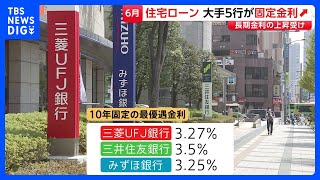
Fixed-rate mortgage costs in Japan are set to rise again in June as the country's five major banks increase home loan rates in response to higher long-term interest rates, with their flagship 10-year fixed-rate mortgages rising to preferential rates of 3.27% at Mitsubishi UFJ Bank, 3.5% at Sumitomo Mitsui Banking Corporation, and 3.25% at Mizuho Bank.

Japan is facing a growing transportation dilemma. While a record number of foreign visitors in 2025 has fueled congestion and traffic jams in major cities and tourist destinations, many rural communities are grappling with the opposite problem: shrinking populations and aging residents are making it increasingly difficult to maintain public transportation services.

Born with osteogenesis imperfecta, a rare disorder that makes bones fragile and prone to fractures, Toshiya Kakiuchi built a company with a mission to transform both the physical and emotional barriers faced by people with disabilities.

Finland is positioning economic resilience as a core pillar of national security, with Finnish Economic Affairs Minister Sakari Puisto emphasizing closer cooperation with Japan in advanced technologies, supply chain security and dual-use industries during a recent visit to Tokyo.

Bank of Japan Governor Kazuo Ueda said on May 27th that Japan's economy is facing an "oil price shock" as tensions in the Middle East drive up crude oil prices, speaking at an international conference hosted by the central bank.