News On Japan

Anger Mounts Over Japan's Tax Policy

TOKYO - A demonstration demanding the abolition of the consumption tax and the restructuring of the Finance Ministry took place in front of the ministry’s headquarters in Tokyo’s Kasumigaseki district on February 24th. The scene at around 5 p.m. was markedly different from the usual atmosphere.

The protest, which began at 4 p.m., saw participants filling half of the sidewalk while police managed traffic in the area.

Many attendees said they were drawn to the demonstration after watching videos online. A woman who traveled two hours to join the rally said, “I saw on YouTube that it was happening at 4 p.m. today, so I rushed to get ready and came out.”

A man from Gunma Prefecture, attending his first protest, echoed similar sentiments.

“I watch YouTube a lot, and there's a channel that reads out online news articles,” he said.

Another protester in his 50s expressed frustration over the lack of media coverage.

“No media outlet is reporting this. I can’t help but feel that they’re deliberately hiding what’s happening in the world today,” he said.

Public discontent with the Finance Ministry intensified in November 2024, when the government released an estimate showing that increasing the income threshold for taxable earnings from 1.03 million yen to 1.78 million yen, as advocated by the Democratic Party for the People (DPP), would reduce tax revenues by more than 7 trillion yen. The projection sparked backlash on social media, with criticism directed at the ministry in charge of tax policy.

These developments appear to have fueled the growing wave of protests.

A participant from Nagoya remarked, “It would be great if the ministry could be reborn as an institution that truly works for the people.”

As tax policy debates heat up, DPP Secretary-General Kazuya Shimba was in Chiba Prefecture on February 24th. When asked about the Finance Ministry protest, he commented:

“A demonstration of around 1,000 people in front of the Finance Ministry would be a big news story. Apparently, it actually happened. That’s the sentiment of the people, isn’t it? They are at their breaking point. This is the people’s outcry. As a politician, I must take their pain seriously and act accordingly.”

With public interest surging, negotiations between the ruling and opposition parties over the income threshold are entering a decisive phase this week.

Source: FNN

News On Japan
POPULAR NEWS

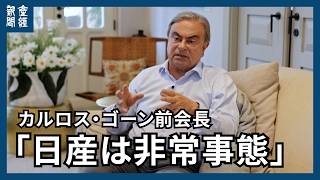
Former Nissan Motor Chairman Carlos Ghosn said the automaker is in a "state of emergency" and signaled he would be willing to return as chief executive officer, arguing that only a true decision-maker in the CEO role could rescue the company.

The entire Negishi Housing Area in Yokohama, Kanagawa Prefecture, has been returned to Japan for the first time in 79 years, ending its use as a residential district for U.S. military personnel and their families.

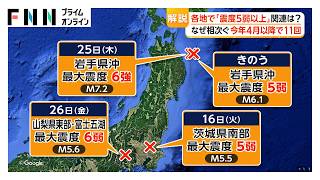
Strong earthquakes have continued to shake parts of Japan in recent weeks, with 11 temblors measuring lower 5 or above on the Japanese seismic intensity scale recorded across the country since April 2026.

A Kintetsu Railway train derailed inside Kyoto Station on the morning of June 29, forcing partial suspensions on the Kintetsu Kyoto Line for the rest of the day and causing long delays that hit commuters, students and tourists.

A section of stone wall at Hikone Castle, one of Japan’s few surviving original Edo-period castles and a National Treasure whose main keep remains intact more than 400 years after its construction, collapsed after heavy rain caused by Typhoons No. 7 and No. 8, Hikone city officials said.

MEDIA CHANNELS
         

MORE Politics NEWS

Japan’s political agenda on June 29 centered on Prime Minister Sanae Takaichi’s attempt to connect economic growth, national security and technological resilience, as the government moved toward a long-term economic blueprint while also responding to China’s expanded export controls and preparing a revision of Japan’s Arctic policy.

Japan remains among the world’s leading nations in seabed resource development and should accelerate work to sharpen its technology, Democratic Party for the People upper house lawmaker Yoshihiko Yamada said, calling for broader ocean policy investment, stronger protection of sea lanes and a more active Japanese role in mine-clearing operations near the Strait of Hormuz.

Chinese and Russian bombers and other military aircraft flew around Japan on June 27, prompting Defense Minister Shinjiro Koizumi to describe the joint activity as a show of force directed at Japan.

Defense Minister Koizumi met with South Korean Defense Minister Ahn Gyu-back in Seoul on the morning of June 28, with the two ministers agreeing to continue cooperation between Japan and South Korea, as well as among Japan, the United States and South Korea.

Japan’s political agenda on June 26 was dominated by national security, election regulation and Prime Minister Sanae Takaichi’s push to reshape the country’s long-term economic strategy, as the Diet advanced measures that point to a broader shift in how the government is preparing for defense, technology and political campaigning.

The Takaichi government said on June 24 that public and private investment in 17 strategic fields, including AI and semiconductors, is expected to exceed 370 trillion yen by 2040, as it seeks to draw out private-sector spending and turn advanced technologies into economic growth.

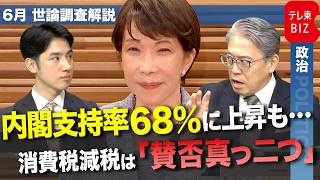
A cross-party national council discussing a reduction in the consumption tax on food will present a draft proposal on June 24 calling for the rate to be lowered to 1% from April next year.

The speakers and vice speakers of both houses of the Japanese Diet approved on June 22 the government’s outline for revising the Imperial Household Law and related measures aimed at securing the number of imperial family members, following what has been described as the consensus of the legislature.