News On Japan

Heatwave Sparks Shark Attacks on Fish Farms

KAGOSHIMA, Jul 04 (News On Japan) - The heatwave has not only affected the land but also brought unexpected changes to the sea. On July 3, Tokyo recorded a temperature of 34.8C, the hottest day of the year so far. This intense heat has also triggered unusual occurrences in the ocean, including shark attacks on aquaculture farms.
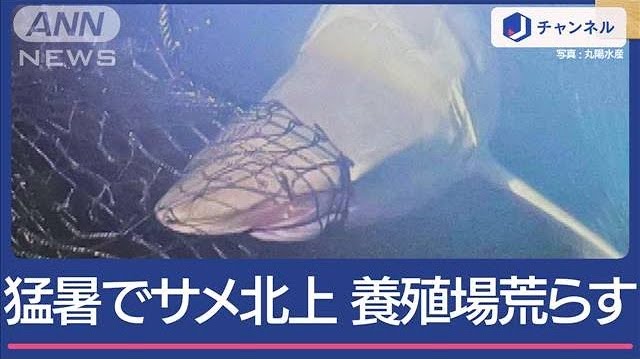
In Kagoshima Prefecture, a major hub for amberjack aquaculture, sharks have emerged as a significant threat. Just as the farmed fish were about to be shipped, giant sharks, some nearly 3 meters long, broke through the nets, causing severe damage. The sharks, too large for any single person to handle, were identified as the culprits behind the destruction. Two sharks managed to break through the nets, leading to the escape of all the amberjack. The damage is estimated at around 10 million yen.

The sharks were first spotted near a fishing port in Kagoshima Bay. A local fisherman expressed his shock, noting that while sharks were often seen offshore, they had never caused such extensive damage to fish ready for shipment. Fortunately, there were no human injuries reported.

The investigative team observed shark fins near the scene, confirming the presence of the predators. The occurrence of sharks so close to shore, particularly at this scale, was unprecedented, leaving the local community in disbelief.

Experts suggest that the recent rise in sea temperatures might be drawing sharks closer to shore. The species identified, likely the bronze whaler, is known to inhabit warm waters and is typically found in tropical and subtropical regions, including areas around Amami, Okinawa, and Kyushu.

The increase in sea temperatures has also affected the amberjack directly, as parasites are more likely to attach to their bodies, causing them to rub against the nets and sustain injuries. This has added to the challenges faced by aquaculture operators.

Despite being a protected species due to its endangered status, the presence of these large sharks poses a significant threat to the local fishing industry. Fishermen are concerned about the future, as these incidents demoralize those working in the sector.

Source: ANN

News On Japan
POPULAR NEWS

The Ministry of Land, Infrastructure, Transport and Tourism has announced plans to draw up guidelines for the introduction of a so-called dual pricing system that differentiates between foreign visitors and local residents.

Kyoto City significantly raised its lodging tax from March 1st, increasing the maximum charge per person per night from 1,000 yen to as much as 10,000 yen, in a move aimed at tackling overtourism and funding the preservation of cultural assets, even as questions remain about its impact on visitors and the local economy.

A former emergency responder and foreign tourists worked together to rescue a woman in her 80s who was trapped inside an overturned light vehicle in Hakuba Village, Nagano Prefecture.

Tokyo Metro and Toshiba have launched Japan’s first demonstration test allowing passengers to pass through ticket gates without touching them by using their smartphones’ Bluetooth function.

The admission fee for the World Heritage-listed Himeji Castle in Himeji, Hyogo Prefecture, was revised on March 1st for the first time in 11 years, introducing a dual pricing system that significantly raises costs for visitors from outside the city.

MEDIA CHANNELS
         

MORE Sci-Tech NEWS

NTT’s next-generation optical communications infrastructure, known as IOWN, is moving toward global standardization as the company steps up efforts to promote the technology in Europe.

Motors are embedded in countless electronic devices, from home appliances and robots to automobiles, quietly generating the power that underpins modern life, and now a Japanese startup is challenging long-held assumptions by developing a next-generation motor that delivers both high efficiency and high output while eliminating the need for rare earth materials.

The assembly of a massive shield machine for tunnel construction at the Kanagawa Station site of the Linear Chuo Shinkansen has been completed, with the site opened to the media as excavation prepares to move forward toward Nagoya.

Tsurui Village in Hokkaido is moving to purchase land designated for a large-scale solar power project near the Kushiro Wetland from an Osaka-based developer, in a bid to protect the surrounding landscape.

Water shortages are worsening across Japan amid what meteorologists describe as 'once-in-30-years' low rainfall, with riverbeds exposed, reservoirs falling to record lows, and dry conditions fueling a renewed surge in influenza infections.

A deep-sea exploration vessel that successfully recovered mud containing rare earth elements from a depth of 5,600 meters for the first time in the world has returned to Shimizu Port in Shizuoka City.

A startup is working to curb global warming by feeding seaweed to cattle in an effort to reduce methane emissions from their burps, with plans to commercialize the technology in the coming years.

The arrival of pollen season has once again begun to affect large parts of Japan, but new research aimed at preventing cedar pollen from dispersing is raising hopes that the future could bring relief for millions of sufferers, with scientists working on a method to wither only the male flowers of cedar trees and stop pollen at its source.