TOKYO - A controversial penalty shootout decision during the Tokyo qualifiers for Japan's National High School Soccer Championship on October 24 has sparked debate after a team that believed it had secured victory was forced to continue playing and eventually lost, raising questions about whether a hole in the goal net contributed to an incorrect ruling.
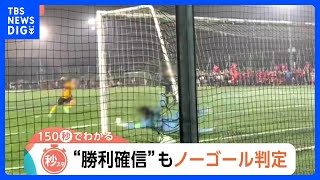
The incident occurred during the quarterfinals of the Tokyo Tournament's second preliminary round, Block B, when Tokai University Takanawadai High School faced Sundai Gakuen High School. With neither side able to secure victory after extra time, the match proceeded to a penalty shootout.
Tokai University Takanawadai appeared to have reached the decisive moment when one of its players stepped forward to take a penalty that, if successful, would seal the team's victory.
The player struck the ball toward the goal, prompting teammates to celebrate what they believed was the winning shot. However, their celebrations were cut short when officials ruled that the shootout should continue.
Spectators were left confused by the decision, with many believing the ball had entered the goal and that the match was over.
"Nobody understood why the penalty shootout was continuing," one spectator said. "Everyone at the venue thought the goal had been scored and the game was finished."
The spectator later heard that there was a hole in the goal net, allowing the ball to pass through and emerge outside the goal. This may have led officials to conclude that the shot had not entered the goal.
Video footage of the incident shows the ball emerging outside the goal, although the circumstances of the disputed decision have continued to raise questions.
Despite the initial celebrations, officials ordered the penalty shootout to continue. Tokai University Takanawadai ultimately lost 11-12 on penalties, turning what players believed was a moment of triumph into a painful elimination from the tournament.
The incident has generated controversy over the accuracy of refereeing decisions and the importance of ensuring that goal nets and other equipment are properly inspected before matches.
A similar controversy occurred in another Japanese high school sporting competition 11 years earlier, when an administrative error led to an unusual outcome at the 2015 National High School Handball Invitational Tournament.
In the men's quarterfinals of the tournament's 38th edition, Hosei Daini High School of Kanagawa faced Urasoe High School of Okinawa. The match should have proceeded to extra time after finishing level, but an error in recording the score resulted in Urasoe being incorrectly declared the winner.
Officials subsequently considered whether to arrange extra time or a replay. However, the decision-making process was delayed, and the tournament final began while discussions over the quarterfinal result were still underway.
The final was eventually suspended before its completion, and both teams competing in the championship match were declared joint winners.
Hosei Daini, which had been eliminated because of the scoring error, was awarded third place as part of the measures taken to resolve the controversy.
The two incidents highlight how officiating decisions and administrative mistakes can have lasting consequences for young athletes competing in major school tournaments.
For high school players, national championship qualifiers often represent a once-in-a-lifetime opportunity, making disputed decisions particularly difficult to accept.
The latest controversy has renewed attention on the responsibility of tournament organizers and officials to explain decisions clearly to players and ensure that appropriate measures are taken to prevent similar incidents in future competitions.
Source: TBS