Kumamoto - Fifteen days after the Kumamoto earthquake, restoration of electricity and transport infrastructure is progressing, but thousands of people are believed to remain outside official shelters, while rising construction costs and interest rates are creating new challenges for rebuilding homes and restoring livelihoods.
Conditions vary sharply across the disaster zone, with some neighborhoods suffering concentrated destruction while nearby areas escaped with comparatively limited damage. In central Yatsushiro, where a seismic intensity of upper 6 on Japan's seven-level scale was recorded, rows of wooden homes and buildings around the station were heavily damaged, suggesting that shaking in some locations may have approached intensity 7.
Nine people were reported killed in the area shown during an aerial survey, and extensive damage remained visible more than two weeks after the earthquake.
Power outages were restored relatively quickly, an important development during the height of summer because residents were again able to use air conditioning. The number of people staying in officially recognized evacuation shelters has also fallen sharply, from nearly 10,000 on July 30 to about 3,500 in the latest figures.
Water outages, however, remain a serious problem, and the official evacuation figures do not include many people sleeping in vehicles or continuing to live in damaged homes.
Some residents avoid shelters because of children, privacy concerns or other circumstances. As a result, they may still be living under conditions similar to those of shelter evacuees while remaining absent from official statistics.
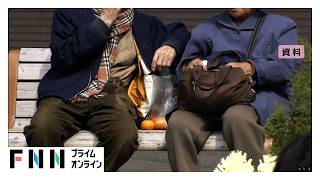
One example is a public housing complex in the Kagami district of Yatsushiro, where about 80 people live and most residents are aged 65 or older. Electricity has been restored, but running water remains unavailable. Many residents have chosen to stay in their familiar homes rather than move to evacuation centers.
Because the housing complex is not an official shelter, residents initially received little emergency assistance. Family members and others used social media to publicize their needs, prompting private volunteers to deliver drinking water and other supplies.
Even two weeks after the disaster, residents said they were still not receiving regular supplies from government agencies, although water trucks were visiting the area.
The situation illustrates the problem of "invisible evacuees" whose needs may not appear in official disaster statistics. While shelter populations are recorded by authorities, people remaining at home or sleeping in vehicles may never be reflected in formal records, raising questions over how their experiences should be documented and incorporated into future disaster planning.
Water shortages are particularly severe. Drinking water delivered to communities must be conserved, leaving little for washing clothes, cooking or cleaning dishes. Without sufficient water for everyday activities, residents may be forced to obtain prepared food and live in conditions that differ little from those in evacuation shelters.
The disaster has also shifted attention toward the financial burden of rebuilding.
Authorities have so far confirmed 1,252 damaged homes, including 20 classified as suffering large-scale partial destruction and 1,032 as partially destroyed. About 10,000 additional cases have yet to be fully assessed, meaning the final figure is expected to rise significantly.
Kumamoto Mayor Kazufumi Onishi said homes built after the Kumamoto earthquakes 10 years ago appear generally to have suffered less serious damage, highlighting the value of seismic reinforcement.
Newer houses constructed to modern earthquake-resistance standards were often able to withstand extremely strong shaking, although buildings located directly above or near fault ruptures could still suffer severe damage.
Financial assistance for victims broadly comes from four sources: national government support payments, disaster donations, assistance provided independently by municipalities and earthquake insurance for households that have purchased coverage.
Prime Minister Sanae Takaichi's government has decided to apply the Disaster Victims' Livelihood Reconstruction Support Act across Kumamoto Prefecture, allowing victims to receive assistance under a framework similar to that used following the 2011 Great East Japan Earthquake and the Kumamoto earthquakes 10 years ago.
Under the previous system, households meeting the relevant conditions could receive up to 3 million yen for homes classified as completely destroyed, up to 2.5 million yen for large-scale partial destruction and up to 1 million yen for medium-scale partial destruction.
The classification process itself can become contentious because municipal employees make assessments under national standards. Past disasters have produced disputes when residents questioned why neighboring homes that appeared less damaged received a more favorable classification. Some disagreements following the Great East Japan Earthquake led to lawsuits.
Ensuring residents understand and accept damage assessments is expected to become an important part of the recovery process.
Disaster donations are another major source of assistance. Contributions collected from the public are generally distributed to victims through local governments.
Following the 2011 disaster, households in Kamaishi, Iwate Prefecture, where nearly 3,000 homes were classified as completely destroyed, received about 1.89 million yen per household under applicable conditions. In Ishinomaki, Miyagi Prefecture, severely affected households received roughly 1.6 million yen.
Based on past disasters, donation payments have often fallen in the range of about 1.5 million to 2 million yen, although the amount varies by municipality depending on donations received and the scale of damage.
Morioka, the inland capital of Iwate Prefecture, provided an unusual example after the 2011 disaster. The city escaped major tsunami damage and recorded only one completely destroyed home, but many people donated to Morioka because it was the prefectural capital. More than 500,000 yen in donations was ultimately distributed in connection with that single severely damaged household.
Combining national assistance of up to 3 million yen with perhaps around 2 million yen in disaster donations could provide some households with approximately 5 million yen.
Even that amount, however, is unlikely to cover the cost of rebuilding a home from the ground up, leaving many victims to contribute substantial amounts themselves.
The financial environment is also considerably more difficult than during the Kumamoto earthquakes 10 years ago or the Great East Japan Earthquake 15 years ago. Higher prices and rising interest rates mean the same level of public assistance now covers a smaller portion of construction expenses, potentially increasing the amount households must borrow or pay from savings.
The earthquake is also affecting tourism across Kyushu.
A key section of the Kyushu Expressway remains closed, disrupting travel not only to parts of Kumamoto that suffered relatively little damage, including northern areas and Amakusa, but also affecting tourism farther south in Kagoshima and Miyazaki prefectures.
Even in Kumamoto city, where many areas suffered comparatively limited physical damage, cancellations have spread beyond hotels to restaurants and group dining reservations, placing pressure on the wider service industry.
One possible measure later in the recovery is a tourism subsidy similar to the reconstruction discount program introduced after the Kumamoto earthquakes 10 years ago. No such program has yet been announced by the government, but a comparable scheme could eventually be considered to support hotels, restaurants and tourism businesses once emergency accommodation needs decline.
At present, some inns and hotels are being used to temporarily house disaster victims. Tourism incentives would therefore be more likely to begin after evacuees move from hotels into temporary housing, potentially sometime from autumn through winter.
The recovery is entering a stage in which emergency restoration and longer-term reconstruction must proceed simultaneously, with officials facing the dual challenge of reaching people who remain outside the formal shelter system and ensuring financial assistance is sufficient to help households rebuild in a far more expensive economic environment than in previous major earthquakes.
Source: YOMIURI