Interior design surveys rarely make headlines, but this year's did.
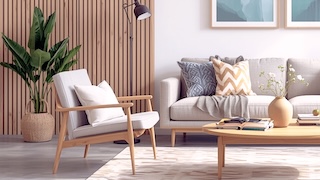
Apartment Therapy's annual State of Home Design report, based on responses from 140 working interior designers, named Japandi one of the defining styles of the year, the fusion of Japanese restraint and Scandinavian warmth that has spent the past several years moving from niche design blogs into mainstream renovation shows and retail catalogs. The finding confirms what search data and store shelves have already suggested: Japanese-influenced interiors are no longer a subculture in Western home design, they are close to the mainstream.
This is also due in part to the fact that the relationship between Western furniture labels and Japanese designers is growing ever closer: Billiani with Kazuhide Takahama, Poltrona Frau with Kensaku Oshiro, and B&B Italia with Naoto Fukasawa, among others. What the survey does not measure, and what a number of commentators, several of them Japanese, have begun asking in public, is how much of the underlying philosophy made the journey along with the aesthetic.
Japandi, Wabi-Sabi, Zen House: A Side-by-Side Comparison
Much of the criticism aimed at the trend is not about whether Western consumers are buying Japanese-inspired furniture, but about how loosely certain Japanese terms, wabi-sabi chief among them, are now applied to products and marketing that have little connection to their original meaning. Three terms are doing most of the work in this conversation, and each one means something noticeably different depending on which side of the exchange is defining it:
-
Japandi, in Western usage: a material and color palette, light wood, linen, uneven ceramics, applied to furniture and home decor. In its country of origin: not a Japanese term at all. It is a Western marketing coinage from around 2016, pairing Japanese minimalism with Scandinavian hygge, without a corresponding design category inside Japan itself.
-
Wabi-Sabi, in Western usage: a decorating style built around visibly imperfect, handmade-looking objects, chipped bowls, raw wood, uneven glaze. In Japan: a centuries-old aesthetic and spiritual worldview concerning impermanence and restraint, historically expressed through deliberate choices rather than purchased finishes, and rarely spoken aloud as a descriptive label.
-
Zen House, in Western usage: a room with minimal furniture and an uncluttered, pared-back look. In Japan: not a standard architectural term either. It loosely references Zen Buddhist discipline and the flexible, sliding-panel layouts of traditional residential architecture, describing a way of living and using space rather than a finished look.
Where the term Wabi-Sabi entered Western design vocabulary
Most English-language references to wabi-sabi trace back to a single text: Leonard Koren's 1994 book "Wabi-Sabi for Artists, Designers, Poets and Philosophers," written specifically to translate Japanese aesthetic sensibility for a Western audience. Timon Screech, a professor at the School of Oriental and African Studies in London, has written that wabi-sabi historically represented a deliberate choice available mainly to those who could afford otherwise: samurai and merchants who had the means to gild their surroundings and chose plain materials instead. Academic reviews of the concept's Western reception, including a 2020 paper published in the journal Intercultural Relations, describe a consistent pattern in which the philosophical and spiritual dimensions of wabi-sabi are set aside in favor of its visual characteristics, muted colors, uneven textures, natural materials, which are easier to reproduce in a product line.
Native speakers rarely use the term the way marketers do
Photographer and educator George Nobechi, who teaches Japanese aesthetic concepts, has noted a gap between how the word functions inside Japan and how it is used abroad. "Japanese people do not say, 'That's very wabi-sabi,'" he wrote, describing it as a quality that is felt rather than named. Outside Japan, the term has become a marketing category attached to ceramics, textiles, and furniture collections with varying degrees of connection to the original concept. Some Japanese commentators writing online have pushed back publicly against this pattern, comparing it to the sale of clothing labeled "kimono" that bears little resemblance to the garment, or Japanese characters printed decoratively without regard to their meaning.
Zen House: an aesthetic borrowed from a discipline
Unlike wabi-sabi, zen house has no single traceable origin, no Koren-style book, no scholar widely cited on the subject. It functions less like an imported design term and more like marketing shorthand, showing up most often in real estate listings and renovation headlines rather than in design theory. What it borrows loosely from Japan is the practice of using sliding panels to let one room serve several purposes over a day, storage tucked out of sight, furniture kept low and easy to move. In its Western retail form, what typically survives is the empty look of the room. What tends to get left behind is the discipline of ownership and use that produced the emptiness in the first place.
When Western Design Finds Common Ground With Japanese Philosophy
Not every application of the trend is treated as superficial. Designer Shanty Wijaya, quoted in Apartment Therapy's coverage of the survey, described the appeal of the style as rooted in "recognizing, accepting, and embracing the imperfectness of life," a framing closer to the original philosophy than most retail marketing achieves. Whether that level of engagement represents where the trend is heading, or remains the exception inside a much larger commercial movement, is a question the industry itself has not yet settled.