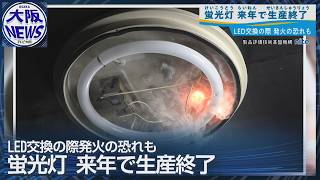
OSAKA - Fluorescent lamps that have illuminated Japanese homes and workplaces for decades are approaching the end of production, with Panasonic preparing to wind down a business it has operated since 1951 while experts warn that incorrectly replacing some fixtures with LEDs could create a fire risk.
Panasonic opened its factory in Takatsuki, Osaka Prefecture, to the media on September 9 as it moves ahead with the phased termination of fluorescent lamp production after about 75 years of manufacturing and sales.
The company plans to end production of compact fluorescent lamps by the end of September. Production of straight-tube and circular fluorescent lamps is scheduled to finish at the end of September 2027.
The transition comes as Japan moves toward ending the manufacture of all fluorescent lamps containing mercury by the end of 2027.
Consumers are being encouraged to switch to LED lighting, but the ease of replacement depends on the type of fixture.
LED bulbs designed for common sockets such as the E26 base can generally be installed directly in place of conventional bulbs without special work.
Greater caution is required with straight-tube and circular fluorescent lamps, however, because some existing fixtures require electrical work before they can safely use LED replacements.
Experts warn that installing an incompatible LED lamp without properly checking the fixture can lead to overheating or other problems and potentially cause a fire.
Electronics retailers are therefore preparing to help customers make the transition safely as the deadline for fluorescent lamp production approaches.
Some consumers remain unaware that production is being discontinued. When told at a store that fluorescent lamps would no longer be manufactured, one customer asked whether they would still be able to buy replacements. Store staff explained that existing products could continue to be sold, but once remaining inventory runs out, they would no longer be available.
Retailers are advising households not to rush to replace every fluorescent light immediately, but instead to check each room and plan upgrades gradually.
Fluorescent lamps will not suddenly stop working when production ends, and existing lamps can continue to be used until they reach the end of their service life.
Because many ceiling lights are installed in high or difficult-to-reach locations, specialists say safety should take priority over speed, with households encouraged to confirm fixture compatibility and arrange professional electrical work when necessary.
Source: Television OSAKA NEWS