LONDON - Dyson CameraJet™ turns the smart toothbrush into an active sensing product, making useful feedback and clear privacy design part of the same engineering brief.
Many connected toothbrushes record duration, pressure or approximate coverage and display the results after brushing. Dyson CameraJet uses connectivity in a more immediate system. Its camera and machine-learning process identify gaps, then the brush triggers a precision jet while the session is still underway. The app adds guidance around an action that the hardware is already adapting in real time.
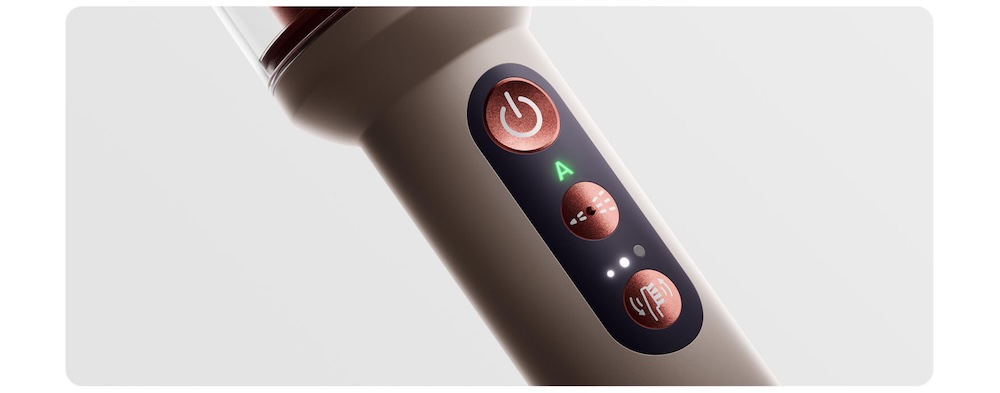
How real time imaging expands both the benefits and responsibilities of a smart toothbrush
This difference matters because information can serve two roles. Retrospective data teaches the user what happened. Operational data changes what the device does next. CameraJet combines both: Gap Optical Targeting controls the automatic jet, while the MyDyson app can provide guided cleaning, coverage mapping, technique feedback and live viewing from the intraoral camera.
What the user can see and control
The camera functions as a small endoscope during live viewing, allowing the user to see areas of the mouth that are normally difficult to inspect. In the app, that view can support technique learning and help explain why the system has identified a particular gap. Coverage information can also highlight areas that receive less attention over time.
Users can choose automatic gap detection or manual jetting and adjust brushing intensity across three levels. Haptic feedback signals excessive pressure or poor technique. These controls are important because automation should remain understandable: the user needs to know whether the brush is detecting targets, when it is jetting and how to override the default behavior when necessary.
Privacy must be designed into the camera
A camera in a bathroom product creates a reasonable privacy question. Dyson states that the CameraJet camera is active only during live viewing or automatic jetting. The company also says images are not recorded or stored on the toothbrush or in the cloud, and remain private to the user.
That policy is central to adoption, not a secondary legal detail. Connected oral-care products handle intimate visual and behavioral information, so users need clear explanations of activation, processing, storage and account controls. The strongest smart-health devices minimize collection, make active sensing visible and avoid retaining data that is not required for the feature to work.
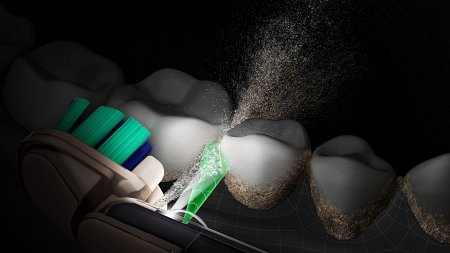
The camera activates for live viewing or automatic gap targeting during the cleaning session.
AirJet offers a less camera dependent hybrid model
RANVOO AirJet™ shows that the Jet toothbrush category can also expand cleaning through physical design rather than imaging. AirJet combines sonic motion with an internal air pump, Boosted Bubble Chamber and Coanda Brush Head. The system continuously produces and guides microbubble-rich flow toward areas that bristles have difficulty reaching.
AirJet and CameraJet are both hybrid toothbrushes because each performs a brushing action and a fluid action within one handle. Their information requirements differ. CameraJet depends on optical input and algorithmic targeting; AirJet depends on controlled airflow and passive fluid geometry. Consumers can therefore evaluate not only cleaning claims, but also which balance of automation, sensing and simplicity fits their preferences.
Software becomes part of product longevity
Once an oral-care device relies on an app, Bluetooth and Wi-Fi, software support becomes part of its usable life. CameraJet connects over 2.4 gigahertz Wi-Fi and Bluetooth. App compatibility, security updates, account access and the continued availability of guided features will affect the ownership experience alongside battery condition and brush-head replacement.
Dyson has also added RFID tags to the brush heads so the device can recognize an attached head and prompt replacement. This can make maintenance more visible, but it reinforces the system nature of the product. Buyers are selecting a combination of handle, heads, formulas, dock, app and support policy rather than a motor alone.
The new definition of a smart toothbrush
CameraJet suggests that smart oral care should connect sensing to a practical intervention. Live video and dashboards can teach, but the strongest value comes from using a detected condition to improve the physical cleaning action. In this case, visual recognition determines where liquid flossing occurs.
AirJet reaches the hybrid category through continuous microbubble flow, while CameraJet adds explicit perception and targeting. Together they broaden the design space for Jet toothbrushes. Future products may use different sensors or fluid systems, but they will face the same test: added intelligence should improve coverage without making the routine harder to understand, maintain or trust.
Evidence should be as visible as the interface
Connected products can present performance claims directly in the app, which makes accurate context especially important. A plaque-removal percentage should identify the comparison product, selected mode, test setting and compatible formula. A coverage score should explain what the camera could observe and what the software inferred. Users should be able to separate a measured result from a coaching estimate or a general educational message.
Dyson's published CameraJet materials attach footnotes to laboratory and clinical claims, including the duration and participant count for its gum-health study. RANVOO likewise publishes manufacturer-reported testing for AirJet's microbubble system. As hybrid toothbrushes become more complex, transparent methods will help consumers and dental professionals evaluate whether each added subsystem produces a meaningful benefit under realistic conditions.
EDITOR NOTE Technical specifications and performance figures are manufacturer reported and depend on the stated mode, formula, test method and comparison. Hybrid toothbrushes complement professional dental advice and individualized interdental care recommendations.