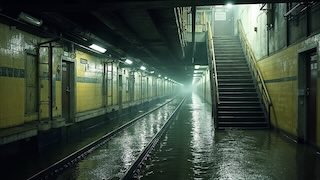
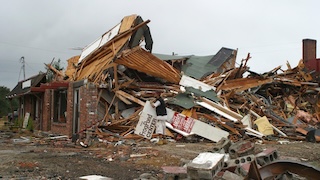
During typhoon season a Japanese river can climb several levels of alert and carry a heavy load of sediment within a few hours. The country follows both strands through the storm as it happens, rather than piecing the picture together once the water has dropped.
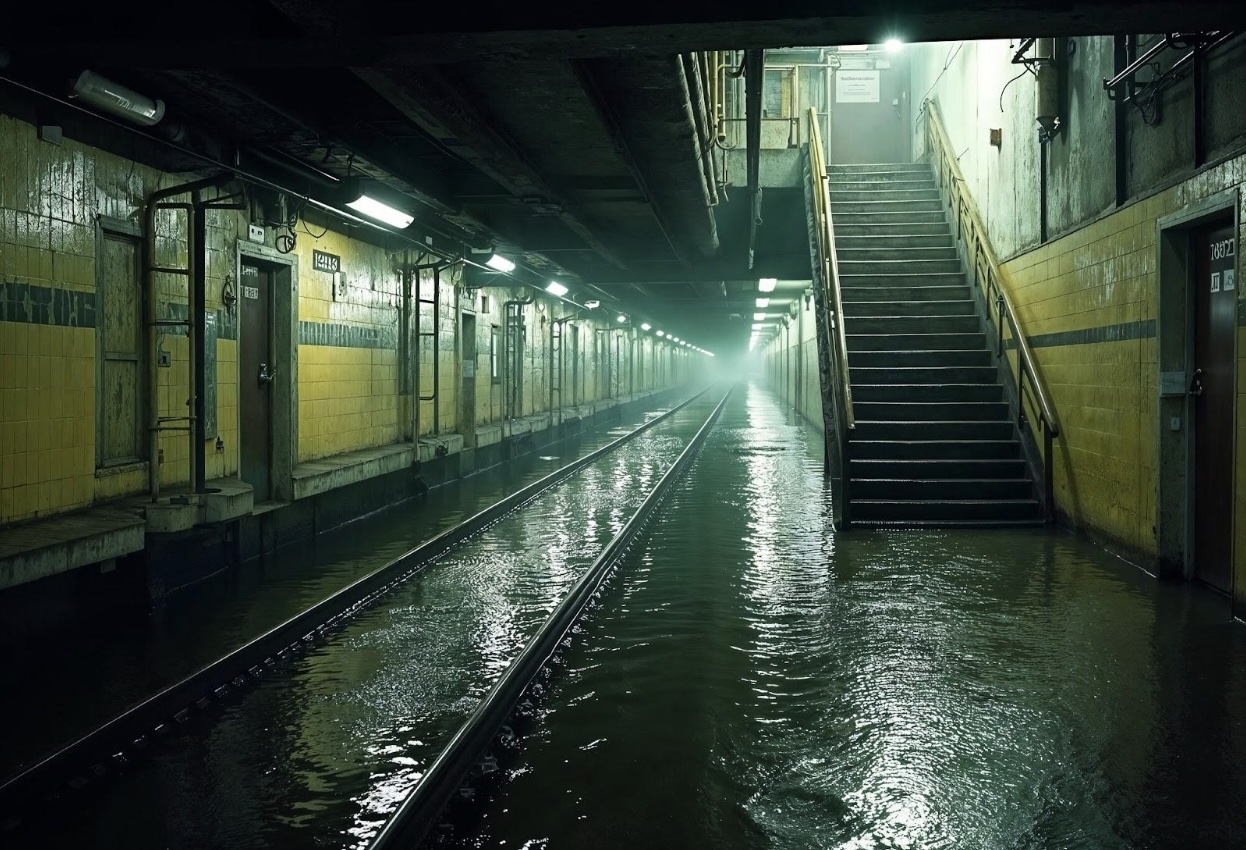
What a Sensor Misses Between Readings
In one field study on a Japanese river, researchers tracked turbidity and conductivity continuously using optical and electrical sensors fitted with wipers, and ran an automatic water sampler to collect river water during storm-driven events. On another river, the highest turbidity and suspended-solid readings turned up almost at the peak water level or slightly ahead of it. That window is short. Event-triggered sampling at a river or stormwater station depends on water quality sampling solutions that start collecting when a threshold is crossed, which is how a bottled record exists for the hours the readings matter rather than for the calm days either side.
One Flood, Years of Sediment
A 2008 paper published by the Japan Society of Civil Engineers followed the Tama River, which flows into Tokyo Bay, through the flood raised by Typhoon No. 9 in 2007. The suspended sediment carried by that single flood came to about 6.6 years of the river's annual load. Total phosphorus came to about 1.7 years' worth and chemical oxygen demand to about 2.6 years'. The authors concluded that the event had a significant environmental impact on water quality in Tokyo Bay.
The same paper found that the relationship between load and river discharge in a large flood was quite different from the one seen in medium and small floods. That matters for anyone estimating a year's load from routine samples. A curve fitted to ordinary days and modest storms does not carry over to the large event, and on the Tama River the large event moved more than six years' worth of sediment on its own.
Ten-Minute Readings, Colour-Coded and Pushed to Phones
Japan's river monitoring system refreshes water-level readings roughly every 10 minutes and shows them colour-coded by danger level, according to material published through the UN Centre for Regional Development. The scheme runs red for Flood Danger Level, orange for Evacuation Decision Level and yellow for Flood Warning Level. An MLIT open database puts several layers in front of the public at once, among them river camera views, radar rainfall, designated flood-danger rivers, heavy rain points, dam discharge figures and real-time flood and landslide risk maps.
A Record Written by Recent Storms
Typhoon Hagibis made landfall on the night of October 12, 2019, after dropping well over 1,000 millimeters of rain on Hakone, according to a quick report published by the New Zealand Geotechnical Society. Drawing on Ministry of Land, Infrastructure, Transport and Tourism figures as of October 21, the report lists damage at 108 sections across 26 nationally administered rivers. It also records 13 wastewater treatment plants flooded and nine pump stations put out of service.
The Heavy Rain Event of July 2018 reached further. Japan's Cabinet Office, in its white paper on disaster management, reports that rain from June 28 to July 8 passed 1,800 millimeters in parts of Shikoku and 1,200 millimeters in parts of the Tokai region, and that the event left 237 people dead, citing the Fire and Disaster Management Agency. Levee breaches along the Odagawa River flooded Mabi Town in Kurashiki, and in Ehime Prefecture debris flows in Yoshida Town, Uwajima, destroyed a water purification plant. Water outages reached a peak of about 260,000 households in 80 municipalities, according to Ministry of Health, Labour and Welfare figures in the same paper.
When Rain and Sewage Share a Pipe
About 80% of Tokyo's 23 wards use a combined sewerage system, in which sewage and rainwater travel to the water reclamation center in the same pipe, according to the Tokyo Metropolitan Government's Bureau of Sewerage. In a paper presented at a 2011 workshop held alongside the IWA-ASPIRE conference, Bureau engineers wrote that separate pipes were hard to build quickly under the city's many narrow roads. The cost of that choice is combined sewer overflow, which they described as a source of pollution in public waters.
The Bureau's response has centered on the first flush. Storm water tanks at pumping stations and near sewer outlets were built to hold a fixed volume of the first flush of overflow, which carries a high pollutant load, and they held 410,000 cubic meters by the end of fiscal 2010, the same paper reports. Tanks at the water reclamation plants, built for first flush beyond secondary treatment capacity, held another 550,000 cubic meters.
National water quality standards for combined sewer overflows took effect in 2004, and the Bureau was required to bring average BOD in a treatment district down to 40 milligrams per liter or less by 2023. Its long-term aim, the engineers wrote, is overflow loads comparable to those of a separate system.
Why the Timing Decides the Value of the Data
The case for running the two networks side by side sits in the timing. When the turbidity and suspended-solid peaks arrive at or just before the water-level peak, the contamination picture and the flood picture belong to the same few hours, and a station built to catch only one of them will have nothing to say about the other. Sampling that fires on a threshold, rather than on a calendar, is what keeps those hours on the record.