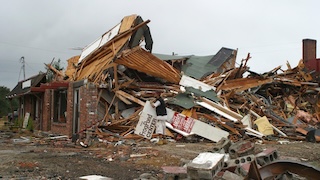
TOKYO - Japan launched a new national disaster management agency on November 2nd to strengthen its response to major emergencies, just days before a powerful earthquake struck Aichi Prefecture, injuring 24 people and renewing concerns over the possibility of a catastrophic Nankai Trough earthquake.
The earthquake, which struck eastern Aichi Prefecture in the early hours of November 8th, registered an upper 5 on Japan's seven-level seismic intensity scale, the strongest shaking recorded in the prefecture in approximately 30 years. A total of 24 people were injured across Aichi and neighboring Shizuoka Prefecture.
One resident described the earthquake as the strongest shaking they had ever experienced, while another said the late-night tremors had been frightening and raised questions about how to prepare for an even more powerful disaster. "We need to take time to think about what we should do to make sure we can withstand shaking even stronger than this," the resident said.
The earthquake occurred within a region considered vulnerable to the long-feared Nankai Trough megaquake, which government estimates suggest has a probability of approximately 60% to 90% or higher of occurring within the next 30 years.
Following the November 8th earthquake, an expert panel convened by the Japan Meteorological Agency examined whether the seismic activity indicated an increased risk of a major Nankai Trough earthquake. The panel concluded that no changes had been observed suggesting that the likelihood of such an event had risen.
Naoshi Hirata, chairman of the evaluation committee, emphasized that the findings should not be interpreted as an assurance that a major earthquake would not occur.
"The conclusion is that yesterday's earthquake will not lead to a Nankai Trough megaquake," Hirata said. "However, that does not mean a Nankai Trough earthquake will not happen. I want everyone to make preparations in their daily lives so they are ready whenever one occurs."
The latest earthquake came less than a week after the Japanese government established the Disaster Management Agency on November 2nd, creating a new central organization responsible for coordinating the country's response to natural disasters.
The agency is intended to serve as the government's command center during major emergencies, improving coordination between ministries, local authorities, and emergency response organizations while strengthening preparedness for large-scale disasters.
A particular priority is the Nankai Trough earthquake, which experts have warned could cause widespread destruction across central and western Japan, affecting major population centers, industrial regions, and critical transportation networks.
Disaster Management Minister Hosono described the potential consequences as a threat to the country's future and urged the public to recognize the seriousness of the danger.
"If a Nankai Trough earthquake actually occurs, I believe it will become a battle for the fate of the nation," Hosono said. "Conversely, if we fail to overcome such a disaster, the nation's decline will be unavoidable. That is how critical the situation is."
Hosono stressed that disaster preparedness must extend beyond government agencies and emergency services, with individuals and households taking responsibility for protecting themselves.
"I particularly want members of the public to regard disasters as something that concerns them personally," he said.
Although the latest assessment found no evidence that the November 8th earthquake had increased the immediate likelihood of a Nankai Trough megaquake, authorities continue to emphasize that a devastating earthquake could strike Japan at any time, making everyday preparedness and public awareness essential to reducing casualties and damage.
Source: YOMIURI