News On Japan

Touch-Free Ticket Gates Coming to Tokyo's Yamanote Line

TOKYO - East Japan Railway (JR East) announced on November 10th that it will introduce touch-free ticket gates at 40 stations, including every station on Tokyo's Yamanote Line, from spring 2028, allowing passengers using Mobile Suica to pass through without taking their smartphones out of their pockets or bags.

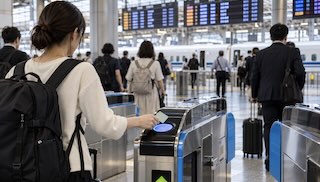
The new system, known as "walk-through ticket gates," uses radio signals emitted by smartphones equipped with Mobile Suica to automatically open the gates as passengers approach. Travelers will be able to walk through at their usual pace without stopping to tap their phones against a reader, marking a significant change from the conventional ticket gate system.

JR East said the technology is designed to make travel more convenient, particularly for passengers carrying large luggage, wheelchair users, and parents pushing strollers, who may find it difficult to reach for a smartphone or transportation card while moving through stations.

The railway operator plans to begin trial operations at 14 stations in the Tokyo metropolitan area in April 2027, ahead of the full-scale rollout at 40 stations in spring 2028. The initial large-scale deployment will cover all stations on the Yamanote Line, one of Tokyo's busiest commuter rail networks.

Unlike conventional automatic ticket gates, which require passengers to touch an IC card or smartphone against a dedicated reader, the new technology identifies Mobile Suica users through wireless communication, allowing the gates to open automatically without physical contact.

JR East aims to extend the system to every station equipped with automatic ticket gates across its network by the end of fiscal 2031, which falls in March 2032.

The company said the introduction of walk-through ticket gates is intended to create a more comfortable and seamless travel experience, especially for passengers whose hands are occupied by luggage, strollers, or mobility equipment.

The initiative represents another step in JR East's efforts to modernize railway services through digital technology, building on the widespread adoption of Suica and its smartphone-based Mobile Suica service.

山手線にタッチ不要の改札導入へ

JR東日本は11月10日、2028年春から山手線の全駅を含む40駅に、改札機にタッチせずに通過できる新しい改札システムを導入すると発表した。モバイルSuicaを利用している乗客は、スマートフォンをポケットやカバンから取り出すことなく改札を通過できるようになる。

东京山手线将引入无需刷卡的自动检票闸机

东日本旅客铁道公司(JR东日本)于11月10日宣布,将从2028年春季起,在包括东京山手线所有车站在内的40个车站引入无需触碰的自动检票系统。使用手机Suica的乘客无需从口袋或包中取出智能手机,即可直接通过检票闸机。

Source: TBS

News On Japan
POPULAR NEWS

Japan's Children and Families Agency unveiled its first national guidelines on November 10th for parental involvement in children's internet use, dividing those aged 0 to 18 into six developmental stages as the government considers tighter regulations on social media platforms to protect young people from online bullying, exploitation, and other growing risks.

As of 3 a.m. on Wednesday, November 11, Typhoon No. 32 was moving east-northeast over waters east of Chichijima in the Ogasawara Islands, gradually heading away from the Japanese archipelago after passing near the island between late Tuesday night and early Wednesday morning.

Odakyu Electric Railway unveiled images of its next-generation Romancecar limited express train on November 10, revealing a striking blue-green design featuring enormous circular windows that will allow passengers to enjoy panoramic views from ceiling to floor when the new trains enter service in March 2029.

A male bear weighing approximately 270 kilograms was killed by hunters in Iwamizawa, Hokkaido, on November 8th after being caught in a box trap, with local hunters suspecting it was responsible for a series of attacks on a nearby poultry farm that left more than 100 chickens and ducks dead since August.

A magnitude 5.7 earthquake struck central Japan early on November 8th, registering an upper 5 on Japan's seismic intensity scale in Aichi Prefecture and injuring at least 21 people, while damaging buildings and disrupting Shinkansen and conventional railway services across the region.

MEDIA CHANNELS
         

MORE Travel NEWS

East Japan Railway (JR East) announced on November 10th that it will introduce touch-free ticket gates at 40 stations, including every station on Tokyo's Yamanote Line, from spring 2028, allowing passengers using Mobile Suica to pass through without taking their smartphones out of their pockets or bags.

Hokkaido's transportation network faced further disruptions on Tuesday, November 10, as freezing temperatures, lingering snow and icy conditions caused train cancellations, flight delays and highway restrictions, although conditions improved in several areas during the afternoon.

A powerful cold air mass brought the lowest temperatures of the season to much of Japan on Tuesday, November 10, with Hokkaido recording a nationwide seasonal low of minus 11.8 degrees Celsius, heavy snowfall covering northern communities, and Tokyo experiencing midwinter conditions as temperatures fell sharply across the country.

The card worked on the subway, paid for a convenience-store coffee and still has plenty of yen left. Then the Shinkansen gate refuses to open. Another top-up seems the obvious fix, especially with a departure time creeping closer. But the balance may be perfectly healthy.

Japan's younger generation is increasingly turning away from driving and car ownership, with the number of driver's license holders aged 24 and under falling by approximately 590,000 over the past decade to around 5.15 million in 2025, reflecting changing attitudes toward transportation, spending and the traditional appeal of owning a car.

A field of approximately 20,000 cosmos flowers has reached peak bloom at Nagai Botanical Garden in Osaka's Higashisumiyoshi Ward, where a limited-time installation by art collective teamLab is transforming the autumn landscape into a glowing display of light and sound after dark.

A magnitude 5.7 earthquake struck central Japan early on November 8th, registering an upper 5 on Japan's seismic intensity scale in Aichi Prefecture and injuring at least 21 people, while damaging buildings and disrupting Shinkansen and conventional railway services across the region.

Sapporo deployed its distinctive Sasara snow-clearing tram for the first time this season early on November 7th, the second-earliest deployment in 10 years, after snowfall reached 8 centimeters at 4 a.m., prompting a vehicle to leave its depot to clear snow from the city's streetcar tracks.