HOKKAIDO - Heavy snow, freezing temperatures and strong winds are threatening transportation across Hokkaido on Tuesday, November 10, with Japan Airlines and All Nippon Airways warning of possible flight disruptions at several airports and JR Hokkaido reporting train cancellations and delays across parts of its northern network as of 6 a.m.
Road authorities were also enforcing restrictions on major expressways as freezing conditions increased the danger of accidents.
The disruptions come as midwinter-like cold air moves across northern Japan, bringing heavy snow to areas along the Sea of Japan coast. Snowfall could reach 30 centimeters in parts of northern and central Hokkaido over the 24 hours through Tuesday evening, with around 20 centimeters possible in northern districts of Sapporo.
Air travel is among the services facing immediate uncertainty. Japan Airlines identified Sapporo's Okadama Airport as vulnerable to disruption on November 10 because of snow, warning that affected flights could be delayed, canceled, diverted to another airport or forced to return to their departure point.
All Nippon Airways separately identified Wakkanai Airport in northern Hokkaido as facing similar risks because of snowfall. The airline warned that actual flight operations would depend on weather conditions, aircraft type and departure time.
At New Chitose Airport, Hokkaido's principal aviation gateway, snow had accumulated to 3 centimeters by 5 p.m. on November 9 following periods of intense snowfall. Further snow was forecast overnight and into Tuesday morning, creating the possibility of delays caused by runway conditions, aircraft deicing and reduced visibility.
New Chitose was not specifically identified in the airline-wide weather disruption notices examined for November 10, and widespread weather-related cancellations there had not been confirmed as of early Tuesday.
Some flights from New Chitose experienced delays on November 9. ANA Flight 82 from Sapporo to Tokyo's Haneda Airport, originally scheduled to arrive at 10:10 p.m., was reported arriving at 11:50 p.m. Air Do Flight 32, also operating as ANA Flight 4732, arrived at Haneda at 8:38 p.m. instead of its scheduled 7:35 p.m. arrival. However, the causes of those individual delays were not confirmed as snow-related.
Rail transportation is also facing operational problems, although not all are directly associated with the winter weather.
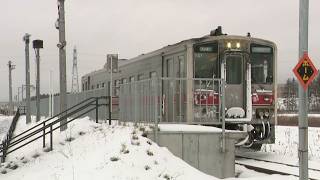
JR Hokkaido reported at 5:06 a.m. on November 10 that the discovery of rail damage exceeding permitted safety limits had resulted in cancellations or delays affecting services in northern Hokkaido, with disruption notices also covering the Sapporo metropolitan and central Hokkaido operating areas.
The railway had previously reported disruptions on the Soya Line after a local train traveling from Otoineppu toward Wakkanai struck a deer between Osashima and Saku stations on the evening of November 9. Further cancellations or delays were reported after midnight.
In eastern Hokkaido, a separate deer collision on the Hanasaki Line between Bettoga and Ochiishi disrupted services between Kushiro and Nemuro on November 9. JR Hokkaido warned that the incident would also cause some train cancellations on November 10 because of operational arrangements.
The incidents have complicated railway operations as the region enters another period of heavy snowfall. However, the cancellations linked to rail damage and animal collisions should be distinguished from disruptions caused directly by snow.
Early railway service reports indicated that many principal routes, including the Hakodate Main Line, Chitose Line and Gakuen-Toshi Line, had no general disruption notices, although individual services remained subject to change.
Road transportation faces a more widespread threat from frozen surfaces and reduced visibility. As of 5:15 a.m. on November 10, winter tire requirements and speed restrictions were in effect across extensive sections of the Do-O Expressway, Hokkaido's principal north-south highway.
Between Shibetsu-Kenbuchi and Sapporo, motorists were subject to a 50-kilometer-per-hour speed limit because of freezing conditions, with winter tires required. Similar restrictions applied on sections between Eniwa and Chitose, as well as between Noboribetsu-Muroran and Yakumo.
Other sections of the expressway were operating under 80-kilometer-per-hour restrictions, including stretches between Kitahiroshima and Eniwa and between Chitose and Tomakomai-Higashi.
Winter tire requirements were also reported on the Sasson Expressway linking Sapporo and Otaru, the Shiribeshi Expressway, the Doto Expressway serving eastern Hokkaido, and the Fukagawa-Rumoi Expressway.
These were restrictions rather than confirmed blanket closures of the expressway network, but further snowfall could force authorities to introduce additional controls if visibility or road conditions deteriorate.
Bus services are also vulnerable to the worsening road conditions, particularly on routes linking Sapporo with Otaru, Iwamizawa, Rumoi, Asahikawa and other communities along the Sea of Japan side of Hokkaido.
Hokkaido Chuo Bus was monitoring local, intercity and airport bus services, although a comprehensive list of snow-related cancellations for November 10 was not available in the early-morning information examined.
Hokto Kotsu reported normal operations on its principal airport bus routes between central Sapporo and New Chitose Airport, as well as services connecting Okadama Airport with the city. However, its Soen and Jozankei airport routes were listed as fully suspended, without confirmation that the suspensions were caused by Tuesday's snowfall.
Ferry transportation also faces possible disruption as strong winds and high waves affect waters surrounding northern Hokkaido.
Heartland Ferry, which operates services between Wakkanai and the islands of Rishiri and Rebun, said decisions on November 10 sailings would be made at around 5:30 a.m. The operator had also scheduled services between Esashi and Okushiri Island, but the early information available did not confirm whether individual crossings would proceed.
The Japan Coast Guard reported strong wind and wave advisories affecting the Soya region and the islands of Rishiri and Rebun as of 4:20 a.m. Gale-force conditions were also a concern in waters west of Hokkaido and around the Soya Strait, increasing the possibility of ferry delays or cancellations.
In Sapporo, subway operations were not confirmed to be affected by the snowfall. However, the city's public transportation information system experienced a separate disruption on November 9 after unauthorized access led to false notices claiming subway suspensions and network-wide delays. Municipal officials said subway services had actually been operating normally, and the affected information service was temporarily shut down.
The most difficult travel conditions on November 10 are expected across northern and western Hokkaido, particularly in Kamikawa, Rumoi, Sorachi and parts of the Ishikari region. Bifuka, Horokanai, Iwamizawa, Ebetsu and Kutchan are among the communities forecast to receive significant snowfall, increasing the risk of delays on local roads and regional transportation networks.
Visibility remains a particular concern following severe blizzard conditions in Bifuka on November 9, when blowing snow temporarily reduced visibility to almost zero.
Sapporo is forecast to reach a high of just 2 degrees Celsius on November 10, with morning snow giving way to more settled conditions later in the day. Temperatures near or below freezing could nevertheless leave roads slippery even after snowfall eases.
Although transportation services may face additional disruption through Tuesday morning, the early reports do not establish a widespread shutdown of Hokkaido's railway, aviation or highway networks. The confirmed problems include individual railway cancellations, flight delays carried over from November 9, and extensive highway restrictions, while further weather-related cancellations remain possible.
Conditions are expected to improve gradually from November 11, but authorities are urging motorists and travelers to check the latest operating information before departure, allow additional travel time and remain alert to rapidly changing weather, particularly in northern Hokkaido and along the Sea of Japan coast.