News On Japan

Japan's Antarctic Research Ship Shirase Departs for 68th Expedition

KANAGAWA - Japan's Antarctic research vessel Shirase departed from the Maritime Self-Defense Force's Yokosuka Base in Kanagawa Prefecture on November 11th, beginning a mission to support the country's 68th Antarctic Research Expedition, with the ship scheduled to reach Showa Station in late December before returning to Japan in April 2027.

The vessel will make a stop in Fremantle, Western Australia, in late November to pick up approximately 60 expedition members and accompanying personnel before continuing its journey to Antarctica.

Around 180 Maritime Self-Defense Force personnel are aboard Shirase, which departed following a ceremony attended by crew members and their families at the Yokosuka naval base.

Maritime Self-Defense Force Chief of Staff Satoshi Saito addressed those gathered at the departure ceremony, emphasizing the international importance of Japan's Antarctic research. "Observations aimed at uncovering the mechanisms of climate change are attracting worldwide attention. I expect everyone to work together as one team with the research expedition to complete the mission," he said.

Captain Shigenori Kosaka, 48, formally announced the ship's departure before boarding the vessel.

The 68th Japanese Antarctic Research Expedition will conduct scientific observations in Antarctica, continuing Japan's long-running research program at Showa Station, which serves as the country's main Antarctic research base.

Kyodo News photographer and videographer Ichiro Sakano, 37, will accompany the expedition's main team to document its activities.

The vessel is scheduled to return to Japan in April 2027, completing a voyage that will support Japan's continuing efforts to understand Antarctica's environment and its role in global climate change.

News On Japan
POPULAR NEWS

Japan launched a new national disaster management agency on November 2nd to strengthen its response to major emergencies, just days before a powerful earthquake struck Aichi Prefecture, injuring 24 people and renewing concerns over the possibility of a catastrophic Nankai Trough earthquake.

Northern Japan experienced record-breaking cold on the morning of November 11th, with temperatures plunging to minus 20.2 degrees Celsius in Horokanai, Hokkaido, marking the first time in Japan's recorded history that temperatures have fallen below minus 20 degrees during the first half of November.

East Japan Railway (JR East) announced on November 10th that it will introduce touch-free ticket gates at 40 stations, including every station on Tokyo's Yamanote Line, from spring 2028, allowing passengers using Mobile Suica to pass through without taking their smartphones out of their pockets or bags.

Japan's Children and Families Agency unveiled its first national guidelines on November 10th for parental involvement in children's internet use, dividing those aged 0 to 18 into six developmental stages as the government considers tighter regulations on social media platforms to protect young people from online bullying, exploitation, and other growing risks.

As of 3 a.m. on Wednesday, November 11, Typhoon No. 32 was moving east-northeast over waters east of Chichijima in the Ogasawara Islands, gradually heading away from the Japanese archipelago after passing near the island between late Tuesday night and early Wednesday morning.

MEDIA CHANNELS
         

MORE Sci-Tech NEWS

Japan's Antarctic research vessel Shirase departed from the Maritime Self-Defense Force's Yokosuka Base in Kanagawa Prefecture on November 11th, beginning a mission to support the country's 68th Antarctic Research Expedition, with the ship scheduled to reach Showa Station in late December before returning to Japan in April 2027.

The Japan Mint conducted its annual coin inspection at its headquarters in Osaka's Kita Ward on November 9, confirming that all 19,300 coins examined met the required weight standards.

Japan’s changing urban landscape reflects a complex relationship between its architectural heritage, demographic transition, and modernization ambitions.

Scientists at Toyo University have identified a possible weakness in alligator weed, an invasive aquatic plant described as one of the world's worst, raising hopes of finding a way to control its extraordinary ability to regenerate as it spreads through Japan's waterways, threatens agricultural land, and creates growing concerns about flooding.

Japanese pharmaceutical company Sumitomo Pharma announced on October 30 that the first patient to receive its newly approved regenerative medicine treatment for Parkinson's disease underwent a successful brain cell transplant at Kyoto University Hospital in early October, with the woman in her 50s already returning to work and recovering well.

Japan's ports have long been the backbone of one of the world's most export-driven economies.

A company in Kagoshima has developed a new garbage collection station that uses specially shaped wires and rollers instead of conventional nets to prevent crows from scattering household waste, offering a cleaner and more convenient solution to a persistent problem in Japan's urban neighborhoods.

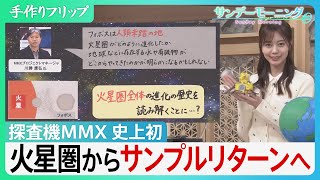
Japan has chosen a small, irregularly shaped moon orbiting Mars rather than the planet itself for its latest space exploration mission, taking advantage of Phobos' extremely weak gravity and lack of atmosphere to make collecting extraterrestrial samples and returning them to Earth far easier and less expensive, while potentially unlocking secrets about the history of Mars and the origins of water and organic materials in the solar system.