News On Japan

Subaru Unveils Advanced Driver Assistance System

TOKYO - Subaru unveiled experimental vehicles equipped with a new driver assistance system on October 18, introducing technology that can automatically guide a vehicle to a safe roadside location when the driver becomes incapacitated, with plans to introduce the system in production models by the late 2020s.

The Japanese automaker demonstrated the technology using a test vehicle that detected an abnormal condition affecting the driver and automatically pulled over to a safe position on the roadside.

Subaru already offers a feature in some models that automatically brings a vehicle to a stop within its current lane if the driver loses consciousness or becomes unable to operate the vehicle while driving.

The newly developed system expands on this capability by allowing the vehicle to move out of its lane and stop on the roadside, potentially reducing the risk of accidents involving other vehicles.

Subaru aims to introduce the enhanced driver assistance technology in commercially available vehicles by the end of the 2020s as part of its efforts to improve road safety.

The company also announced plans to significantly shorten the time required to develop new vehicles. While developing a new model currently takes several years, Subaru is working to reduce the development period by approximately 40% per vehicle through measures including the digitalization of its development processes.

Source: TBS

News On Japan
POPULAR NEWS

Japan launched a new national disaster management agency on November 2nd to strengthen its response to major emergencies, just days before a powerful earthquake struck Aichi Prefecture, injuring 24 people and renewing concerns over the possibility of a catastrophic Nankai Trough earthquake.

Northern Japan experienced record-breaking cold on the morning of November 11th, with temperatures plunging to minus 20.2 degrees Celsius in Horokanai, Hokkaido, marking the first time in Japan's recorded history that temperatures have fallen below minus 20 degrees during the first half of November.

East Japan Railway (JR East) announced on November 10th that it will introduce touch-free ticket gates at 40 stations, including every station on Tokyo's Yamanote Line, from spring 2028, allowing passengers using Mobile Suica to pass through without taking their smartphones out of their pockets or bags.

Japan's Children and Families Agency unveiled its first national guidelines on November 10th for parental involvement in children's internet use, dividing those aged 0 to 18 into six developmental stages as the government considers tighter regulations on social media platforms to protect young people from online bullying, exploitation, and other growing risks.

As of 3 a.m. on Wednesday, November 11, Typhoon No. 32 was moving east-northeast over waters east of Chichijima in the Ogasawara Islands, gradually heading away from the Japanese archipelago after passing near the island between late Tuesday night and early Wednesday morning.

MEDIA CHANNELS
         

MORE Sci-Tech NEWS

Japan's Antarctic research vessel Shirase departed from the Maritime Self-Defense Force's Yokosuka Base in Kanagawa Prefecture on November 11th, beginning a mission to support the country's 68th Antarctic Research Expedition, with the ship scheduled to reach Showa Station in late December before returning to Japan in April 2027.

The Japan Mint conducted its annual coin inspection at its headquarters in Osaka's Kita Ward on November 9, confirming that all 19,300 coins examined met the required weight standards.

Japan’s changing urban landscape reflects a complex relationship between its architectural heritage, demographic transition, and modernization ambitions.

Scientists at Toyo University have identified a possible weakness in alligator weed, an invasive aquatic plant described as one of the world's worst, raising hopes of finding a way to control its extraordinary ability to regenerate as it spreads through Japan's waterways, threatens agricultural land, and creates growing concerns about flooding.

Japanese pharmaceutical company Sumitomo Pharma announced on October 30 that the first patient to receive its newly approved regenerative medicine treatment for Parkinson's disease underwent a successful brain cell transplant at Kyoto University Hospital in early October, with the woman in her 50s already returning to work and recovering well.

Japan's ports have long been the backbone of one of the world's most export-driven economies.

A company in Kagoshima has developed a new garbage collection station that uses specially shaped wires and rollers instead of conventional nets to prevent crows from scattering household waste, offering a cleaner and more convenient solution to a persistent problem in Japan's urban neighborhoods.

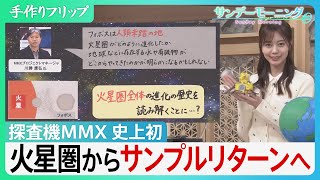
Japan has chosen a small, irregularly shaped moon orbiting Mars rather than the planet itself for its latest space exploration mission, taking advantage of Phobos' extremely weak gravity and lack of atmosphere to make collecting extraterrestrial samples and returning them to Earth far easier and less expensive, while potentially unlocking secrets about the history of Mars and the origins of water and organic materials in the solar system.