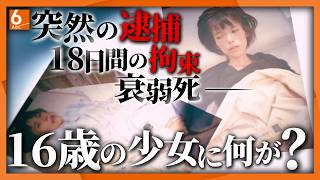
KOBE - The family of a 16-year-old girl who died from severe malnutrition six months after being arrested and detained for 18 days over an assault allegation she denied has launched a lawsuit against Hyogo Prefecture and the Japanese government, with the first hearing held at Kobe District Court on October 21, as a separate case involving a 12-year-old girl has raised further questions about interrogation practices at the same police station.
The teenager, identified as Luna, died in December 2025 after her weight had fallen to just 19 kilograms. She had been diagnosed with post-traumatic stress disorder (PTSD) following her release from detention, and her family alleges that unlawful police and prosecutorial actions contributed to her physical and psychological deterioration.
Luna had followed in the footsteps of her mother, who had worked in disability welfare for many years, and began working at a support facility for people with disabilities after graduating from junior high school.
In June 2025, she was arrested by Hyogo Prefectural Police on suspicion of assaulting a facility resident during an event by repeatedly pressing against the person's jaw. Luna consistently denied the allegation, saying she had no recollection of doing anything resembling the alleged assault.
Despite her denial, she was held in custody for 18 days. Following her release, her mental and physical health deteriorated, and she died six months after her arrest.
Her family subsequently filed a damages lawsuit against Hyogo Prefecture and the national government, arguing that the police investigation, detention and prosecutorial procedures had been unlawful and had ultimately contributed to her death.
At the first hearing on October 21, Luna's mother appeared in court dressed entirely in white, explaining that the clothing represented her determination to establish her daughter's innocence.
"I have always believed that the police and prosecutors are there to help people and protect lives and human rights," she told the court. "I want to know why it was necessary to deprive my daughter of her freedom. I demand that the facts and the grounds for that decision be made clear."
The family also raised concerns about Luna's treatment while in custody.
According to her mother, Luna had described being pressured by detention officers to eat despite being physically unable to do so. Officers allegedly told her that refusing food would make them responsible for her condition.
Notes Luna wrote while detained described investigators repeatedly demanding that she confess to the alleged assault.
"You really did it, didn't you? Tell the truth. You'll feel better if you admit it now," one officer allegedly told her.
Her notes also recorded her emotional distress, including her desire to leave detention and return to her family.
"I can't take this anymore. I want to see everyone again. Mom, I want to see you. I'm sorry," she wrote.
The allegation that led to Luna's arrest had originated with a facility resident with an intellectual disability who reported an incident to municipal authorities.
However, three months after Luna's death, her mother received a letter from the resident acknowledging that the original account had been exaggerated.
"I reported it as abuse even though I wasn't sure whether it was abuse. I exaggerated what happened," the letter stated.
Luna's family said prosecutors had informed them only that the case would not proceed, without providing a satisfactory explanation of the decision or the circumstances of her detention.
Hyogo Prefecture and the national government have indicated that they will contest the lawsuit and have asked the court to dismiss the family's claims.
Following the hearing, Hyogo Prefectural Police maintained that the investigation and treatment of Luna during detention did not constitute unlawful conduct under Japan's State Redress Act.
The case has also brought renewed attention to a separate incident involving a 12-year-old sixth-grade girl who was questioned at the same police station more than a year before Luna's arrest.
The girl, identified here as Amane, was summoned to Akashi Police Station in February 2024 after officers contacted her mother and requested that she bring her daughter in for questioning about trouble at school.
Amane and her mother arrived at approximately 4:30 p.m. and were taken to separate rooms.
According to her mother, officers immediately alleged that Amane had been involved with several classmates in repeatedly touching a male pupil's private parts.
Police claimed the boy had been touched more than 10 times.
The allegation shocked Amane's mother, who initially believed the police must have obtained reliable evidence before summoning her daughter.
"I thought police officers wouldn't lie about something like that," she recalled. "I was terribly shaken, and I feel sorry for my daughter because I actually began to suspect her."
Amane, meanwhile, was questioned alone by a female police officer after her belongings were searched.
The officer asked whether she had touched the boy's lower body. Amane denied doing so but, as questioning continued, remembered that she had struck him while playing tag during a school trip.
She attempted to explain the incident, but the officer allegedly treated her account as confirmation of the original accusation.
Amane recalled feeling increasingly frightened while alone with an adult officer in a small room.
The questioning continued, with the officer allegedly insisting that she could not have forgotten such an incident and telling her that her mother had been crying.
"You wouldn't forget if you had done something like that. Your mother was crying. I think you should tell us," the officer allegedly said.
Under the pressure, Amane began to doubt her own memory.
She said she considered herself forgetful and gradually became concerned that she might have done something without remembering it.
Eventually, she told the officer that the alleged conduct might have occurred.
Amane was then instructed to write an account of what she had done.
According to her testimony, the officer told her that hitting someone and touching them were effectively the same thing and instructed her to write that she had touched the boy.
Although Amane believed she had not committed the alleged act, she complied.
"I wondered why she kept telling me to write it, but at that point I felt I had to write what the officer wanted," she recalled. "I knew I hadn't done it, but I wrote it anyway. I thought I couldn't go home unless I did."
By the time the interrogation ended at approximately 8 p.m., Amane had spent three and a half hours at the police station.
She said she had lost track of time, noticed that it had become dark outside and was desperate to return home.
During the questioning, police also reportedly took six photographs of her in a manner resembling the photographing of a criminal suspect.
The procedures have raised questions about whether officers complied with national guidelines governing police interactions with children.
According to the National Police Agency, photographing juveniles during investigations can impose a substantial psychological burden. Such photography is generally prohibited except when unavoidable and when consent has been obtained from both the juvenile and their guardian.
The agency has also instructed police departments nationwide to avoid questioning children under the age of 14 late at night or for extended periods.
Amane's parents subsequently visited Akashi Police Station repeatedly to protest the questioning and seek an explanation.
During one visit, officers acknowledged that doubts had emerged about the credibility of the boy's original allegation.
Police said they had questioned several classmates, all of whom denied the alleged conduct, raising questions about whether the boy's account was accurate.
Amane's mother said she was astonished that her daughter had been treated as a suspect without firmer evidence.
"I thought they must have solid evidence before accusing someone," she said. "But apparently that wasn't the case. I was frightened that a child could be summoned and treated like a criminal so easily."
Despite repeated visits to the station, the family said it received neither a satisfactory explanation nor an apology.
When contacted about Amane's case, Hyogo Prefectural Police said the photographs taken during questioning had been deleted and maintained that there had been no problems with the interrogation.
The family later learned of Luna's arrest and death at the same police station and was deeply disturbed by the similarities between the two cases.
Amane's mother said she was particularly distressed that Luna's treatment had occurred after her own family had repeatedly complained about police questioning practices.
"We protested, so why didn't things improve even a little?" she asked. "I cannot accept that a child had to die. For a mother, the idea of a child never coming home is unbearable."
A lawyer identified as Kawamura, who has handled numerous juvenile cases over approximately 20 years, warned that children are particularly vulnerable to pressure during police questioning because they have not yet developed the confidence and ability to assert themselves in the same way as adults.
Children may agree with investigators' suggestions even when the statements are inaccurate, particularly when questioning is conducted by officers without specialized training in dealing with minors, Kawamura said.
The lawyer argued that police officers should receive appropriate training before questioning children and that applying conventional adult interrogation methods to juveniles creates serious risks.
Kawamura also suggested that other cases of inappropriate questioning may remain undisclosed.
Children under the age of criminal responsibility rarely have legal representation during police investigations, and parents may accept official accounts or feel powerless to challenge the authorities.
Some families may remain silent because they believe their child was at fault, while others may fear confronting the police.
The lawyer said these circumstances could allow questionable investigative practices to continue without public scrutiny.
After learning about Luna's case through news coverage, Amane and her mother began exchanging letters with Luna's family.
In her initial letter, Amane's mother expressed shock at what had happened and explained that her own daughter had also been suddenly summoned and questioned by officers at the same station.
The correspondence eventually brought the two families together.
On October 21, Amane's mother attended the proceedings at Kobe District Court to support Luna's mother, meeting her in person for the first time.
The two women spoke about the distress their daughters had experienced and the difficulty of being believed when challenging police accounts.
Amane's mother encouraged Luna's mother to continue seeking answers, saying she understood the pain of watching a child suffer after being accused of something they had not done.
Luna's mother thanked her for the letters and support, saying they had helped give her the strength to pursue the case.
Another family whose daughter was questioned in connection with Amane's school incident has also reported lasting psychological consequences.
According to the girl's mother, her daughter emerged from the police station asking whether police officers were allowed to lie.
The girl reportedly continues to become anxious when she sees police officers or patrol cars, suggesting that the experience has damaged her trust in law enforcement.
The incident has raised concerns that children who lose confidence in police may later hesitate to seek help if they become victims of crime.
For Luna's mother, the lawsuit is not only an effort to establish what happened to her daughter but also a campaign to prevent other families from experiencing similar tragedies.
She recalled that even as Luna's health deteriorated following her release, the teenager had said she would forgive the police if they apologized.
Her mother said she was deeply moved by her daughter's willingness to forgive despite everything she had experienced.
"She said she could forgive them if they apologized," she recalled. "That shocked me. After suffering so much, she was still able to say she would forgive them."
Luna's mother said she would continue presenting her daughter's account regardless of how strongly the police, prosecutors or government disputed it.
"No matter how much the government, police or prosecutors deny it, I will keep telling people exactly what my daughter said," she said. "I will continue until they understand."
She hopes the proceedings will establish why Luna was arrested and detained, clarify the circumstances surrounding her death, and lead to changes in the way police investigate allegations involving children.
Source: TBS