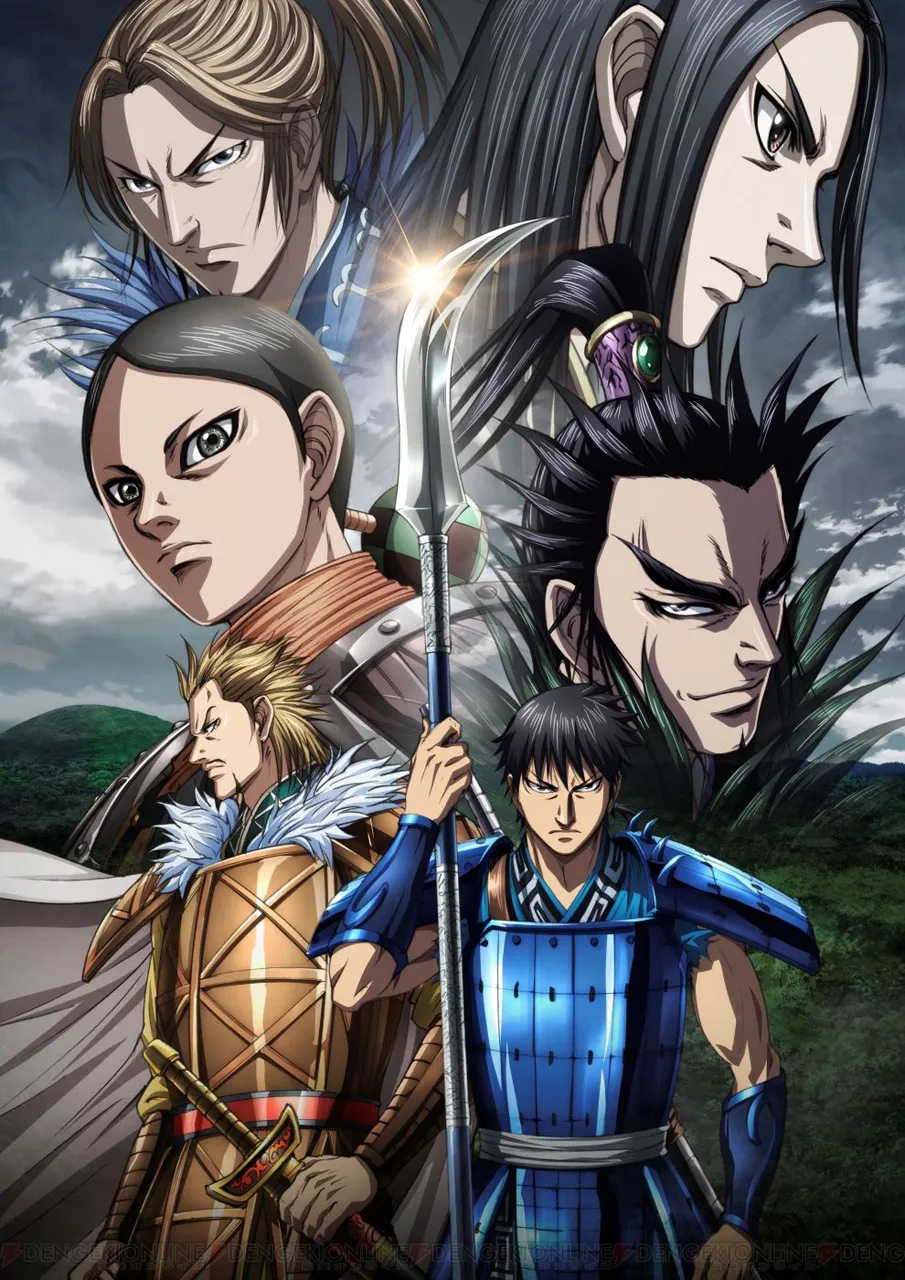
TOKYO - The highly anticipated Season 5, Episode 10 of the TV anime "Kingdom," titled "The Roar of Pride," has aired, surprising viewers with its barbaric war scenes.
In episode 9, Shin managed to slay Keisha, the supreme commander of the Zhao forces. Just when it seemed the battle at Kokuyou Hills might be concluded, the resistance led by Kisui and Kinmou continues, with the battle remaining in a deadlock. Frankly, the Zhao army, choosing a hardline strategy to conceal Keisha's death, seemed to have the upper hand. Unlike the cautious Keisha, Kisui opts for a more brute force approach. With the enemy's tactics changing so suddenly, it's inevitable that the Kanki army, facing them, would be caught off guard.
The scene where Kisui's cavalry charges down the cliffs was so overpowered that it was almost laughable. The soldiers of Rigan are overwhelming. It's admirable how Kanki's troops, including Kokuyou and Maron, do not retreat a single step against such foes.
Then, the orders from Kanki to his troops brought not just a weird laugh but almost tears to my eyes. The content of the orders, which seemed to negate the four days of battle so far, made one wonder what exactly Kanki was thinking. It's surprising how Kokuyou and the others could follow such orders...
As I was thinking this, sure enough, everyone became extremely grumpy, and I couldn't help a wry smile. That order is truly incomprehensible. It's only natural that Raido, who rarely confronts Kanki, would snap back at him.
However, Kanki's remark to the approaching Raido, "Haven't you guys started thinking too much like the military after being with it for so long?" sent chills down my spine. Raido and the others seemed flustered, as if he had hit the nail on the head.
Reflecting on their past, these men were originally a band of bandits. They climbed to where they are now with a cunning different from that of a regular army. As their time with the military grew longer, they began to forget their strengths, but Kanki, who leads them, has not lost sight of his essence, which is unsettling.
As a result, the Kanki army spends its days in a horrifying series of torture, looting, and massacres. And their target is not the Zhao army but the civilian villages scattered around Kokuyou. Incredibly, they burn down the villages and kill the inhabitants, then carry their bodies somewhere. With Kisui's forces steadily fortifying the central hill, should they really be doing this?
The bizarre and barbaric actions are filling my head with question marks! The story took a dramatic turn when Shin and Kyoukai discovered their atrocious acts. Kanki's forces had attacked the village where Kon, the old lady who had helped Kyoukai when she was injured, lived. Shin, rushing to the scene and witnessing this, felt a bitter taste in his mouth despite a sense of relief.
Could this be leading to a confrontation between the Feixin Unit and the Kanki army? And the actions Shin and Kyoukai took in their enraged state seem too dangerous to control! The last five minutes of the episode were so rapidly developed that I could barely keep up. I can't wait for the next episode!
As usual, I will highlight some points of interest as a fan. Be warned that the following contains even more spoilers. Point of interest 1: The confrontation between Kanki and Shin. Could the "exchange of soldiers" that happened before the war have significant implications in this explosive situation? I'm most curious about how the "exchange of soldiers" that took place before the war will affect this critical juncture. From the Feixin Unit to the Kanki army, Bihei has been sent, and from the Kanki army to the Feixin Unit, Naki has been temporarily transferred under the guise of an exchange of generals.
Naki seems to have been dyed in the colors of the Feixin Unit, such as covering for Shin with his body when he cornered Keisha. On the other hand, Bihei... There's no doubt he's also being influenced by the Kanki army. He was handed an amethyst bracelet, found in the corner of a burned village, by a soldier of the Kanki army. Of course, Bihei tried to refuse, but in the end, he accepted it somewhat nonchalantly.
This is concerning. The amethyst bracelet is strikingly similar to the charm that Kon-baasan mentioned she would make for Kyoukai... It's unsettling. Honestly, it's incredibly ominous, and there's bound to be trouble! I can't take my eyes off what this action by Bihei will lead to. Point of interest 2: Kyoukai's rage! But killing allies is... As I mentioned earlier, Kyoukai, having witnessed the massacre by Kanki's forces, was so enraged that she immediately cut down several of his soldiers without hesitation. Kyoukai, always calm but with a fiery spirit, could not help but draw her sword upon finding Kon-baasan's body. Her actions are right as a person.
However, this is a "military" setting. Considering the importance of discipline, killing one's comrades is a serious crime... Is this really okay? Afterward, Shin and Kyoukai rush into Kanki's camp together to denounce the massacre. Seeing the Kanki army's unshaken demeanor, I felt a cold sweat running down my back. This is practically enemy territory! The atmosphere is too thin, and just watching makes it hard to breathe!!
Even with Kyoukai's sword at his throat, Kanki does not show the slightest sign of panic, and his intentions remain unfathomable. What is he thinking? Although I expect it to be revealed in future episodes, even if there is a significant reason, I can't see Shin and Kyoukai backing down. With the Qin army in a fratricidal state in front of the enemy, how they will resolve this situation is truly something to look forward to.
Source: Dengeki