News On Japan

Osaka Expo to Unveil World’s First Glowing Plants

OSAKA, Jan 23 (News On Japan) - Glowing plants will make their debut at the Osaka-Kansai Expo set to open in April this year.

The plants, which emit a green glow in the dark, are from the Solanaceae family, specifically the tobacco plant. According to Professor Kenji Nagai of Osaka University, the glow is achieved by incorporating luminescent mushroom genes into the plant's cells, enabling them to emit light independently.

The glowing plants will be unveiled for the first time at the Osaka-Kansai Expo, under the exhibition concept of "Future Wabi-Sabi." Visitors will have the chance to experience these plants in a space designed to evoke the ambiance of a traditional tea room.

Professor Nagai of Osaka University’s Institute of Scientific and Industrial Research commented: "We invite visitors to see what the world’s first glowing plants look like."

Professor Nagai and his team aim to enhance the brightness of these plants further and hope to make them practical for use as streetlights and other forms of lighting within the next decade.

Source: MBS

News On Japan
POPULAR NEWS

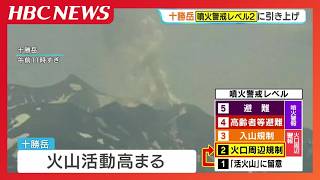
The eruption alert level for Mount Tokachidake in Hokkaido was raised to Level 2 on June 18 for the first time in 12 years, prompting authorities to restrict entry within 1.5 kilometers of the crater and close parts of hiking trails just days before the mountain’s official opening for the summer climbing season.

Bear attacks and sightings are increasing across Japan, with multiple people injured on June 17 and experts warning that bears are becoming more accustomed to human environments, potentially leading to more dangerous and unpredictable encounters in the years ahead.

JR Central and JR West on June 17 announced pricing and service details for the new private-room seating that will be introduced on the Tokaido and Sanyo Shinkansen from October, creating a new top-tier class above the existing Green Car service.

A draft of the joint statement from the G7 summit in France has revealed that all proposals put forward by Prime Minister Takaichi on energy security and critical minerals have been incorporated into the agreement.

A Japanese man suspected of serving as a key coordinator for a Cambodia-based fraud syndicate that allegedly caused losses totaling billions of yen was arrested by Japanese authorities after being deported from Thailand on June 16.

MEDIA CHANNELS
         

MORE Sci-Tech NEWS

A Japanese startup is seeking to transform manufacturing inspections with a world-first lighting technology that eliminates reflected light, making previously hidden defects, contaminants, and irregularities visible to the human eye.

You likely interact with Japanese innovation daily without realizing it. Walk through any modern facility, and you encounter systems where hardware and software fuse flawlessly.

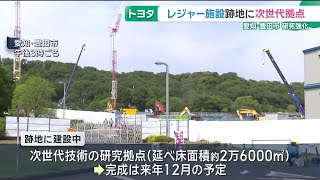
Toyota Motor will establish a next-generation technology research hub on the site of a former leisure complex in Toyota City, Aichi Prefecture, as part of its efforts to accelerate innovation in future mobility and related fields.

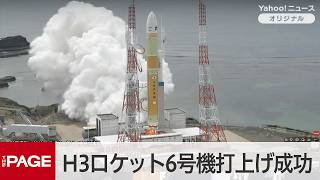
Japan's H3 Rocket No. 6 lifted off from the Tanegashima Space Center in Kagoshima Prefecture at 9:53 a.m. on June 12, marking the first launch in about six months since the failure of H3 Rocket No. 8 and a critical step toward the full resumption of operational flights.

Weeds, often seen as symbols of toughness and perseverance, may in fact survive not because they are strong, but because they have developed highly efficient strategies that avoid unnecessary competition and maximize their chances of reproduction, according to recent research.

Three people in their 20s and 30s living in Osaka Prefecture and other areas were referred to prosecutors on June 2nd for allegedly illegally selling and transferring the type 2 diabetes drug Mounjaro without the required authorization, as concerns grow over the drug's popularity as a weight-loss treatment and the health risks associated with its misuse.

A hot spring lodging facility in Akita Prefecture has introduced a biomass boiler that uses rice husks and buckwheat hulls as fuel, reducing reliance on expensive kerosene while creating a new use for agricultural waste.

The Japanese government has unveiled a draft target to replace between two and five nuclear reactors by the 2040s, marking the first time numerical goals for nuclear power development have been presented since the Fukushima Daiichi nuclear disaster 15 years ago.