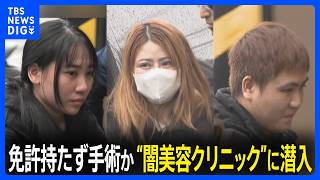
TOKYO - Three Vietnamese nationals have been arrested on suspicion of repeatedly performing cosmetic surgery without medical licenses, highlighting the dangers of underground beauty clinics as complaints over cosmetic procedures continue to rise sharply in Japan.
Those arrested include Nguyen Thi Hue, 34, and her husband, Dang Xuan Thanh, 31, along with a third suspect.
According to police, the suspects allegedly performed a procedure in January 2026 on a then 47-year-old woman to correct sagging eyelids, making incisions below her eyebrows despite having no medical licenses. Police have not disclosed whether the three have admitted to the allegations.
An undercover investigation conducted in June revealed the operations of an illegal cosmetic surgery clinic where unlicensed procedures were allegedly performed regularly.
The clinic operated out of a residential apartment, with two treatment beds arranged in a room measuring approximately 10 square meters.
When asked about a procedure to make a nose smaller, Nguyen suggested surgery before claiming that injections could also achieve the desired result.
Asked about making lips fuller, Nguyen recommended hyaluronic acid injections, warning that the procedure would be painful and quoting a price of 15,000 yen.
No explanation of the potential medical risks was provided, with Nguyen outlining only the proposed procedures and their costs.
Three women believed to be customers were present in the apartment at the time. Nguyen was also filmed using a syringe to inject an unidentified substance into the area around a customer's facial contours. All of these procedures are believed to have been performed without a medical license.
Cosmetic procedures have become increasingly popular in Japan, particularly among younger generations, with treatments ranging from skin rejuvenation to facial enhancements.
One vocational school student said she had undergone skin treatments and received hyaluronic acid injections to enhance the fullness beneath her eyes.
However, the number of consultations concerning cosmetic procedures has increased sharply in recent years, including cases involving patients who underwent treatments without fully understanding the risks and subsequently experienced complications or other problems.
The discovery of an underground cosmetic surgery clinic in Nagoya has exposed a largely hidden side of Japan's expanding beauty industry, with unlicensed operators offering facial injections and surgical procedures in residential apartments and attracting customers through social media.
Aichi prefectural police arrested the three suspects on November 24 after receiving a complaint from a woman who underwent cosmetic surgery at an apartment in Nagoya's Minami Ward in January. The woman reported that she was unable to close her eyes properly following the procedure and continued to suffer from dry eyes.
Police seized approximately 10 million yen in cash believed to be proceeds from the business during searches of premises connected to the suspects.
Investigators believe the group had been performing unlicensed cosmetic procedures since at least August 2025, periodically changing treatment locations and recruiting customers, primarily foreign residents, through social media.
The operators allegedly used Facebook and other platforms to livestream procedures, while promotional videos featured medical instruments and explanations of treatments designed to reshape noses and create double eyelids.
FNNプライムオンライン+2
The Nagoya case is not an isolated incident. Police across Japan have uncovered similar operations in recent years, with procedures ranging from facial filler injections to cosmetic surgery involving incisions.
In November 2021, Hyogo prefectural police arrested two Vietnamese nationals suspected of performing double-eyelid surgery on two women at a hotel in Osaka. The procedures reportedly cost several tens of thousands of yen, compared with the 200,000 to 300,000 yen typically charged for comparable surgery at Japanese medical institutions at the time. One customer reportedly developed swollen eyelids.
In February 2023, another Vietnamese woman was arrested in Hyogo Prefecture on suspicion of performing cosmetic procedures at her apartment. She allegedly received approximately 230,000 yen from three Vietnamese women in their teens and 20s for procedures that included facial injections of hyaluronic acid.
A similar case emerged in Kumamoto in 2024, when a woman was arrested on suspicion of injecting an unidentified liquid near another woman's temple without a medical license.
kobe-np.co.jp+2
These cases illustrate how cosmetic procedures can be offered outside established medical institutions, with residential apartments and hotel rooms serving as temporary treatment facilities.
Social media has made it possible for operators to reach potential customers without maintaining a permanent clinic or publicly identifiable business premises. Before-and-after photographs, promotional videos and personal recommendations can create an impression of professional expertise even when the person performing the treatment has no recognized medical qualifications.
For foreign residents in Japan, the availability of consultations in their native language, potentially lower prices and recommendations within their communities may make such services attractive. However, the overall size of Japan's underground cosmetic surgery market remains unknown, and individual arrests do not establish how widespread these operations are.
Under Japan's Medical Practitioners Act, individuals without a medical license are prohibited from engaging in medical practice. This includes cosmetic procedures that require medical knowledge and technical skills to prevent harm to the human body.
Violators face up to three years in prison, a fine of up to 1 million yen, or both. Heavier fines can apply to offenders who falsely present themselves as doctors.
厚生労働省+1
The distinction between ordinary beauty treatments and medical procedures is particularly important as the cosmetic industry increasingly promotes minimally invasive treatments that do not require major surgery.
Although facial injections are often marketed as quick and relatively simple procedures, they carry potentially serious medical risks. Hyaluronic acid injections, commonly used to enlarge lips, reshape facial contours and reduce wrinkles, can cause infections, allergic reactions, persistent swelling and the formation of lumps beneath the skin.
In more serious cases, filler material can inadvertently enter a blood vessel, interrupting the blood supply to surrounding tissue. Such complications can result in permanent scarring, tissue death, blindness or even a stroke.
FDA
Procedures involving incisions around the eyes carry additional risks, including damage to surrounding tissue, impaired eyelid movement, infections and permanent changes to facial appearance.
Unlike properly equipped medical institutions, underground clinics may lack the necessary emergency medication, sterilization equipment and trained personnel to respond to complications. Patients may also have difficulty establishing precisely what substances were injected into their bodies, particularly if products were obtained through unauthorized distribution channels or administered without proper medical documentation.
The absence of reliable medical records can further complicate subsequent treatment at legitimate hospitals, where doctors may be unable to determine the type or quantity of substances previously administered.
The financial consequences can also be substantial. Patients attracted by inexpensive procedures may ultimately face considerable medical expenses for corrective surgery or prolonged treatment.
Japan's broader cosmetic medicine industry has also come under increasing scrutiny as consumer complaints have risen substantially over recent years.
According to the National Consumer Affairs Center of Japan, consultations regarding cosmetic medical services increased from 6,281 in fiscal 2023 to 10,744 in fiscal 2024, representing an increase of approximately 71%. The figure declined to 7,944 in fiscal 2025 but remained considerably above the fiscal 2023 level.
These figures cover cosmetic medical services generally, rather than underground clinics specifically, and include disputes over contracts, misleading advertising, unexpected charges and physical complications.
Reported cases include patients who suffered facial asymmetry and permanent scars following facelift procedures, developed drooping eyelids after Botox injections, or agreed to expensive treatments without receiving adequate explanations of potential side effects.
Other complaints involve customers being pressured into signing contracts on the day of their initial consultation, often through offers of substantial discounts that are presented as available for a limited time.
kokusen.go.jp+1
The proliferation of social media has also changed how cosmetic treatments are marketed and perceived. Procedures that were once regarded as major personal decisions are increasingly presented online as routine beauty treatments, alongside skincare, hairstyling and fashion.
Short videos showing dramatic changes in appearance can obscure the recovery period, potential complications and limitations of cosmetic procedures. Digitally altered photographs and beauty filters may also contribute to unrealistic expectations about facial appearance.
The growing popularity of treatments among young people has raised particular concerns about consumers making decisions without fully appreciating the long-term consequences.
Japan's Ministry of Health, Labor and Welfare has been working to strengthen oversight of cosmetic medicine, including clarifying the legal boundaries between medical consultations and sales activities conducted by unqualified staff.
In November 2024, a government-appointed panel compiled a report identifying problems within the cosmetic medical industry, including cases in which unqualified counselors effectively determined treatment plans without appropriate medical involvement.
The ministry issued further guidance in August 2025, clarifying that individuals without medical qualifications who independently determine medical treatment plans may be violating the Medical Practitioners Act.
The government has also moved to introduce a reporting and disclosure system for medical institutions providing cosmetic treatments, intended to improve transparency regarding patient safety measures, professional qualifications and complaint-handling arrangements.
厚生労働省+2
Authorities have extended their attention beyond conventional cosmetic surgery to other treatments increasingly offered at beauty salons.
Medical laser hair removal, high-intensity focused ultrasound treatments and permanent makeup procedures involving the insertion of pigment into the skin fall within medical regulations when performed under the conditions specified by the health ministry.
In December 2025, the ministry reiterated that performing permanent makeup procedures professionally without a medical license constitutes a violation of the law. Such treatments include eyebrow pigmentation, permanent eyeliner and lip coloring.
その美容医療、ちょっと待って! │ 厚生労働省+1
Consumers considering cosmetic procedures are encouraged to verify the qualifications of practitioners through the health ministry's online medical license verification system and establish whether the facility is a properly registered medical institution.
Authorities also recommend obtaining a clear explanation of the treatment, its expected effectiveness, potential complications, recovery period, total cost and arrangements for follow-up care before agreeing to any procedure.
Particular caution is warranted when operators offer treatments at private residences or temporary premises, refuse to disclose their medical qualifications, cannot provide information about the products being administered, or offer unusually inexpensive procedures without explaining the associated risks.
Japan's consumer protection framework provides cooling-off periods and cancellation rights for certain qualifying cosmetic medical service contracts. However, recovering payments or obtaining compensation from underground operators may prove considerably more difficult, especially when businesses have no permanent address or disappear following complaints.
licenseif.mhlw.go.jp+1
The emergence of underground cosmetic clinics highlights a widening gap between the accessibility of cosmetic treatments and public understanding of their medical consequences. While injections and minor surgical procedures are increasingly marketed as convenient and affordable ways to improve appearance, the underlying medical risks remain unchanged.
For authorities, the challenge extends beyond identifying individual illegal operators. Preventing further harm will require effective enforcement of medical licensing laws, greater transparency across the cosmetic medicine industry, accessible information for foreign residents and improved public awareness of the potentially irreversible consequences of treatments performed by unqualified individuals.
Source: TBS