News On Japan

Nadeshiko Japan's Bold Vision for Women's Soccer

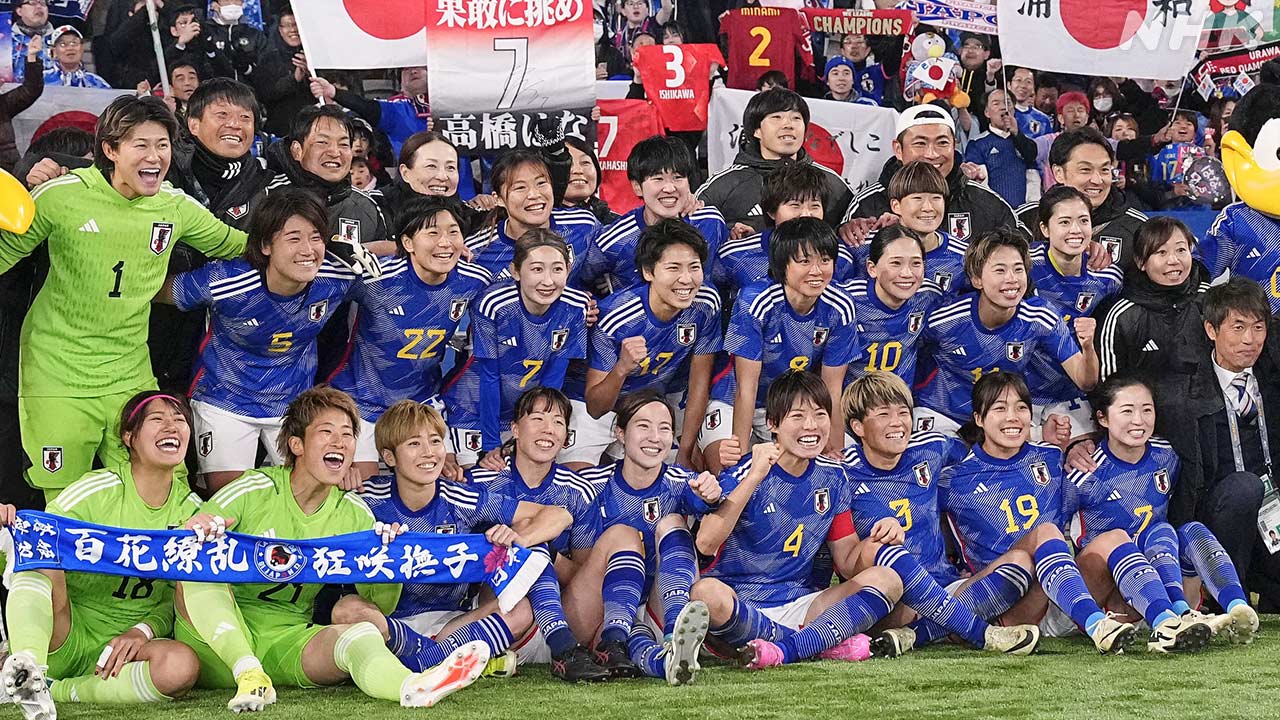
TOKYO - Nadeshiko Japan has secured their ticket to Paris with gritty, united team play.
Nadeshiko Japan's Bold Vision for Women's Soccer

The venue for the first leg of the final qualifier was changed from Pyongyang, the capital of North Korea, to Saudi Arabia, which was announced only three days before the match. While North Korea had prepared for the match with a long-term training camp in a relatively warm area of China, Japan struggled with the change of venue, causing delays in the integration of overseas-based players and preventing satisfactory preparations.

The first leg was a tough draw In the first leg, North Korea, having studied Japan's play, adopted an unexpected defensive strategy, and Japan barely managed to create any chances, resulting in a draw.

Japan seemed less than perfect in tactical penetration and player conditioning compared to North Korea.

Formation changes for the second leg Then, with only three days until the second leg, Japan changed their formation to a three-back defense line to increase the number of attackers. The team chose a strategy that involved the side players actively joining the attack. However, what led to the victory was not just these tactical changes, but the "determination to win" shared among the players.

Hana Takahashi pushes in the first goal with gritty play In the 26th minute of the first half, Hikaru Kitagawa, who was selected to start, connected a free kick, and after Mina Tanaka's header shot was repelled by the crossbar, Hana Takahashi pushed in the ball with a gritty effort to take the lead.

Goalkeeper Annya Yamashita shows great defense On defense, goalkeeper Annya Yamashita made a big play by just managing to clear an opponent's shot off the goal line, and the defense put their bodies on the line to protect the goal. After the match, captain Saki Kumagai looked relieved as she reflected on the game.

Captain Saki Kumagai: "I'm not usually a fan of just saying it's all about fighting spirit, but today, I think the whole team confirmed their desire to win before the game and managed to bring that to our play."

After the 2011 World Cup victory, which sparked the "Nadeshiko fever," Japanese women's soccer experienced a decline, missing out on the Rio de Janeiro Olympics in 2016 after losing in the Asian final qualifiers.

On this day, 27,777 spectators visited the National Stadium. It was unusual for a domestic game of "Nadeshiko Japan" to attract over 20,000 spectators. In front of a large crowd, the players of "Nadeshiko Japan" showed spirited play, and this victory was not only about securing a spot in the Paris Olympics but also a significant win that sheds light on the revival of popularity for women's soccer.

Source: NHK

News On Japan
POPULAR NEWS

Japan began applying a new numerical alcohol threshold for dangerous driving offenses on July 21, introducing a clearer standard for cases involving impaired driving that could lead to fatal accidents.

Prime Minister Sanae Takaichi's government approved its first annual basic economic and fiscal policy on Tuesday, pledging "responsible and proactive fiscal policy" and envisioning about 370 trillion yen in public- and private-sector investment in strategic industries through fiscal 2040.

A covert network of shuttle tankers is carrying crude through the increasingly dangerous Strait of Hormuz as renewed fighting between the United States and Iran disrupts shipping and raises concerns over how Japan will secure the oil it needs.

Russian Deputy Foreign Minister Andrey Rudenko has criticized moves by Japanese and Ukrainian companies to cooperate on drone technology, warning that such ties would be regarded by Moscow as a "clear hostile act."

The rainy season ended in the Kanto-Koshin and Tokai regions on July 20 as strengthening high pressure brought intense heat across Japan, with temperatures forecast to reach 38 C in Kumagaya, Saitama Prefecture, and Kofu.

MEDIA CHANNELS
         

MORE Sports NEWS

Japan's largest pickleball facility has opened in Higashiizu, Shizuoka Prefecture, with 20 courts available by reservation as the town seeks to establish itself as a leading destination for the fast-growing sport.

Foreign tourists are filling an interactive sumo show venue in Tokyo’s Asakusa district, where former wrestlers introduce the basics, rules and history of the sport in English as Japan’s traditional pastime enjoys growing popularity at home and abroad.

Waseda Jitsugyo held off a ninth-inning rally by Hachioji to win a first-round showdown between two schools with Koshien experience in the West Tokyo high school baseball tournament on July 10.

Japan national soccer team coach Hajime Moriyasu, captain Ko Itakura of Ajax, Daizen Maeda of Celtic, Yukinari Sugawara of Bremen and Japan Football Association President Tsuneyasu Miyamoto visited Education, Culture, Sports, Science and Technology Minister Yohei Matsumoto on July 8 following Japan's campaign at the FIFA World Cup hosted by the United States, Canada and Mexico.

Shohei Ohtani of the Los Angeles Dodgers became the first Japanese player to reach 300 career home runs in Major League Baseball, hitting a solo shot in the first inning against the Colorado Rockies in Los Angeles on July 7.

Shonan Galleon, a 210 million yen colt by Flightline, made a striking debut at Hakodate Racecourse on Sunday, July 5, winning the fifth race over 1,800 meters on turf in record time for a 2-year-old on the course.

Two yokozuna seeking to rebound after time away from the ring drew loud cheers from about 5,000 spectators on July 4 as they performed the traditional ceremonial ring entry at Atsuta Shrine in Nagoya ahead of the Nagoya Grand Sumo Tournament.

Some names change the game, and Conor McGregor is one of them.