News On Japan

PM Ishiba Under Fire Over 100,000 Yen Vouchers

TOKYO - The controversy surrounding Prime Minister Ishiba’s 100,000-yen voucher program continued to face scrutiny in the Diet on Monday, with opposition parties intensifying their criticism. Within the ruling party, concerns are mounting that Ishiba may be an electoral liability.

Takahiro Inoue, a news anchor, remarked, “In Nagatacho, the saying goes, ‘What is common sense in politics is nonsense to the public.’ This case seems to be a perfect example.”

Ordinarily, opposition parties demand a prime minister’s resignation, while the ruling party defends its leader. However, this time, the roles appear reversed.

On March 16th, Constitutional Democratic Party leader Yoshihiko Noda stated, “We will not simply call for his resignation. The Liberal Democratic Party would welcome a leadership change ahead of the Upper House election, so we won’t make it that easy for them.” Instead of seeking Ishiba’s resignation, the opposition is focusing on intensifying their criticism.

Meanwhile, within the ruling coalition, some upper house members are calling for Ishiba to take responsibility, arguing that “we cannot fight an election with him in charge.”

According to TBS political correspondent Teppei Nakajima, who previously produced a documentary on Ishiba, the opposition prefers to keep Ishiba in office, believing he would be easier to challenge in the upcoming election. Instead of filing a no-confidence motion, they plan to continue pressing him in the Diet to weaken his position ahead of the vote.

For the ruling Liberal Democratic Party, concerns are growing that the current situation could cost them the election, making the timing of a potential leadership challenge against Ishiba a key issue.

Nakajima, who has covered Ishiba for years, noted, “The prime minister believes his actions do not constitute a legal violation. He likely hopes to continue in office by providing careful explanations.”

Ishiba has expressed regret, stating, “I am truly sorry.” However, even if he were to step down, it remains unclear who would succeed him.

Inoue added, “Ishiba was once considered the right person to lead a minority government. Whether that assessment changes remains to be seen. The political maneuvering between the ruling and opposition parties is set to escalate in the Diet as the election approaches.”

Source: TBS

News On Japan
POPULAR NEWS

Japan’s World Cup campaign ended in the cruelest possible fashion on June 29, as Gabriel Martinelli scored in the fifth minute of stoppage time to give Brazil a 2-1 victory over the Samurai Blue in their knockout match in Houston. Japan had led in the first half and were still level at 1-1 in the final moments, but Martinelli’s late strike sent Brazil into the Round of 16 and eliminated Japan from the tournament.

Strong earthquakes have continued to shake parts of Japan in recent weeks, with 11 temblors measuring lower 5 or above on the Japanese seismic intensity scale recorded across the country since April 2026.

A Kintetsu Railway train derailed inside Kyoto Station on the morning of June 29, forcing partial suspensions on the Kintetsu Kyoto Line for the rest of the day and causing long delays that hit commuters, students and tourists.

A section of stone wall at Hikone Castle, one of Japan’s few surviving original Edo-period castles and a National Treasure whose main keep remains intact more than 400 years after its construction, collapsed after heavy rain caused by Typhoons No. 7 and No. 8, Hikone city officials said.

Japan advanced to the knockout stage of the World Cup after a 1-1 draw with Sweden on June 25, finishing second in Group F and setting up a Round of 32 clash with Brazil in Houston.

MEDIA CHANNELS
         

MORE Politics NEWS

Japan’s political agenda on June 29 centered on Prime Minister Sanae Takaichi’s attempt to connect economic growth, national security and technological resilience, as the government moved toward a long-term economic blueprint while also responding to China’s expanded export controls and preparing a revision of Japan’s Arctic policy.

Japan remains among the world’s leading nations in seabed resource development and should accelerate work to sharpen its technology, Democratic Party for the People upper house lawmaker Yoshihiko Yamada said, calling for broader ocean policy investment, stronger protection of sea lanes and a more active Japanese role in mine-clearing operations near the Strait of Hormuz.

Chinese and Russian bombers and other military aircraft flew around Japan on June 27, prompting Defense Minister Shinjiro Koizumi to describe the joint activity as a show of force directed at Japan.

Defense Minister Koizumi met with South Korean Defense Minister Ahn Gyu-back in Seoul on the morning of June 28, with the two ministers agreeing to continue cooperation between Japan and South Korea, as well as among Japan, the United States and South Korea.

Japan’s political agenda on June 26 was dominated by national security, election regulation and Prime Minister Sanae Takaichi’s push to reshape the country’s long-term economic strategy, as the Diet advanced measures that point to a broader shift in how the government is preparing for defense, technology and political campaigning.

The Takaichi government said on June 24 that public and private investment in 17 strategic fields, including AI and semiconductors, is expected to exceed 370 trillion yen by 2040, as it seeks to draw out private-sector spending and turn advanced technologies into economic growth.

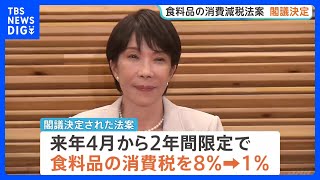
A cross-party national council discussing a reduction in the consumption tax on food will present a draft proposal on June 24 calling for the rate to be lowered to 1% from April next year.

The speakers and vice speakers of both houses of the Japanese Diet approved on June 22 the government’s outline for revising the Imperial Household Law and related measures aimed at securing the number of imperial family members, following what has been described as the consensus of the legislature.