



China held commemorative events across the country on September 18 to mark the 95th anniversary of the Mukden Incident, the 1931 railway explosion that Japan's Kwantung Army used as a pretext to seize Manchuria and which became a major turning point in the deterioration of relations between Japan and China.

Prime Minister Sanae Takaichi launched her first cabinet reshuffle since taking office, keeping core economic, foreign-policy and security ministers in place while replacing a broad group of other ministers in an attempt to stabilize her government before a difficult autumn of tax, budget, monetary policy and diplomatic battles.
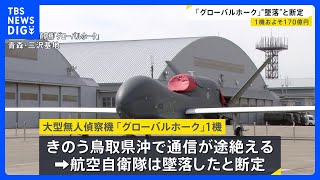
Japan's Air Self-Defense Force has concluded that a large Global Hawk unmanned reconnaissance aircraft that lost communication off Tottori Prefecture on September 15 crashed into the sea.

Prime Minister Sanae Takaichi launched a new Liberal Democratic Party executive team on September 16, retaining most of the party’s senior leadership while pledging to unite the government and ruling party to overcome a difficult political and economic environment.

A Japan Air Self-Defense Force Global Hawk unmanned reconnaissance aircraft went missing over international waters about 50 kilometers north of Tottori Prefecture on September 15, with floating debris and oil later found in the area where communications were lost.

Prime Minister Sanae Takaichi’s government entered a decisive political week on September 15 after approving an outline for food-tax relief and household payouts without settling how the package will be funded, keeping fiscal concerns alive just days before the Bank of Japan is expected to decide whether to raise interest rates again.
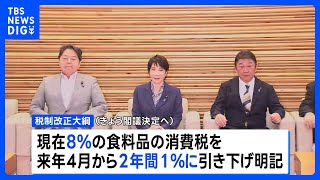
Japan's government is set to approve tax reform guidelines on September 15 that will reduce the consumption tax on food from the current 8% to 1% for two years starting in April 2027 as part of measures to ease the burden of rising prices.

Genta Koja, a former deputy mayor of Naha who accepts the relocation of the U.S. Marine Corps Air Station Futenma to Henoko in Nago, won the Okinawa gubernatorial election on September 13, defeating incumbent Governor Denny Tamaki and bringing an end to 12 years of prefectural administrations committed to blocking the project.