


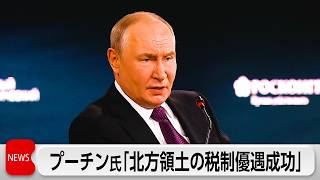
Russian President Vladimir Putin said tax incentives on the Russian-held islands claimed by Japan have been successful, using a speech at the Eastern Economic Forum in Vladivostok to highlight economic development in Russia's Far East.

Finance Minister Satsuki Katayama said on September 3 that the economic policy of Prime Minister Sanae Takaichi's government should not be equated with conventional reflationary policy, after returning from the Group of 20 finance ministers and central bank governors meeting in the United States and briefing the prime minister on the talks.

Russian President Vladimir Putin said on September 2 that Japan bears full responsibility for the deterioration in relations between the two countries, defending Moscow's approach following criticism from Tokyo over his first visit to Etorofu Island in August.

The leaders of the Centrist Reform Alliance, the Constitutional Democratic Party of Japan and Komeito have agreed to abandon plans to merge their three parties, leaving the Centrist Reform Alliance effectively split.

Japan is moving to strengthen its defenses against mass drone attacks after Terra Drone became the sole company to advance through a Defense Ministry program for a Japanese-made interceptor drone, drawing on battlefield technology and production methods developed in Ukraine while pushing for domestic production of critical components.

Prime Minister Sanae Takaichi moved on August 28 to contain market concern over her government’s spending plans, saying Japan will aim to cap new government bond issuance at around 40 trillion yen in the fiscal 2027 budget while still pursuing food-tax relief, growth investment and measures to support households facing higher prices.
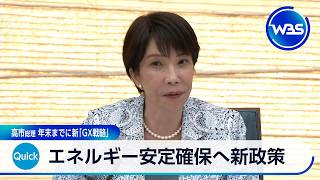
Japan has drawn up a new policy package aimed at strengthening energy security in response to developments in the Middle East, including support for alternative oil pipelines that would bypass the Strait of Hormuz and greater use of nuclear power to reduce dependence on fossil fuels.
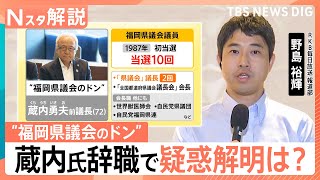
Former Fukuoka Prefectural Assembly speaker Isao Kuranouchi, long regarded as the dominant power in the chamber, resigned as an assembly member on August 25, intensifying scrutiny of allegations involving financial transactions, costly overseas inspection trips and policies backed by public funds while raising broader questions about how he accumulated such influence.