Prime Minister Sanae Takaichi’s economic strategy faced renewed pressure on August 7 as attention shifted toward the Bank of Japan’s September policy meeting, with central bank officials preparing a series of public appearances that could signal whether another interest-rate hike is becoming likely after recent yen turmoil and fiscal concerns.
BOJ board member Kazuyuki Masu is scheduled to deliver a speech and hold a news conference on September 10, one week before the central bank’s September 17-18 policy meeting. Deputy Governor Ryozo Himino is due to speak on August 27, while board member Hajime Takata, one of the BOJ’s more hawkish voices, is expected to speak on September 2.
The speaking schedule matters because markets are looking for signs of whether the BOJ is preparing to raise rates again after keeping its policy rate at 1% at the July 30-31 meeting. The central bank raised rates in June to their highest level in more than three decades, but the yen’s fall to 40-year lows and the rare U.S.-Japan currency intervention have increased pressure for further tightening.
The BOJ is now being pulled between two political and economic demands. On one side, a faster rate hike could help stabilize the yen and reduce import-driven inflation. On the other, higher rates would raise borrowing costs for the government, companies and households, complicating Takaichi’s investment and tax-relief agenda.
That tension is becoming the central test of Takaichi’s administration. The government wants to pursue a 370 trillion yen public-private investment roadmap through fiscal 2040, expand defense and economic-security spending, and cut the consumption tax on food to ease household pressure. But markets are increasingly asking whether those policies can coexist with fiscal discipline and an independent central bank.
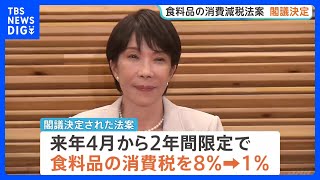
The food-tax cut remains the most visible domestic issue. The ruling Liberal Democratic Party has approved Takaichi’s plan to reduce the consumption tax on food from 8% to 1% for two years from April 2027, pending parliamentary approval. The government also plans payments that would effectively cover the remaining 1%, making food tax-free for households during the period.
The measure is politically powerful because food prices are one of the clearest ways voters experience inflation. Takaichi’s approval rating has already fallen sharply, and the government needs a concrete household-relief policy before the autumn Diet session.
But the plan carries large fiscal risks. It is expected to create a revenue shortfall of about 5 trillion yen, and the administration has promised not to use deficit-financing bonds. Instead, it says the cost will be covered through non-tax revenue, state funds, foreign reserves and spending reforms.
That explanation has not fully calmed concern. Investors want to know whether the funding is credible and whether the government can really restore the food-tax rate to 8% after two years. Opposition parties are likely to argue that the plan offers delayed relief while setting up a future tax increase when the temporary measure expires.
The timing is also politically awkward. A start date of April 2027 gives businesses and tax authorities time to prepare, but households facing high prices now may see it as too slow. Opposition parties are expected to press for earlier cash benefits, especially for low- and middle-income households.
The BOJ controversy deepened after reports that Takaichi had asked Governor Kazuo Ueda in May to increase government bond purchases if necessary to contain rising long-term interest rates. The report is sensitive because the government has spent weeks trying to reassure investors that it respects BOJ independence.
Earlier wording in the government’s economic blueprint had already raised concerns that the administration wanted closer coordination with the BOJ to support Takaichi’s growth strategy. The final version clarified that specific monetary policy tools belong to the central bank, but the reported bond-buying request has revived doubts.
If investors believe the government is asking the BOJ to suppress long-term yields, they may question whether monetary policy is being used to cushion the fiscal impact of tax cuts, defense spending and industrial policy. That could push bond yields higher and weaken confidence in the yen.
The yen remains the most important market signal. Japan and the United States recently carried out a rare coordinated yen-buying intervention after the currency fell to its weakest level in about 40 years. The intervention temporarily stabilized the yen, but it did not resolve the underlying pressure from interest-rate gaps, energy costs and investor concern over Japan’s fiscal path.
U.S. pressure has added another layer. Washington’s support for intervention gave Tokyo more room to act, but U.S. officials have also made clear that BOJ policy matters for yen stability. That increases expectations that the central bank may need to signal a more hawkish path before the September meeting.
For Takaichi, the problem is that the same policy move can help and hurt her at once. A BOJ rate hike could support the yen and reduce import inflation, helping households. But it could also raise debt-servicing costs, increase mortgage and business borrowing costs, and make the government’s investment program harder to finance.
Defense policy is now part of the same debate. Japan’s latest defense white paper has drawn attention by presenting the country’s military buildup not only as a security necessity but also as a source of economic growth and industrial development. The document emphasizes drones, missiles, unmanned systems, startup technology and the need to strengthen Japan’s defense industrial base.
The white paper identifies China as Japan’s most significant strategic challenge, while also pointing to threats from Russia and North Korea. It links lessons from Ukraine and the Middle East to Japan’s need for faster development of drones, unmanned systems and resilient supply chains.
That framing fits Takaichi’s wider political message. Her administration wants to connect national security, economic security and industrial policy into a single strategy. Defense spending is being presented not only as deterrence, but also as support for advanced manufacturing, supply-chain resilience and future growth.
The controversy is that this widens the government’s spending ambitions at the same time markets are questioning fiscal credibility. Takaichi wants to cut food taxes, invest in strategic industries, expand defense and reassure bond investors. Each policy has a political logic, but together they raise questions over whether the government is promising more than it can finance.
Opposition parties are likely to use that contradiction in the autumn Diet session. They can argue that the government is offering delayed tax relief, leaning on the BOJ, expanding defense spending and relying on optimistic growth assumptions. Takaichi’s response will be that Japan needs both immediate household relief and long-term national renewal.
The August 7 political picture is therefore one of rising pressure before the next major BOJ test. The food-tax plan has cleared a ruling party hurdle, but funding doubts remain. The yen has stabilized after intervention, but only temporarily. The defense white paper has strengthened the government’s security narrative, but also raised spending questions. The BOJ is preparing to speak, and markets are waiting to see whether those speeches point toward another rate hike.
The central question is whether Takaichi can keep control of the policy story before September. If the government can present a credible funding plan for the food-tax cut, protect BOJ independence and keep the yen stable, the administration may regain some political ground. If bond yields rise or the yen weakens again, the pressure for a BOJ rate hike could turn Takaichi’s own growth agenda into the main source of market anxiety.
What To Watch Next
BOJ officials’ speeches from late August to mid-September will be closely watched for signs of whether another rate hike is likely at the September 17-18 policy meeting.
The yen remains the most immediate test of confidence. Any renewed fall toward pre-intervention levels could increase pressure for further U.S.-Japan currency action.
The government must still explain how it will fund the food-tax cut without deficit-financing bonds, especially given the expected 5 trillion yen revenue shortfall.
The autumn Diet session will determine whether the tax plan passes quickly or becomes a broader battle over fiscal discipline and household relief.
Reaction to the reported Takaichi-Ueda bond-buying discussion will remain important for perceptions of BOJ independence.
The defense white paper will continue to shape debate over whether Japan’s military buildup is being sold as economic policy as well as national security policy.
Bond yields should be watched closely as investors judge whether Takaichi’s tax cut, defense expansion and 370 trillion yen investment roadmap can coexist with fiscal credibility.