News On Japan

Up to 3 Million Yen in Aid Planned for Kumamoto Earthquake Victims

TOKYO - Prime Minister Takaichi said on August 10 that the government expects to apply the Disaster Victims' Livelihood Recovery Support Act across all of Kumamoto Prefecture, allowing households whose homes were completely destroyed in the Kumamoto earthquake to receive up to 3 million yen in assistance.

Speaking at a meeting of the government's emergency disaster response headquarters for the Kumamoto earthquake, Takaichi said extensive damage to homes had been confirmed throughout the prefecture.

"Because a large number of homes have been confirmed damaged, we now expect the Disaster Victims' Livelihood Recovery Support Act to be applied throughout Kumamoto Prefecture. This will make it possible to provide support payments of up to 3 million yen," Takaichi said.

If the law is formally applied, households whose homes were completely destroyed will be eligible for support payments of up to 3 million yen.

Takaichi also instructed Disaster Management Minister Akama and other officials to ensure that disaster damage certificates are issued promptly so financial and other assistance can reach affected residents as quickly as possible.

Source: FNN

News On Japan
POPULAR NEWS

The Tokaido Shinkansen operated its first overnight service ahead of the Obon holiday period, offering travelers a 15,000 yen trip from the Tokyo area to Kyoto and Shin-Osaka while allowing them to save on hotel costs and arrive earlier than the first regular morning trains.

Typhoon No. 15 is expected to approach and likely make landfall somewhere in the Kanto region on August 11, bringing strong winds and heavy rain that could disrupt conventional rail services, expressways and flights while also affecting a wider area extending into Tohoku.

Raccoons are increasingly invading homes across Japan, damaging roofs and wiring, contaminating buildings with large amounts of urine and feces, and raising concerns over agriculture, native wildlife and the spread of disease as their population continues to expand.

Nagasaki marked the 81st anniversary of the U.S. atomic bombing on August 9 with a memorial ceremony near the hypocenter, where Mayor Shiro Suzuki declared nuclear weapons an "absolute evil" and called on the Japanese government to uphold its Three Non-Nuclear Principles.

Transport services were gradually returning to normal on August 9 after Typhoon No. 13 caused widespread cancellations and shutdowns across Okinawa, although air travel remained disrupted as airlines worked to restore schedules and accommodate passengers stranded during the opening days of Japan's busy Obon holiday period.

MEDIA CHANNELS
         

MORE Politics NEWS

Prime Minister Takaichi said on August 10 that the government expects to apply the Disaster Victims' Livelihood Recovery Support Act across all of Kumamoto Prefecture, allowing households whose homes were completely destroyed in the Kumamoto earthquake to receive up to 3 million yen in assistance.

Nagasaki marked the 81st anniversary of the U.S. atomic bombing on August 9 with a memorial ceremony near the hypocenter, where Mayor Shiro Suzuki declared nuclear weapons an "absolute evil" and called on the Japanese government to uphold its Three Non-Nuclear Principles.

Prime Minister Sanae Takaichi’s economic strategy faced renewed pressure on August 7 as attention shifted toward the Bank of Japan’s September policy meeting, with central bank officials preparing a series of public appearances that could signal whether another interest-rate hike is becoming likely after recent yen turmoil and fiscal concerns.

Hiroshima marked the 81st anniversary of the atomic bombing on August 6 with a peace memorial ceremony at Peace Memorial Park, where Mayor Kazumi Matsui warned of the growing danger that nuclear weapons could be used and called for renewed action toward their abolition.

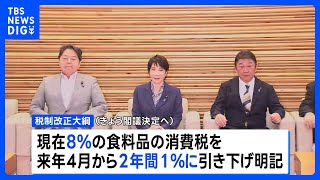
Prime Minister Sanae Takaichi’s government formally approved a plan on August 5 to reduce the consumption tax rate on food and nonalcoholic beverages from 8% to 1% for two years beginning in April 2027, setting the stage for a difficult parliamentary battle over how to cover an estimated 10 trillion yen revenue shortfall and whether the politically sensitive tax can be restored afterward.

Japan’s latest defense white paper has sparked controversy by presenting the country’s expanding military buildup not only as a national security necessity but also as a potential engine of economic growth, drawing criticism from China and raising fresh domestic questions over how far Prime Minister Sanae Takaichi’s government is prepared to link defense, industry and fiscal policy.

Prime Minister Sanae Takaichi’s food-tax cut plan cleared a major ruling party hurdle on August 5, intensifying debate over whether her government can deliver household relief without weakening fiscal credibility or drawing the Bank of Japan deeper into the administration’s economic agenda.

Ukrainian President Volodymyr Zelenskyy instructed diplomatic officials on August 3 to strengthen relations with Japan, expressing disappointment with the results achieved so far and raising speculation that Kyiv is seeking Japanese weapons supplies.