News On Japan

Hyogo Debt Burden Forces Tighter Controls

HYOGO - Hyogo Prefecture has been placed under a system requiring central government approval for new borrowing after its debt repayment burden exceeded a nationally defined threshold, raising concerns that worsening finances and higher interest rates could push the prefecture closer to serious fiscal distress.

The prefectural government reported its fiscal 2025 financial results to a Hyogo Prefectural Assembly committee on August 18.

The three-year average of Hyogo's real debt service ratio, which measures debt repayments as a percentage of revenue, reached 19.2%, exceeding the central government's threshold of 18%.

As a result, Hyogo has been designated as an entity requiring approval to issue local government bonds, meaning it must obtain central government permission before taking on new debt.

The prefecture attributed the deterioration partly to higher levels of public investment compared with other prefectures of a similar size, as well as continuing repayments on debt incurred for reconstruction following the Great Hanshin-Awaji Earthquake.

Recent increases in interest rates are expected to add further pressure by increasing future debt-servicing costs.

If the current trend continues, Hyogo could fall into the category of an early fiscal rehabilitation entity in fiscal 2031, a status regarded as one step short of fiscal collapse.

It would be the first prefectural government in Japan to enter that category.

In response, Hyogo plans to reduce investment in public works projects by at least 10% over a 10-year period beginning in fiscal 2027.

Source: YOMIURI

News On Japan
POPULAR NEWS

Typhoon No. 26 was moving northeast over waters south of Japan at about 20 kilometers per hour at 9 p.m. on September 29 and is expected to approach and pass through the southern Izu Islands from the night of September 30 into October 1, bringing strong winds, heavy rain and waves exceeding 5 meters in some areas, while southern Kanto, including Chiba Prefecture's Boso Peninsula, could also see periods of intensified rainfall.

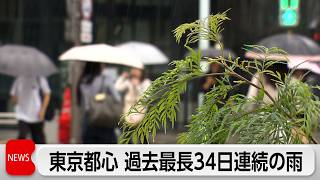
Tokyo recorded rain for a 34th consecutive day on September 29, setting a new all-time record for the capital, but the prolonged wet spell could finally end after Typhoon No. 26 passes the Izu Islands between the night of September 30 and the morning of October 1.

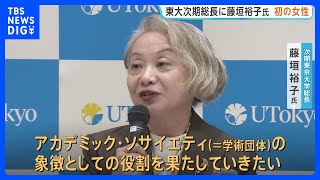
The University of Tokyo has selected professor Yuko Fujigaki, 64, as its next president, making her the first woman to lead Japan's most prestigious university.

Beaujolais Nouveau, France's newly produced wine traditionally associated with autumn, arrived in Japan on September 28 about a month earlier than usual after a record-breaking heatwave accelerated this year's grape harvest.

Yokozuna Onosato captured his sixth career championship at the Autumn Grand Sumo Tournament on September 27, defeating Ukrainian ozeki Aonishiki in a winner-takes-all showdown at Tokyo's Ryogoku Kokugikan to finish the 15-day competition with 12 wins and three losses, ending a year-long title drought after a dramatic final weekend.

MEDIA CHANNELS
         

MORE Politics NEWS

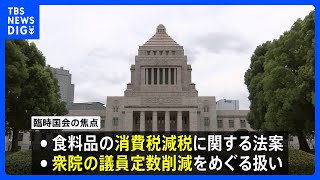
Japan's government plans to convene an extraordinary Diet session on October 5, with proposed legislation to reduce the consumption tax on food and plans to cut the number of seats in the House of Representatives expected to be among the main issues.

Prime Minister Sanae Takaichi moved on September 28 to strengthen Japan’s intelligence functions as her government prepared for an extraordinary Diet session that is expected to test its ability to pass tax relief, defend its economic policy and manage rising security pressure from China.

Prime Minister Sanae Takaichi is entering the autumn political season under growing pressure to show that her government can manage relations with Washington and Beijing while keeping Japan’s economic policy on a credible path after the Bank of Japan’s latest rate hike.

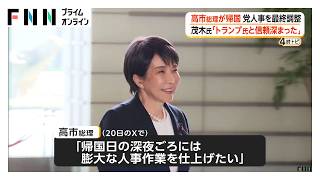
Prime Minister Sanae Takaichi returned to Japan on the morning of September 24 following talks with US President Donald Trump and immediately headed to the Prime Minister's Office to finalize key appointments within the ruling Liberal Democratic Party ahead of an extraordinary Diet session in October.

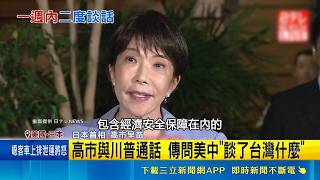
Japanese Prime Minister Sanae Takaichi and US President Donald Trump held talks at United Nations headquarters in New York in the early hours of September 23 Japan time, demonstrating the strength of the Japan-US alliance and confirming close cooperation on China ahead of an upcoming US-China summit.

Prime Minister Sanae Takaichi and U.S. President Donald Trump met in New York on September 22, confirming close cooperation on security and economic issues ahead of Trump’s planned summit with Chinese President Xi Jinping.

China held commemorative events across the country on September 18 to mark the 95th anniversary of the Mukden Incident, the 1931 railway explosion that Japan's Kwantung Army used as a pretext to seize Manchuria and which became a major turning point in the deterioration of relations between Japan and China.

Prime Minister Sanae Takaichi launched her first cabinet reshuffle since taking office, keeping core economic, foreign-policy and security ministers in place while replacing a broad group of other ministers in an attempt to stabilize her government before a difficult autumn of tax, budget, monetary policy and diplomatic battles.