News On Japan

Hyogo Debt Burden Forces Tighter Controls

HYOGO - Hyogo Prefecture has been placed under a system requiring central government approval for new borrowing after its debt repayment burden exceeded a nationally defined threshold, raising concerns that worsening finances and higher interest rates could push the prefecture closer to serious fiscal distress.

The prefectural government reported its fiscal 2025 financial results to a Hyogo Prefectural Assembly committee on August 18.

The three-year average of Hyogo's real debt service ratio, which measures debt repayments as a percentage of revenue, reached 19.2%, exceeding the central government's threshold of 18%.

As a result, Hyogo has been designated as an entity requiring approval to issue local government bonds, meaning it must obtain central government permission before taking on new debt.

The prefecture attributed the deterioration partly to higher levels of public investment compared with other prefectures of a similar size, as well as continuing repayments on debt incurred for reconstruction following the Great Hanshin-Awaji Earthquake.

Recent increases in interest rates are expected to add further pressure by increasing future debt-servicing costs.

If the current trend continues, Hyogo could fall into the category of an early fiscal rehabilitation entity in fiscal 2031, a status regarded as one step short of fiscal collapse.

It would be the first prefectural government in Japan to enter that category.

In response, Hyogo plans to reduce investment in public works projects by at least 10% over a 10-year period beginning in fiscal 2027.

Source: YOMIURI

News On Japan
POPULAR NEWS

Typhoon No. 18 remained a strong storm as it passed near Minamidaito Island on August 25, with Okinawa's main island and the Amami region expected to experience their most severe rain, winds and waves late at night through around midnight. According to the Japan Meteorological Agency, the typhoon was near Minamidaito Island at 9 a.m. on August 25 and was moving west-northwest at 20 kilometers per hour.

The Japanese government plans to reuse low-radioactivity soil generated by decontamination work after the Fukushima nuclear accident at government office complexes in Saitama and Sendai, marking the first such reuse outside Tokyo.

An 85-year-old couple have donated a combined 400 million yen to Osaka City with a request that the money be used to create a giant Myaku-Myaku statue about 20 meters tall at the former site of the Osaka-Kansai Expo, envisioning a landmark that could become a lasting symbol of the event and of renewed prosperity for Kansai and Japan.

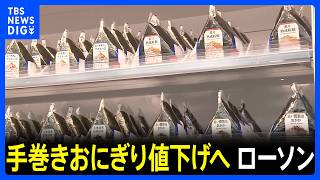
Lawson plans to cut prices on its main line of onigiri rice balls by 10 yen from September 29 as falling rice prices begin to feed through to retail costs.

Police have established a temporary police post in the whaling town of Taiji, Wakayama Prefecture, ahead of the September 1 opening of the annual drive hunt for whales and dolphins.

MEDIA CHANNELS
         

MORE Politics NEWS

Japan's GX Promotion Organization has invested about 3 billion yen in two startups developing nuclear fusion and plastic recycling technologies, with combined public and private investment expected to reach around 20 billion yen as the government seeks to accelerate the commercialization of advanced decarbonization technologies.

Japan's Internal Affairs and Communications Ministry has begun considering reductions in postal services, including fewer mailboxes and less frequent deliveries, as the country's postal business continues to suffer losses following a prolonged decline in letters and New Year's cards.

Russia has conducted missile exercises around the Northern Territories, including what appears to have been a launch from one of the disputed islands, prompting Japan's foreign minister to call Russia's growing military presence there unacceptable.

Japan's government is moving toward abolishing the Cool Japan Fund, a public-private investment vehicle created to support the overseas expansion of Japanese anime, food culture and other industries, after its cumulative losses reached 54 billion yen.

Japan strongly protested and condemned North Korea after it launched a ballistic missile at around 5:04 p.m. on August 20, with the projectile believed to have fallen outside Japan's exclusive economic zone, Defense Minister Shinjiro Koizumi said.

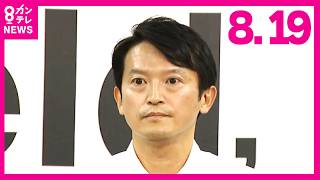
Hyogo Governor Motohiko Saito said on August 19 that the prefecture's shift to a status requiring central government permission to issue bonds would not immediately halt public projects, while stressing that years of high public investment, funding shortfalls and what he described as improper land-acquisition bond practices under former Governor Toshizo Ido had contributed to the deterioration of the prefecture's finances.

A Takenaka Corp. construction manager who oversaw work on the Grand Ring and other facilities at the Osaka-Kansai Expo was arrested on August 19 on suspicion of causing more than 13 million yen in losses to the major contractor through inflated construction bills, with police investigating allegations that money from the scheme was used for renovations to his home and a cafe operated by relatives.

A Japan Air Self-Defense Force F-15 fighter jet tilted to one side and came to a stop while landing at Naha Airport on August 18, forcing the closure of one of the airport's two runways and causing delays of more than an hour for some arriving commercial flights.