News On Japan

Beware of Bears as Mountain Food Runs Low in Summer

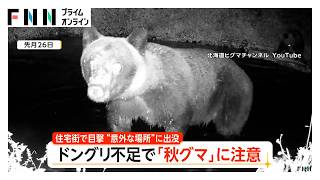
Aomori - Bear sightings are increasing across Japan this summer as a shortage of food in the mountains drives the animals closer to areas where people live and visit, with authorities in Aomori Prefecture closing a lookout near Lake Towada after a foreign tourist was attacked.

Towada City in Aomori has recorded 13 reports of bear sightings in the past week alone, including incidents around Lake Towada, a popular tourist destination known for its scenic landscape.

The lake and surrounding area normally attract about 2 million visitors a year, but Aomori Prefecture decided to close a lookout indefinitely after a foreign male tourist walking near Lake Towada was attacked by a bear four days ago.

The attack has heightened anxiety among visitors to the area, particularly during the busy summer vacation period.

One tourist from Tokyo said he had prepared a bear bell and bear spray because of concerns about encountering an animal. "I was worried, so I brought a bear bell and repellent spray. It is a little frightening," he said.

Another visitor from Saitama said he bought a bear bell after hearing that bears had been appearing in the area. "There are bear warning signs in many places, and when you see them, it definitely makes you nervous," he said.

The growing number of sightings is also affecting businesses that depend on tourists.

A local taxi driver said he avoids taking visitors to places where bears are known to appear. "I don't guide people to places where there are bears, and I don't let them walk there," he said, adding that heavily visited locations such as the Oirase area were considered less concerning.

Souvenir shops around Lake Towada have also taken precautions to prevent bears from entering their premises. Signs written in English and Chinese have been posted asking customers to keep doors closed.

A souvenir shop employee said visitors now ask almost every day whether bears are likely to appear. "It would be a problem if the number of customers dropped sharply," the employee said.

Concern over bears has been spreading in other parts of Japan as sightings continue during the summer.

Authorities are urging caution because natural food supplies for bears in mountainous areas tend to become scarce during the season, increasing the possibility that the animals will enter residential areas and tourist destinations in search of food.

Source: FNN

News On Japan
POPULAR NEWS

An evacuation order has been issued for the entire city of Ishinomaki and parts of Marumori in Miyagi Prefecture as heavy rain caused by the autumn rain front disrupts transportation across the region, with a linear rainband potentially forming along the Pacific side of Tohoku through the evening.

Heavy rain caused by the autumn rain front continued to disrupt rail services across the Tohoku and Kanto regions on September 7, with parts of the Shonan-Shinjuku Line and other routes remaining suspended while some major Tokyo commuter lines returned to normal operations after running reduced services earlier in the day.

Typhoon No. 24 (Krovahn) was near Minami-Daito Island, about 300 kilometers southeast of Okinawa, as of 3 a.m. on September 7, moving east-northeast at about 10 kilometers per hour and expected to weaken into a tropical depression by the afternoon, although strong winds and high waves were forecast to persist before its remnants move north and potentially intensify the autumn rain front over western and eastern Japan later in the week.

Tokyo has unveiled the design for a major redevelopment of the plaza outside Shinjuku Station's west exit, with a landmark tree, water-play area and event space planned as part of a transformation centered on "greenery, light and people" that is scheduled for completion in 2035.

A late former professor at Asahikawa Medical University has won the Ig Nobel Prize in Medicine for scientifically examining the proper way to blow the nose, extending Japan's streak of Ig Nobel winners to 20 consecutive years.

MEDIA CHANNELS
         

MORE Travel NEWS

Japanese customs authorities blocked a record 19,568 shipments suspected of infringing intellectual property rights in the first half of 2026, up 12% from a year earlier, as the expansion of cross-border e-commerce drove an increase in imported parcels.

Hikone Castle in Shiga Prefecture has been formally selected as Japan's candidate for nomination as a UNESCO World Cultural Heritage site, advancing a campaign that has continued for more than 30 years and aims to secure inscription in the summer of 2028.

Highway service areas around the Kanto region are becoming destinations in their own right, offering travelers everything from freshly harvested vegetables and popular regional restaurant dishes to baths, observation decks and family events during the busy summer vacation season.

Japan's Ministry of Economy, Trade and Industry raised subsidies for aviation fuel used on domestic flights from September 3, doubling the support rate while ending subsidies for international flights.

Night trains are making a comeback across Japan, with railway operators introducing new overnight services and even experimenting with overnight Shinkansen trains as demand grows for alternatives that combine transportation, accommodation and the experience of traveling through the night.

Osaka City plans to tighten regulations on private lodging businesses, or minpaku, by generally prohibiting new operations in wooden and steel-frame apartment buildings where residents already live, following repeated complaints over noise and garbage.

Bear sightings and attacks have been reported across Japan throughout the summer, with animals damaging sheds, attacking livestock and injuring people, while experts warn that autumn is the most dangerous season as bears expand their range in search of food.

Kashima Shrine in Kashima, Ibaraki Prefecture, held its Ofune Festival on September 2, with a spectacular fleet of more than 100 brightly decorated boats sailing along rivers and across lakes in a tradition staged once every 12 years during the Year of the Horse.