TOKYO - Prime Minister Sanae Takaichi's Cabinet approval rating has rebounded to above 60% despite weak public assessments of its inflation measures, while an approaching Cabinet and Liberal Democratic Party leadership reshuffle is highlighting a new emphasis on ability and policy continuity as well as the continuing influence of former Prime Minister Taro Aso.
The latest JNN opinion poll showed the Cabinet's approval rating rising 3.3 percentage points from August to September, reversing a decline that had continued since May.
The unusually high figure comes about 10 months after the administration took office. According to comparisons of previous JNN polls, the Takaichi Cabinet is only the second administration since the second Shinzo Abe government to retain support above 60% at that stage.
One veteran LDP lawmaker described the figure as an extraordinary number, noting that the Diet was no longer in session, preparations for tax reductions were advancing and the government had responded to major disasters including the Kumamoto earthquake and torrential rain in Chiba Prefecture without suffering any major political setback.
The rebound appears to owe less to enthusiasm for government policy than to the absence of fresh political damage. With the Diet closed, opposition parties have had fewer opportunities to challenge the administration, while turmoil within the opposition has also worked to the ruling party's advantage.
The Centrist Reform Alliance, which has decided to split, recorded support of only 1.0%, down sharply from 8.5% when it was formed.
Under the planned breakup, the alliance is expected to remain in existence temporarily with a single lawmaker. Members originating from Komeito are expected to return to Komeito, while lawmakers originating from the Constitutional Democratic Party are moving toward forming a new party.
Around 20 lawmakers could join the new party, although it remains uncertain whether all will do so. Some may seek cooperation with the Democratic Party for the People, while others could choose to remain independent.
The new party, Komeito and the surviving Centrist Reform Alliance are expected to cooperate through a unified parliamentary group during the extraordinary Diet session, allowing them to coordinate parliamentary activities despite formally belonging to separate parties.
Financial considerations are one reason the Centrist Reform Alliance will continue to exist rather than simply being dissolved.
The party is expected to receive 2.34 billion yen in government subsidies this year, of which 1.17 billion yen has already been paid. By having lawmakers leave the party while keeping the organization itself alive, the remaining 1.17 billion yen can still be paid to the Centrist Reform Alliance.
The alliance has substantial debt remaining from the House of Representatives election, and the incoming subsidy is expected to be used in part to repay those obligations.
The arrangement also avoids the time-consuming process of dissolving local party organizations and establishing entirely new structures before the extraordinary Diet session expected in October and local elections in the spring.
Questions remain, however, about how public money will ultimately be used following the split. The party also raised more than 100 million yen through crowdfunding, and no final decision has been reached on the treatment of those funds.
Elsewhere in the poll, the LDP edged higher, while Sanseito gained support and appeared to be attracting conservative voters looking for an alternative to the ruling party.
The Constitutional Democratic Party stood at 2.7%, up 0.3 percentage point, while the Democratic Party for the People appeared to gain little from the publicity surrounding its recent leadership election.
The largest group remained voters supporting no political party, at 43.1%, although that was down 3.3 percentage points from the previous survey.
The Cabinet's strong overall rating contrasts sharply with public dissatisfaction over its handling of household economic pressures.
A combined 57% of respondents said they did not particularly approve or did not approve at all of the government's measures to address rising prices.
Takaichi had stepped up publicity for the government's inflation measures on social media during August after criticism that legislation passed near the end of the special Diet session had focused on issues seen as distant from everyday household concerns.
The campaign appears to have done little to change public opinion.
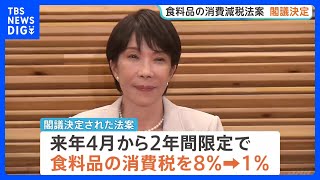
Debate over reducing the consumption tax on food is also becoming more divided. Opposition to the proposal has increased compared with the previous month's poll, with the survey showing a 51% to 42% split.
When respondents were asked whether a consumption tax cut would be effective as a measure against rising prices, 55% said it would have little or no effect.
The poll therefore suggests that neither the government's anti-inflation measures nor discussion of consumption tax reductions is the main reason for the increase in Cabinet support.
Support also varies sharply by age.
Approval among voters under 30 remains around 80%, while support generally declines as age increases. Voters in their 50s recorded the lowest approval among the age groups surveyed.
Takaichi's ability to sustain approval above 60% is especially notable when compared with previous administrations.
Junichiro Koizumi's Cabinet, which also began with approval above 80%, had fallen to 55.4% after about 10 months. Its popularity dropped sharply after the dismissal of then Foreign Minister Makiko Tanaka, who was highly popular with voters.
Yukio Hatoyama's government also began with exceptionally high expectations after the Democratic Party of Japan took power, but the administration itself had ended before reaching the 10-month mark following controversies including Hatoyama's handling of the relocation of a U.S. military base in Okinawa.
The second Abe Cabinet and the Fumio Kishida Cabinet maintained comparatively stable ratings through their first 10 months, but both suffered declines of around 10 percentage points in the following period.
Abe's support fell after controversy over passage of the state secrets law, while Kishida's administration was hit by revelations of links between LDP lawmakers and the former Unification Church as well as political funding problems involving Cabinet ministers.
Those examples underscore the political risk facing Takaichi as she approaches a Cabinet reshuffle and a new Diet session.
The next extraordinary Diet session is expected to begin around October 5, while the next JNN opinion poll is expected to be conducted shortly beforehand. With the Diet still out of session at that point, the political environment may remain relatively favorable to the administration.
September also offers potential opportunities for the prime minister to increase her exposure through the reshuffle and diplomacy, including her planned attendance at the United Nations General Assembly in New York.
Barring a serious personnel mistake or major diplomatic misstep, the Cabinet's approval rating could remain steady or even rise further before the Diet reconvenes.
Personnel decisions are therefore taking on particular importance.
Most of the LDP's traditional factions have disappeared, leaving the Aso faction as the principal surviving group. The change is transforming how candidates for government and party posts are selected.
In the past, faction leaders routinely visited the prime minister before a reshuffle with lists of lawmakers they wanted appointed to Cabinet positions. Seniority was also an important consideration, with lawmakers traditionally regarded as becoming eligible for Cabinet after around five terms in the House of Representatives or three in the House of Councillors.
With most factions gone, those recommendations carry far less weight.
Instead, the LDP is placing greater importance on questionnaires distributed to lawmakers asking which government, parliamentary or party positions they would prefer. The system existed previously but is now playing a larger role because factional recommendations have largely disappeared.
Lawmakers can indicate several preferred positions, ranging from Cabinet minister and vice minister posts to senior party roles.
The change could give Takaichi greater freedom to appoint lawmakers based on individual ability rather than factional seniority or political obligation.
The prime minister and Chief Cabinet Secretary Kihara are believed to be closely examining the responses as they prepare the reshuffle.
Two criteria are emerging as particularly important: competence and continuity.
In the short term, the administration needs ministers capable of handling questioning during the extraordinary Diet session, where consumption tax reductions are expected to become one of the largest issues.
Other legislation could include changes to the number of House of Representatives seats and expansion of political制度 reforms, but the consumption tax debate is expected to require particularly strong ministers capable of explaining and defending government policy.
Continuity is also considered important in portfolios dealing with major policies extending into the autumn and winter.
Foreign policy will enter a busy period, while the defense minister faces work toward revising Japan's three key national security documents by the end of the year.
The finance minister will also be involved in translating Takaichi's proposed investment in 17 growth sectors into concrete measures while overseeing preparation of the national budget.
Those considerations make changes to the foreign, defense and finance portfolios less attractive, while continuity could also favor retaining central figures including the LDP secretary-general and chief Cabinet secretary.
Aso's influence remains a major factor despite the broader collapse of factional politics.
One of the clearest indicators is the expected retention of LDP Secretary-General Suzuki, who is related to Aso by marriage and belongs to the Aso faction.
Whether Suzuki remained in the post had been viewed as a test of whether Takaichi intended to continue cooperating closely with Aso or begin distancing herself from the former prime minister.
The apparent decision to retain Suzuki suggests Takaichi still considers Aso's support important.
That may be particularly useful in the looming debate over consumption tax reductions. Both Aso and Suzuki are former finance ministers and are regarded as fiscal conservatives who are personally skeptical of reducing the consumption tax.
By keeping them inside the administration's leadership, Takaichi could seek their help in maintaining party unity even if she pursues a policy they might otherwise resist.
Aso's influence can also be seen in the position of LDP policy chief Kobayashi, who is expected to remain in his post.
Aso has grown closer to Kobayashi and is believed to have favored retaining him. Their relationship strengthened as the two worked together on policy within the ruling party, with Kobayashi increasingly regarded as one of the younger politicians valued by Aso.
This gives Aso potential influence extending beyond the current Takaichi administration. If Takaichi were eventually to leave office, politicians including senior figures close to Aso and the younger Kobayashi could provide the former prime minister with alternative options for maintaining influence within the party.
The reshuffle is also being watched through the lens of next year's LDP presidential election.
Several politicians who challenged Takaichi in the previous leadership race remain in prominent positions, and one interpretation of the prime minister's strategy is that she wants to keep potential rivals inside the government for as long as possible.
Foreign, defense and party policy chiefs seen as potential future contenders are expected to remain in their current roles.
Particular attention is focused on Internal Affairs Minister Hayashi, who won more votes from LDP lawmakers than Takaichi in the first round of the previous leadership contest and is regarded as one of her strongest potential rivals.
Takaichi would prefer to keep Hayashi inside the Cabinet, while Hayashi himself is believed to retain ambitions for another party leadership bid.
People close to Hayashi say he has indicated that he would like to leave the Cabinet but would find it difficult to refuse if the prime minister asked him to remain.
The decision carries political risks for him.
Leaving a Cabinet with approval above 60% would publicly establish distance from Takaichi and could position him as an alternative candidate for next year's leadership race. Remaining inside the government, however, would make it more difficult to openly challenge the prime minister.
Some lawmakers who previously supported Hayashi are said to believe that unless he is willing to leave the Cabinet at such a moment, he may never create the political independence needed to become prime minister.
The situation recalls former LDP leader Shigeru Ishiba's relationship with Abe.
Ishiba contested the LDP leadership against Abe in 2012 and later served as party secretary-general and in Cabinet posts. In 2014, however, he declined a proposed post overseeing security legislation because his views differed from Abe's, marking a clearer political separation between the two.
The example illustrates the dilemma now facing potential Takaichi rivals: staying within the administration provides influence and senior positions, but leaving can be necessary to establish an independent political identity.
Takaichi's personnel strategy therefore appears designed not only to ensure stable government during the coming Diet session but also to make it harder for potential rivals to organize against her before next year's leadership election.
If she can retain the strongest challengers within the Cabinet and party leadership, she could improve her chances of avoiding a major contest and securing another term as LDP president.
At the same time, Aso is seeking to preserve his own influence over the party's future, giving the reshuffle significance extending well beyond the immediate allocation of Cabinet posts.
The final lineup will provide an early indication of how far Takaichi intends to prioritize individual ability over old factional practices, how much influence Aso still commands and how aggressively the prime minister is preparing for the next LDP leadership contest.
Source: TBS