Camping in Japan does not necessarily mean staying at the campsite all day. On a road trip, the campsite can work more like a place to return to at night.
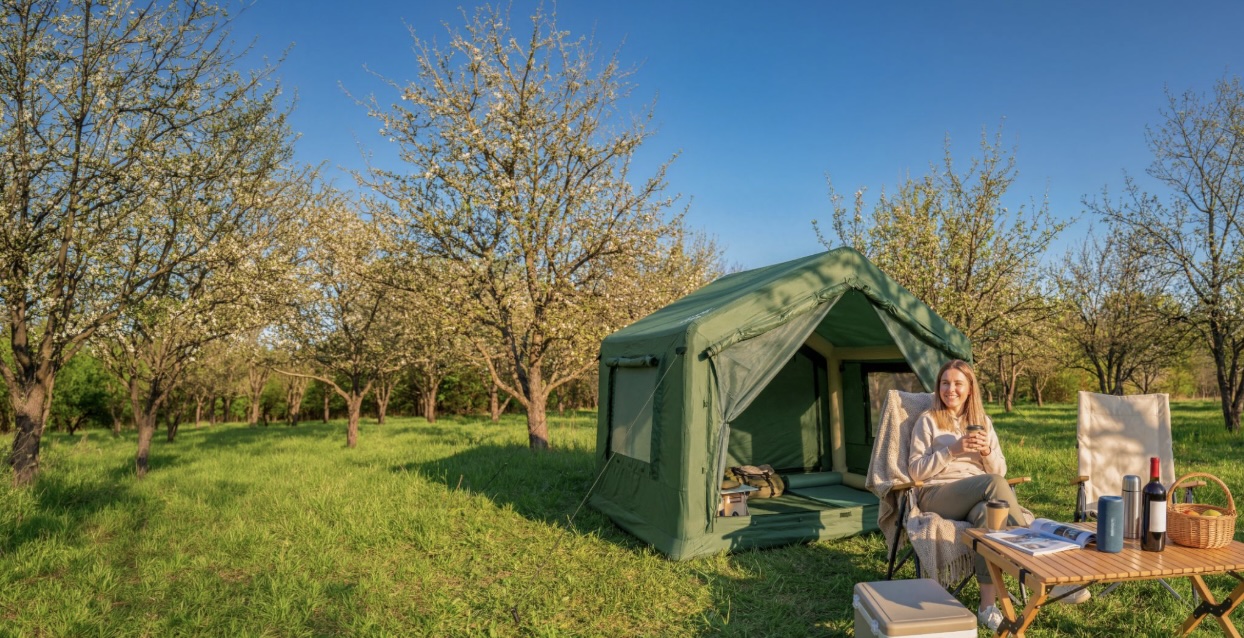
During the day, you might drive out for a hike, visit an onsen, explore a lake, or spend time in a nearby town, then return in the evening to cook, organize gear, and rest.
In Japan, this style of camping, where a vehicle can be parked beside the tent, is commonly known as auto camping. Some campsites in national parks or remote areas have limited public transportation, so driving can make both the campsite and nearby hikes, hot springs, or towns easier to reach.
That changes what you need from a tent. It is no longer just a place to sleep, but a temporary base that you leave and return to throughout the trip, and sometimes move as the route changes.
Plan the Campsite Around the Car Too
One of the main conveniences of auto camping is having the car and tent on the same pitch. It also means both have to share limited space.
The tent itself is only part of the footprint. Car doors need room to open, tables and chairs need somewhere to go, and there must be enough space for stakes, guy lines, and access. The actual area you need may be larger than the tent’s listed floor dimensions suggest.
Rules also vary between auto campsites. Some manage pitches around one vehicle and one tent, so it is worth checking vehicle limits, pitch dimensions, and tent restrictions before booking.
The real question is whether the car, tent, guy-line area, and daytime living space can all fit comfortably within the pitch.
If You Leave Every Day, the Interior Should Match That Routine
Staying at the same campsite for several nights while driving out each day creates a simple pattern: leave in the morning, return in the evening.
You may need quick access to jackets, backpacks, and daytime gear before leaving, then shoes, lights, and clean clothes when you return. If the entrance is crowded with bedding or large bags, every arrival and departure means moving things around.
A more practical setup keeps the sleeping area stable and puts frequently used items somewhere easy to reach. Shoes, lighting, and the first things you need at night should not require stepping over beds or digging through luggage.
A tent is also not a substitute for secure storage. Valuables should still be handled according to campsite rules and the conditions on site when you leave for the day.
Changing Campsites Changes What Matters in a Tent
If the trip stays at one campsite for several nights, pitching the tent once does not take up much of the overall travel time. A route with two or three campsites is different. Every move means packing sleeping gear, taking down the tent, loading the vehicle, and setting everything up again.
On this kind of trip, inflatable tents can reduce some of the pole assembly involved with traditional pole tents, but setup is only one part of the process. If packing down, carrying, and loading the tent are still difficult, it may not suit a road trip with frequent campsite changes.
For a multi-stop route, the full setup, pack-down, and moving process matters more than how easy the tent is to pitch the first time.
Weight and Packed Size Still Matter
Car camping does not make gear weight irrelevant.
If the tent only moves from the vehicle to the pitch once, a few extra pounds may not matter much. But when campsites change repeatedly, the tent has to come out of the car, go up, come down, and go back in each time.
For a smaller group following a route with several campsite changes, the ZONKOO Lyra, a small inflatable tent, shows how those trade-offs can be considered. Its 29 lb total weight and roughly three-minute setup time are especially relevant when the trip involves repeated loading, moving, and setting up again.
The goal is not simply to choose the lightest tent. Tent size, vehicle space, and how often you plan to move all need to work together.
A Good Base Should Not Need to Be Rebuilt Every Evening
The usefulness of a campsite layout becomes most obvious when you return after spending the day away.
If tomorrow’s clothes are buried under bags, the flashlight is hard to find, and daytime items have taken over the sleeping area, you end up reorganizing camp when you are already tired.
It helps to keep the core layout intact while you are away. Beds can stay dedicated to sleeping, frequently used items can remain near the entrance, and larger gear that does not need to be inside can stay in the vehicle.
That way, returning in the evening means dealing mainly with the things you brought back that day rather than reorganizing the entire sleeping area.
Different Seasons Change How the Base Needs to Work
If an auto camping route crosses different regions or seasons, nighttime temperature, wind, humidity, and campsite conditions can change. The tent setup may need to change with them.
In mild weather, the tent may mainly handle sleeping and gear organization. In colder conditions, the placement of wet and dry clothing, warm layers, and nighttime gear becomes more important.
If a cold-weather route includes a campsite where the relevant equipment is permitted and a hot inflatable tent is being considered, the tent design, heat-source compatibility, ventilation and exhaust requirements, and campsite rules all need to be planned together. A heater should not be treated as an ordinary item that can simply be added after arrival.
A mobile base needs to work not only with the route, but also with the conditions at each destination.
The Campsite Can Be the Destination or Just Part of the Trip
Auto camping gives road trips in Japan a flexible rhythm: spend the night in a natural setting, then explore the surrounding area during the day.
Some travelers may spend most of their time at the campsite, while others use it as a base for national parks, mountain areas, or nearby towns. Neither approach is better, but they place different demands on the tent.
When the campsite is only one part of the trip, capacity is not the only consideration. The car and tent need to share the pitch well, daily arrivals and departures should be manageable, and changing campsites should not create unnecessary work.
Seen this way, the tent is more than a temporary place to sleep. It becomes a small mobile base that follows the route and gives you somewhere to return to for organizing gear, eating, and resting at the end of the day.