News On Japan

Fukuroda Falls Roars After Heavy Rain

IBARAKI - Prolonged rain has dramatically transformed Fukuroda Falls in Ibaraki Prefecture, sending far more water than usual over the famous cascade and drawing growing numbers of tourists eager to see the unusually powerful spectacle.

Visitors emerging from the tunnel leading to the falls are being greeted by the thunderous sight and sound of water crashing down the rock face.

Fukuroda Falls is regarded as one of Japan's three most celebrated waterfalls, alongside Kegon Falls in Tochigi Prefecture and Nachi Falls in Wakayama Prefecture.

Under normal conditions, much of the rock face remains visible between the streams of water. The flow was already above normal when the site was visited on September 8, but by September 11 the volume had increased further, giving the falls a dramatically different appearance.

Images of the swollen waterfall have attracted attention on social media, helping bring more visitors to the area.

Benches in front of the falls were soaked, while spray filled the air as tourists pointed cameras toward the torrent.

"It feels like Splash Mountain at Disney," one visitor said. Another said, "I've seen it many times since I was a child, but I've never seen it this powerful." A third visitor said, "This is the most water I've ever seen here, and in terms of impact, it's the most impressive."

The manager of the facility said such a large volume of water is unusual and encouraged visitors to enjoy what he described as a rare version of the falls.

Businesses nearby are also hoping the unusual conditions will boost tourism.

At a restaurant about a seven-minute walk from the waterfall, popular items include miso dengaku made with homemade yuzu-flavored miso.

Keisuke Komuro, president of Takimotoya Honten, said visitor numbers appeared to be rising despite the wet weather. "It seems the volume of water at Fukuroda Falls has become incredible, and because of the rain, we're suddenly seeing more customers coming to the falls. We have a five-day holiday coming up, so if this momentum continues, we're hopeful."

Unusual conditions ahead of the five-day holiday were also affecting Hakone, a popular tourist destination in Kanagawa Prefecture.

At the shopping street in front of Hakone-Yumoto Station, many visitors were wearing long sleeves as light rain and cooler temperatures continued.

Warm food proved popular, with two women eating kamaboko fish cakes as they walked. "It was cold, so we thought we'd buy some. It's been raining constantly lately, so I suppose it can't be helped," one said. The other said they were considering spending the day at Hakone Kowakien Yunessun because its pools are indoors.

Some businesses, however, said persistent rain was hurting sales.

Yumeka Endo of Fukukyuya Kuzuryu Mochi said customers carrying a lot of luggage were sometimes reluctant to go through the trouble of closing their umbrellas to enter stores. "It hasn't caused a huge drop, but it is affecting sales," she said.

Hakone's footbaths, meanwhile, were proving popular with visitors seeking warmth.

"It feels great. My feet are warm, so I'm happy," one tourist said. Another said, "We were planning to go to Fuji-Q, but because of the rain we can't ride the attractions, so we thought we'd stop in Kanagawa before heading back to Saitama."

Indoor attractions in Hakone have also reported increased visitor numbers because of the prolonged wet weather.

Ichiro Maruyama, director of the Hakone Karakuri Museum, said the museum also offers hands-on craft activities and can see attendance roughly double when the weather is rainy or severe. "We hope people can still fully enjoy Hakone even when it rains," he said.

Source: フジテレビ 報道

News On Japan
POPULAR NEWS

Typhoon No. 31 intensified rapidly over the Marshall Islands on Monday, October 26, with the Japan Meteorological Agency forecasting that it will develop into a very strong typhoon before moving toward the Ogasawara Islands over the weekend. At 3 p.m. on October 26, the storm was moving slowly west-northwest with a central pressure of 970 hectopascals, maximum sustained winds of 40 meters per second and maximum instantaneous gusts of 60 meters per second, while the latest forecast indicates that gusts could reach 70 meters per second by Saturday, October 31.

Travelers across Japan face further disruption on Tuesday, October 27, as heavy rain associated with the remnants of Typhoon No. 30 shifts eastward, threatening railway services, highways and morning commuting routes from central Japan toward Tokyo.

The underground platform of the planned Kanagawa Prefecture Station on Japan's Chuo Shinkansen maglev line was opened to the public for the first time on October 24, offering visitors a rare glimpse of the high-speed railway project under construction in Sagamihara, Kanagawa Prefecture, with demand for the tour exceeding available places by approximately 12 times.

Japanese drone manufacturer Terra Drone has delivered interceptor drones to Ukraine's Ministry of Defense for the first time, prompting Russia to threaten retaliatory measures on October 21, as Japan considers expanding domestic drone production and strengthening its coastal defenses through thousands of unmanned aircraft.

A critical security flaw discovered in PHP, a programming language used by an estimated 70% of the world's web systems, has triggered widespread disruptions across Japan since October 21, forcing banks, restaurant chains, government agencies and other businesses to suspend online services as a precaution against potential cyberattacks.

MEDIA CHANNELS
         

MORE Travel NEWS

Asuka Village in Nara Prefecture is introducing new measures to control rising visitor numbers following the July 2026 World Heritage registration of the 'Asuka-Fujiwara: Archaeological Sites of Japan's Ancient Capitals,' seeking to protect its historic landscapes and residents' daily lives while benefiting from growing international interest.

Japan marked the final Sunday of October with traditional autumn events across the country on October 25, including a spectacular water discharge drill at the World Heritage site of Shirakawa-go in Gifu Prefecture, a seasonal salmon feast in Miyagi Prefecture, and a parade of northeastern Japan's most famous festivals in Tokyo, despite widespread rain caused by a stationary autumn rain front.

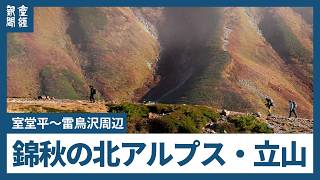
The Northern Alps in central Japan have entered the height of their autumn colors, with the alpine landscape around Tateyama's Murodo Plateau in Toyama Prefecture offering spectacular views of red and yellow vegetation, rugged mountain ridges and the rare Japanese rock ptarmigan, a protected bird species whose survival depends on the delicate balance of the mountain ecosystem.

Motorcycle owners across Japan can now choose their preferred license plate numbers under a new system introduced by the Ministry of Land, Infrastructure, Transport and Tourism on October 19th, with popular numbers allocated by lottery and applications costing between 2,500 and 3,000 yen.

Temperatures fell to their lowest levels of the season across much of Japan on the morning of October 18, with Rikubetsu in Hokkaido recording minus 4.3 degrees Celsius, the country's lowest temperature so far this autumn, before sunshine brought warmer conditions during the day and some areas experienced unseasonably hot weather.

Kyoto City expects revenue from its accommodation tax to more than double to approximately 13.2 billion yen this fiscal year following a substantial increase in the maximum nightly levy to 10,000 yen, as the city seeks to address overtourism and ease the pressure that millions of visitors place on residents and public infrastructure.

The Nada Fighting Festival, known for its spectacular collisions between massive portable shrines weighing around two tons, drew large crowds to Himeji, Hyogo Prefecture, on October 15, as participants repeatedly slammed the heavy structures into one another in a traditional ritual believed to please the gods.

The El Niño phenomenon developing in the Pacific Ocean has reached its strongest level since records began in 1949, with sea surface temperatures off Peru rising 4 degrees Celsius above normal in September, the Japan Meteorological Agency announced on October 9, raising concerns about extreme weather worldwide and the prospect of an unusually warm winter in Japan.