News On Japan

Heavy Rain Disrupts Tourism Ahead of Silver Week

TOKYO - Prolonged rain is disrupting tourism ahead of Japan's Silver Week holidays, forcing Nagatoro's popular river cruises to remain suspended for an 11th consecutive day while increased water flow at Fukuroda Falls in Ibaraki Prefecture is drawing more visitors.

The river cruises in Nagatoro, Saitama Prefecture, are one of the area's best-known attractions, taking passengers through rapids and past scenic gorge landscapes.

However, rising river levels caused by persistent rain have forced the service to suspend operations, leaving the usual departure point without any of the boats normally lined up there.

A visitor from Tokyo who had hoped to take the cruise said, "We were actually planning to go down the river too, but obviously we couldn't. It rained more than I expected, and I felt things were getting pretty bad. I think we'll head back early."

The cruises operated by Chichibu Railway had been suspended for 11 consecutive days as of September 16, and there was no clear prospect of services resuming after the Silver Week holiday period begins on September 19.

The rain is also causing concern at one of Nagatoro's largest barbecue facilities.

Masataka Furusawa, manager of Nagatoro Furusawa-en, said around five reservations had already been canceled for the Silver Week period. "If it were sunny throughout Silver Week compared with the rain continuing like this, the impact could amount to millions of yen," he said. "We are getting quite a few more inquiries about experiences such as making udon noodles and catching fish by hand. We want to develop those kinds of activities."

The prolonged rain has produced a very different effect at Fukuroda Falls, a popular tourist destination in Ibaraki Prefecture.

Visitors reach the falls by buying a ticket and walking through a tunnel, emerging to a dramatically altered view as the recent rain has greatly increased the volume of water.

Fukuroda Falls is regarded as one of Japan's three most famous waterfalls, alongside Kegon Falls and Nachi Falls.

The normally scenic cascade has been transformed by the rain, with large volumes of brown, muddy water crashing violently over the rock face.

Visitors said the unusual conditions made the falls even more impressive. One tourist from Mito said, "You rarely get to see it like this." A visitor from Tokorozawa, Saitama Prefecture, said, "I'd like to see it when it's sunny too, but I like how much water there is." Another visitor from Mito said, "I'd heard people saying the waterfall was incredible right now, so I came to see what it was like, but it was beyond what I imagined. It's almost a little frightening."

Businesses nearby have also noticed the increase in interest.

Keisuke Komuro, president of Takimotoya Honten, a restaurant about a seven-minute walk from the falls, said, "More people are coming and saying, 'It's raining, so let's go to Fukuroda Falls.' We have more tourists than you might expect considering the rain."

The shop is known for its yuzu miso, selling about 6,000 containers a year, and is hoping for strong business during the five-day holiday period. However, Komuro said there were concerns about the weather because of an approaching typhoon. "Fukuroda Falls can be viewed from the tunnel, so we hope people will still come even when it's raining," he said.

While some parts of Japan are struggling with prolonged rainfall, other areas are facing water shortages.

In Imari, Saga Prefecture, reduced-pressure water supply began on September 15 for the first time in 32 years, lowering the amount of water flowing from household and business taps.

At Kubota Fresh Fish, where large quantities of water are essential, Michiko Kubota said the shortage was difficult to manage. "We wash this area with water, and frost builds up inside the refrigerator, so we use water there too. We really have problems if we don't have water," she said.

Kubota said she is trying to conserve water at home, including by reusing stored water for washing, but there is a limit to how much a fresh food business can reduce consumption.

"There are some things we simply can't cut back on here at the shop because of hygiene," she said. "For now, all we can do is wait for the rain to fall."

Source: FNN

News On Japan
POPULAR NEWS

Japan experienced its coldest morning of the season on October 29th, with temperatures falling to new seasonal lows at 616 observation stations nationwide, following a powerful outbreak of cold air that brought the first snow to northern Japan and strong winter winds to Tokyo and western regions the previous day.

Typhoon No. 31, a very strong storm currently moving west near Minamitorishima Island in the western Pacific, could change direction several times in early November and potentially approach Japan's Ogasawara Islands, with its eventual path depending largely on the strength and position of a high-pressure system over the Japanese mainland, according to a forecast updated at 6 a.m. on October 29.

A magnitude 5.4 earthquake struck northeastern Chiba Prefecture at around 12:07 a.m. on October 29, registering a maximum intensity of 5-lower on Japan's seven-level seismic scale and sending tremors across a wide area of eastern and central Japan, including Narita Airport, where footage captured the moment of shaking.

GMO has announced a reward totaling approximately 150 million yen for information leading to the identification of hackers responsible for a cyberattack on its systems, while also pledging compensation to customers whose personal information has been exposed, as Japan faces a growing wave of cyberattacks targeting major companies.

A controversial penalty shootout decision during the Tokyo qualifiers for Japan's National High School Soccer Championship on October 24 has sparked debate after a team that believed it had secured victory was forced to continue playing and eventually lost, raising questions about whether a hole in the goal net contributed to an incorrect ruling.

MEDIA CHANNELS
         

MORE Travel NEWS

Japan's first significant snowfall of the season has brought winter conditions to Hokkaido and northern Honshu, with snow depths exceeding 10 centimeters in several mountain and inland locations on October 28, while a fresh wave of cold air is expected to bring further snowfall over the weekend of October 31 and November 1.

Osaka's iconic Tsutenkaku Tower celebrated the 70th anniversary of its reopening on October 28, marking seven decades since the landmark was rebuilt in 1956 as a symbol of the city's postwar recovery, while new attractions continue to draw visitors to the surrounding Shinsekai entertainment district.

Japan will introduce a major overhaul of its tax-free shopping system for foreign visitors on November 1, replacing immediate tax exemptions at stores with a refund system that requires travelers to pay the full consumption tax upfront and claim reimbursement when leaving the country, a change expected to reshape retail strategies and purchasing behavior across the tourism industry.

Heavy rain linked to former Typhoon No. 30 continued to affect large parts of Japan on October 26, with authorities warning of potentially dangerous rainfall from the Kanto region to Shikoku, raising concerns in Chiba Prefecture's Shisui Town, where flooding caused by Typhoon No. 25 last month left homes and roads submerged for nearly three weeks.

Asuka Village in Nara Prefecture is introducing new measures to control rising visitor numbers following the July 2026 World Heritage registration of the 'Asuka-Fujiwara: Archaeological Sites of Japan's Ancient Capitals,' seeking to protect its historic landscapes and residents' daily lives while benefiting from growing international interest.

The underground platform of the planned Kanagawa Prefecture Station on Japan's Chuo Shinkansen maglev line was opened to the public for the first time on October 24, offering visitors a rare glimpse of the high-speed railway project under construction in Sagamihara, Kanagawa Prefecture, with demand for the tour exceeding available places by approximately 12 times.

Japan marked the final Sunday of October with traditional autumn events across the country on October 25, including a spectacular water discharge drill at the World Heritage site of Shirakawa-go in Gifu Prefecture, a seasonal salmon feast in Miyagi Prefecture, and a parade of northeastern Japan's most famous festivals in Tokyo, despite widespread rain caused by a stationary autumn rain front.

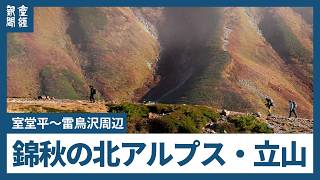
The Northern Alps in central Japan have entered the height of their autumn colors, with the alpine landscape around Tateyama's Murodo Plateau in Toyama Prefecture offering spectacular views of red and yellow vegetation, rugged mountain ridges and the rare Japanese rock ptarmigan, a protected bird species whose survival depends on the delicate balance of the mountain ecosystem.