News On Japan

Konosu Fireworks Festival Sets Guinness World Record

SAITAMA - The Konosu Fireworks Festival, one of Japan's largest fireworks events, set a Guinness World Record for the number of consecutive large-shell fireworks launched on October 10, as approximately 20,000 fireworks illuminated the autumn night sky over Konosu City in Saitama Prefecture.

The annual festival, which attracts more than 600,000 visitors each year, was held on its largest scale to date, featuring a spectacular fireworks program alongside a demonstration flight by the Japan Air Self-Defense Force's Blue Impulse aerobatic team.

Under clear skies and favorable weather conditions, organizers successfully achieved a Guinness World Record for the consecutive launching of shaku-dama fireworks, large shells measuring approximately 30 centimeters in diameter. The record-breaking display was among the highlights of an evening that brought together some of Japan's most impressive pyrotechnic performances.

The program also featured massive yonshaku-dama shells, measuring approximately 120 centimeters in diameter and ranking among the largest fireworks used in Japan, along with elaborate starmine displays in which multiple fireworks are launched in rapid succession to create coordinated patterns of light and color.

The combination of enormous aerial explosions, rapid-fire sequences and carefully choreographed displays transformed the expansive autumn sky into a brilliant spectacle, showcasing the scale and technical sophistication of Japanese fireworks craftsmanship.

The Konosu Fireworks Festival is organized primarily by the youth division of the Konosu City Chamber of Commerce and Industry, with the aim of bringing dreams and hope to children through the excitement and beauty of fireworks.

Over the years, the event has developed into one of Japan's leading fireworks festivals, drawing hundreds of thousands of spectators and becoming a major autumn attraction in Saitama Prefecture.

This year's record-breaking edition further strengthened the festival's reputation for ambitious large-scale displays, combining traditional Japanese fireworks techniques with a Guinness World Record achievement.

The event was also captured using high-resolution cameras and professional audio equipment, allowing viewers to experience the scale, sound and intensity of the fireworks through an uninterrupted recording of the display.

Source: TBS

News On Japan
POPULAR NEWS

Japan launched a new national disaster management agency on November 2nd to strengthen its response to major emergencies, just days before a powerful earthquake struck Aichi Prefecture, injuring 24 people and renewing concerns over the possibility of a catastrophic Nankai Trough earthquake.

Northern Japan experienced record-breaking cold on the morning of November 11th, with temperatures plunging to minus 20.2 degrees Celsius in Horokanai, Hokkaido, marking the first time in Japan's recorded history that temperatures have fallen below minus 20 degrees during the first half of November.

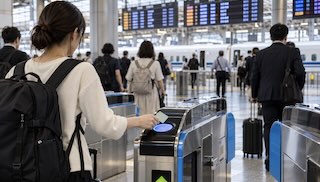
East Japan Railway (JR East) announced on November 10th that it will introduce touch-free ticket gates at 40 stations, including every station on Tokyo's Yamanote Line, from spring 2028, allowing passengers using Mobile Suica to pass through without taking their smartphones out of their pockets or bags.

Japan's Children and Families Agency unveiled its first national guidelines on November 10th for parental involvement in children's internet use, dividing those aged 0 to 18 into six developmental stages as the government considers tighter regulations on social media platforms to protect young people from online bullying, exploitation, and other growing risks.

As of 3 a.m. on Wednesday, November 11, Typhoon No. 32 was moving east-northeast over waters east of Chichijima in the Ogasawara Islands, gradually heading away from the Japanese archipelago after passing near the island between late Tuesday night and early Wednesday morning.

MEDIA CHANNELS
         

MORE Travel NEWS

The ginkgo-lined avenue at Hiroshima Shudo University in Hiroshima City has reached its peak autumn color, transforming the campus into a golden landscape as trees display their brilliant yellow leaves.

A woman was seriously injured in a wild boar attack in Nishinomiya, Hyogo Prefecture, as sightings of unusually large boars increase across the Kansai region, with some weighing nearly 150 kilograms and capable of running at speeds of 45 kilometers per hour.

Japan's autumn foliage season is entering one of its most colorful periods, with spectacular displays of red and golden leaves attracting visitors to lakes, mountain valleys and historic temples across the country, while the latest forecasts suggest that Tokyo, Kyoto and other major cities will see some of their best autumn scenery later than usual this year.

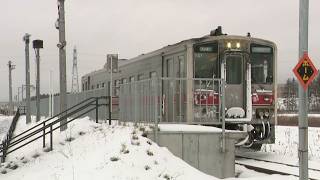
Travel conditions across Hokkaido were showing signs of improvement on Wednesday morning, November 11, following heavy snowfall and freezing temperatures that disrupted rail services and prompted warnings for air travelers and motorists, with railway information updated at 4:23 a.m. showing no major delays or cancellations across the prefecture's principal routes.

As of 3 a.m. on Wednesday, November 11, Typhoon No. 32 was moving east-northeast over waters east of Chichijima in the Ogasawara Islands, gradually heading away from the Japanese archipelago after passing near the island between late Tuesday night and early Wednesday morning.

Odakyu Electric Railway unveiled images of its next-generation Romancecar limited express train on November 10, revealing a striking blue-green design featuring enormous circular windows that will allow passengers to enjoy panoramic views from ceiling to floor when the new trains enter service in March 2029.

A powerful cold air mass brought the lowest temperatures of the season to much of Japan on Tuesday, November 10, with Hokkaido recording a nationwide seasonal low of minus 11.8 degrees Celsius, heavy snowfall covering northern communities, and Tokyo experiencing midwinter conditions as temperatures fell sharply across the country.

The card worked on the subway, paid for a convenience-store coffee and still has plenty of yen left. Then the Shinkansen gate refuses to open. Another top-up seems the obvious fix, especially with a departure time creeping closer. But the balance may be perfectly healthy.