News On Japan

CEATEC 2026 Opens With Latest AI Cybersecurity

TOKYO - One of Japan's largest digital technology exhibitions, CEATEC 2026, opened in Tokyo on October 13, drawing attention to advances in artificial intelligence designed to combat cyberattacks and improve rescue operations at disaster sites, with 821 companies and organizations showcasing their latest innovations over four days.

AI-powered cybersecurity was a major focus of the exhibition, reflecting growing concern over unauthorized access and increasingly sophisticated cyberattacks. One booth offered visitors an interactive simulation of a cyberattack, allowing them to choose from a series of proposed defensive measures and experience how different responses could help protect computer systems.

Shunsuke Harada of NEC explained the importance of using AI to counter emerging threats, saying, "Since attackers are using AI, defenders also need to use AI to identify vulnerabilities."

The demonstration highlighted how artificial intelligence is becoming an increasingly important tool for identifying weaknesses in computer networks and developing countermeasures against malicious intrusions.

Technologies designed for disaster response also attracted attention, including an AI-based system capable of separating individual sounds from the complex background noise typically encountered at emergency sites.

At one demonstration booth, visitors experienced a simulated disaster environment filled with overlapping noises, making it difficult to distinguish cries for help. The AI system was able to isolate different sounds, allowing voices that would otherwise be drowned out by surrounding noise to be identified more clearly.

The technology is being developed with potential applications for rescue robots, which could use the system to detect calls for help from people trapped in disaster areas, even when heavy machinery, collapsing structures, and other environmental sounds make human voices difficult to hear.

The four-day CEATEC 2026 exhibition brings together 821 participating companies and organizations, highlighting how AI and other emerging digital technologies are being applied to practical challenges ranging from cybersecurity to emergency response.

Source: FNN

News On Japan
POPULAR NEWS

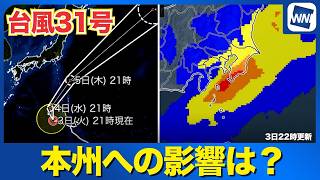
Typhoon No. 31 (In-Fa) was moving northwest over waters south of Japan as of 9 p.m. on November 3rd, regaining strong typhoon status with a central pressure of 970 hectopascals, while a rapidly developing low-pressure system associated with its northward movement is expected to bring more than 200 millimeters of rain to parts of the Kanto region and Izu Islands between November 4th and 5th.

Kyoto's popular Sagano Romantic Train is attracting large numbers of foreign tourists for its final autumn season, with the familiar red-and-black carriages set to retire at the end of 2026 after carrying a cumulative 30 million passengers, making way for new trains scheduled to enter service in 2027.

Kyoto City announced plans on November 2nd to introduce tougher regulations on private lodging facilities, including a requirement for staff to be stationed permanently inside the properties or in nearby buildings, as complaints from residents continue to rise over noise and disruptive tourist behavior.

Spanish authorities have confirmed that a Japanese national was among the 69 people killed in a collision between two high-speed trains in central Spain on October 28, while Japanese officials are continuing efforts to establish the identities of victims following the disaster, which also left about 200 people injured.

Train services remain suspended on part of the JR Soya Line in Hokkaido on November 2 after a limited express train collided with a brown bear and derailed in Nakagawa on Saturday night, with replacement bus services beginning Monday morning between Asahikawa and Wakkanai.

MEDIA CHANNELS
         

MORE Sci-Tech NEWS

Scientists at Toyo University have identified a possible weakness in alligator weed, an invasive aquatic plant described as one of the world's worst, raising hopes of finding a way to control its extraordinary ability to regenerate as it spreads through Japan's waterways, threatens agricultural land, and creates growing concerns about flooding.

Japanese pharmaceutical company Sumitomo Pharma announced on October 30 that the first patient to receive its newly approved regenerative medicine treatment for Parkinson's disease underwent a successful brain cell transplant at Kyoto University Hospital in early October, with the woman in her 50s already returning to work and recovering well.

Japan's ports have long been the backbone of one of the world's most export-driven economies.

A company in Kagoshima has developed a new garbage collection station that uses specially shaped wires and rollers instead of conventional nets to prevent crows from scattering household waste, offering a cleaner and more convenient solution to a persistent problem in Japan's urban neighborhoods.

Japan has chosen a small, irregularly shaped moon orbiting Mars rather than the planet itself for its latest space exploration mission, taking advantage of Phobos' extremely weak gravity and lack of atmosphere to make collecting extraterrestrial samples and returning them to Earth far easier and less expensive, while potentially unlocking secrets about the history of Mars and the origins of water and organic materials in the solar system.

Japan's H3 rocket successfully launched the Martian Moons eXploration (MMX) spacecraft from the Tanegashima Space Center in Kagoshima Prefecture on the morning of October 20th, placing the probe into its planned orbit in the first stage of a mission to collect samples from one of Mars' moons and return them to Earth.

JR West has unveiled multifunctional railway maintenance machinery, including a heavy-duty single-arm robot and a mass-produced humanoid robot, as part of efforts to address labor shortages and reduce workplace accidents in railway maintenance operations.

Subaru unveiled experimental vehicles equipped with a new driver assistance system on October 18, introducing technology that can automatically guide a vehicle to a safe roadside location when the driver becomes incapacitated, with plans to introduce the system in production models by the late 2020s.