News On Japan

Tokyo Disney Rule Breakers?

TOKYO - A promotional video released by Tokyo Disney Resort has recently stirred controversy, raising questions on what constitutes official park policy.

Tokyo Disney Rule Breakers?

The video, released on February 20th, promotes the special spring event "Disney Palooza." It features a group of men and women enjoying a parade, but Disney fans have raised objections, calling it "annoying," "obstructive," and expressing that it would block the view of those behind.

In the video, some people are seen wearing headbands with character ears, and in some scenes, they appear to be holding cameras above their heads, which has raised questions about whether such actions violate the park's rules.

A Disney fan commented, "I take off my headband during parades so that people behind me can see," and "The official stance should be to remove headbands."

Tokyo Disney Resort's official website requests that "when taking photos, please ensure that your camera does not exceed head height. Additionally, for some shows, you may be asked to remove hats or headbands with large decorations."

The controversial scenes in the 44-second PR video appear in six places.

How do actual visitors handle their headbands during parades?

Footage of a parade shot in April 2018 shows that most people sitting along the parade route are not wearing headbands. The same was observed in a parade filmed in April 2023.

Tokyo Disney Resort has been calling for parade viewing etiquette as a "request, not a rule." However, among Disney fans, there is an unwritten rule to remove headbands and not raise hands too high to avoid obstructing others' views.

A Disney fan said, "If one person wears a headband, it can block the view for five or six people," and "I make sure to remove my headband and not raise my hands too much while watching the show."

Oriental Land, which operates Tokyo Disney Resort, commented, "Depending on the content of the show and the viewing environment at the time, our cast members may make requests, but it is not a rule that requires uniform compliance from all guests."

Source: FNN

News On Japan
POPULAR NEWS

Toyota Motor will begin operating fully autonomous taxis in 2027 through a partnership with U.S. self-driving technology company Waymo, marking a major step in the Japanese automaker's efforts to expand driverless transportation services.

Mount Fuji has received its first snowcap of the season, the Japan Meteorological Agency announced on October 30, after temperatures at the summit plunged to minus 9.4 degrees Celsius, marking the arrival of winter conditions on Japan's highest mountain.

U.S. intelligence agencies suspect that a Chinese female intelligence operative developed a close relationship with Nvidia CEO Jensen Huang in an attempt to obtain confidential corporate and U.S. government information, according to a report published by The New York Times on October 29th.

The Japanese government has asked major telecommunications operators to forcibly block access to websites believed to contain personal information stolen in a cyberattack on GMO, it emerged on October 29th, as authorities moved to prevent further exposure of sensitive data online.

Typhoon No. 31 was located near Minamitorishima Island in the Pacific Ocean, as of 3 a.m. on October 30, and was expected to approach the Ogasawara Islands south of Tokyo over the October 31-November 1 weekend while maintaining very strong intensity, bringing a growing risk of dangerously high waves, powerful swells and extremely rough seas.

MEDIA CHANNELS
         

MORE Travel NEWS

Hokkaido University's famous ginkgo avenue in Sapporo has reached its peak autumn color, attracting residents and tourists to the campus ahead of the two-day Hokudai Golden Leaf Festival on October 31 and November 1, an event that drew 35,000 visitors last year.

A spectacular illumination of the Hashigui Rocks, a nationally designated natural monument in Kushimoto, Wakayama Prefecture, is set to begin on October 30, transforming a series of unusual coastal rock formations into a colorful nighttime attraction.

Japan's first major cold spell of the season brought snow, freezing winds and record-low autumn temperatures across the country, with 639 observation points registering their coldest readings of the season on October 29, while forecasts issued that evening indicated that temperatures would recover on October 30 as rain spread across much of the country.

Typhoon No. 31 was located near Minamitorishima Island in the Pacific Ocean, as of 3 a.m. on October 30, and was expected to approach the Ogasawara Islands south of Tokyo over the October 31-November 1 weekend while maintaining very strong intensity, bringing a growing risk of dangerously high waves, powerful swells and extremely rough seas.

Japan's first significant snowfall of the season has brought winter conditions to Hokkaido and northern Honshu, with snow depths exceeding 10 centimeters in several mountain and inland locations on October 28, while a fresh wave of cold air is expected to bring further snowfall over the weekend of October 31 and November 1.

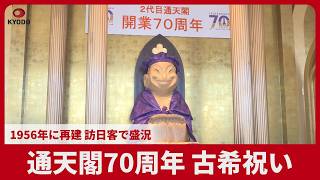
Osaka's iconic Tsutenkaku Tower celebrated the 70th anniversary of its reopening on October 28, marking seven decades since the landmark was rebuilt in 1956 as a symbol of the city's postwar recovery, while new attractions continue to draw visitors to the surrounding Shinsekai entertainment district.

A magnitude 5.4 earthquake struck northeastern Chiba Prefecture at around 12:07 a.m. on October 29, registering a maximum intensity of 5-lower on Japan's seven-level seismic scale and sending tremors across a wide area of eastern and central Japan, including Narita Airport, where footage captured the moment of shaking.

Japan will introduce a major overhaul of its tax-free shopping system for foreign visitors on November 1, replacing immediate tax exemptions at stores with a refund system that requires travelers to pay the full consumption tax upfront and claim reimbursement when leaving the country, a change expected to reshape retail strategies and purchasing behavior across the tourism industry.