News On Japan

Linear Chuo Shinkansen's Partial Completion Pushed Back to 2031

TOKYO - JR Central has announced that the completion of some sections of the construction for the "Linear Chuo Shinkansen" in Yamanashi and Nagano prefectures is expected to be delayed until 2031.
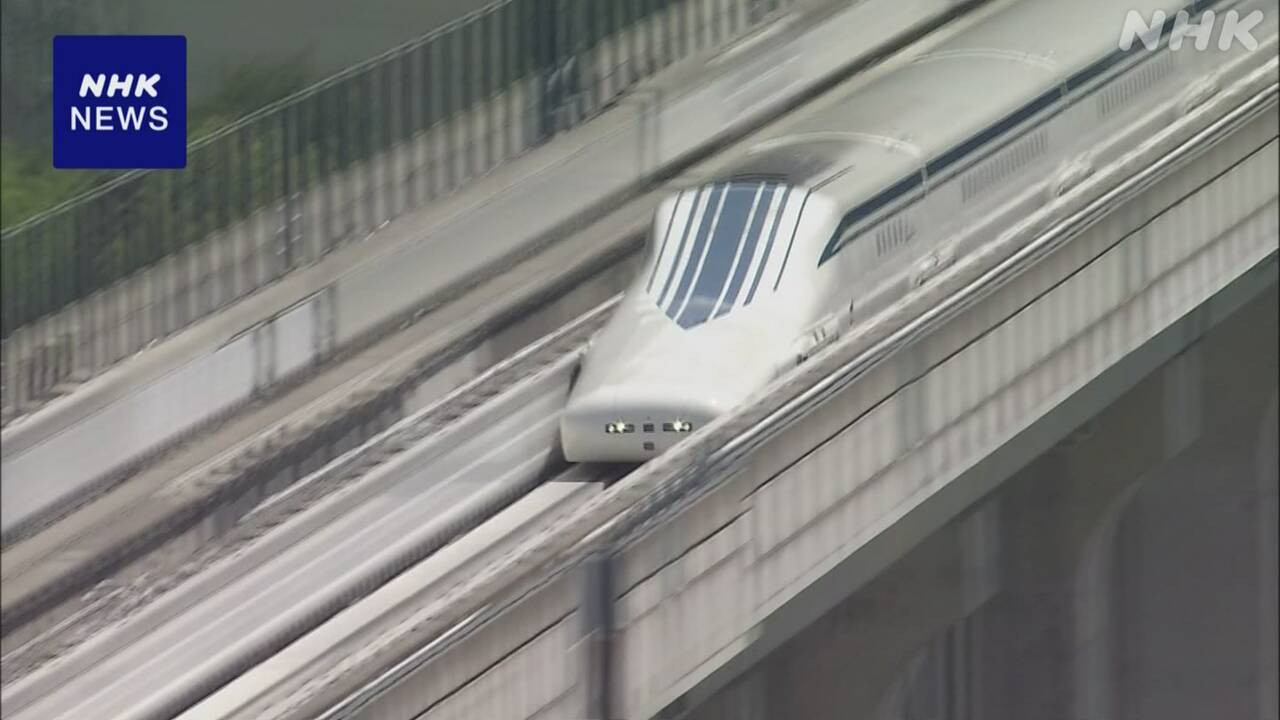
Linear Chuo Shinkansen's Partial Completion Pushed Back to 2031

JR Central had previously given up on its targeted opening year of 2027 last week, marking the first time the company has set a construction period beyond 2027. According to JR Central's announcement, the construction of the Yamanashi prefecture station and the "Zakoji Overpass" in Iida, Nagano prefecture, is now projected to be completed in 2031.

JR Central revealed on March 29, that it had to abandon its goal of opening in 2027 due to Shizuoka Prefecture's continued refusal to allow construction to begin. All construction work on the Linear project had been scheduled to be completed within 2027, but this is the first time a timeline extending beyond that year has been established.

JR Central estimates that the construction work in Shizuoka could take about ten years, indicating that even if construction could start immediately, the opening would be postponed until 2034 or later. However, with Governor Kawakatsu of Shizuoka Prefecture indicating his intention to resign, there is a growing focus on whether this development could lead to progress in the situation.

Source: NHK

News On Japan
POPULAR NEWS

Typhoon No. 25 was making its closest approach to the Kanto region on September 21, bringing central Tokyo into the storm-force wind zone while torrential rain caused widespread flooding, landslides and road damage across Tokyo, Kanagawa, Chiba and Saitama.

Typhoon No. 25 was moving away from the Kanto coast on the night of September 21 after bringing widespread disruption to flights, railways and highways, but serious transport problems were set to continue into September 22, particularly across Chiba Prefecture.

People aged 65 and older accounted for a record 29.6% of Japan's population in 2026, the highest proportion among major countries worldwide, while the number of elderly people in employment also reached an all-time high as Japan marked Respect for the Aged Day on September 21.

Emperor Naruhito and Empress Masako watched Japan defeat Kazakhstan in a women’s basketball preliminary-round game at the 20th Asian Games in Nagoya.

A drone filming the illuminated Nagoya City Hall headquarters crashed into a building across the road shortly before 9 p.m. on September 17, with police investigating whether the flight may have violated Japan's Civil Aeronautics Act.

MEDIA CHANNELS
         

MORE Sci-Tech NEWS

A rare pod of around 50 dolphins was spotted swimming through the Seto Inland Sea off Ozu, Ehime Prefecture, with dozens of dorsal fins repeatedly breaking the surface as the animals moved together.

Tesla unveiled its Cybercab in Japan for the first time on September 11, showcasing an AI-powered autonomous taxi designed without a steering wheel or pedals.

Large volumes of floodwater poured into the Metropolitan Area Outer Underground Discharge Channel in Kasukabe, Saitama Prefecture, following heavy rain on September 7, prompting the massive underground flood-control facility known as the "Underground Temple" to go into operation.

Fluorescent lamps that have illuminated Japanese homes and workplaces for decades are approaching the end of production, with Panasonic preparing to wind down a business it has operated since 1951 while experts warn that incorrectly replacing some fixtures with LEDs could create a fire risk.

Osaka-based spray nozzle maker IKEUCHI is expanding applications for its proprietary "Dry Fog," an ultra-fine mist that can cool, humidify and create visual effects without leaving surfaces wet, with the technology now being used in factories, livestock farming, crop cultivation and tourist attractions in Japan and overseas.

Japanese companies are moving closer to commercializing photonics-electronics convergence technology that replaces part of conventional electrical data transmission with optical signals, potentially allowing huge volumes of data to move with lower latency while sharply reducing power consumption as artificial intelligence drives rapid growth in electricity demand from data centers.

A new generation of optoelectronic integration technology developed over four decades by Japanese companies is moving closer to commercialization, offering a way to transmit huge volumes of data with low latency while sharply reducing the electricity consumed by data centers as artificial intelligence drives explosive growth in computing demand.

Dyson CameraJet™ turns the smart toothbrush into an active sensing product, making useful feedback and clear privacy design part of the same engineering brief.