News On Japan

Japan Greenlights Coverage for iPS Parkinson’s Treatment

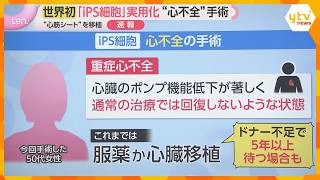
TOKYO - Japan has approved the application of public health insurance to a regenerative medicine product using iPS cells to treat Parkinson’s disease, marking the world’s first practical use of iPS cell-based regenerative medicine.

Because iPS cells can transform into various types of cells, including nerve and muscle cells, they are expected to help restore cellular function. In March this year, the health minister granted conditional and time-limited approval for the manufacture and sale of two regenerative medicine products using iPS cells.

One of the approved products, “Amsepuri,” which is used to treat Parkinson’s disease, was formally approved for coverage under Japan’s public medical insurance system on May 13th by the Central Social Insurance Medical Council, an advisory body to the health minister.

The council also approved a price of approximately 55.3 million yen for the treatment.

Developed by Sumitomo Pharma, “Amsepuri” is designed to be transplanted into the brains of Parkinson’s patients with the aim of improving symptoms. It represents the world’s first practical application of regenerative medicine using iPS cells.

Another iPS cell-based regenerative medicine product approved by the health minister, “ReHeart,” is also expected to face a decision around summer on whether it will be covered by public health insurance.

Source: TBS

News On Japan
POPULAR NEWS

A bear that injured four people in Fukushima City escaped despite efforts to capture it using tranquilizer darts and box traps, prompting authorities to urge residents to remain on high alert.

Typhoon Jangmi (Typhoon No. 6) swept across Japan on June 3rd, bringing record-breaking rainfall, widespread flooding, landslides, transport disruptions, and powerful winds, while prompting Tokyo's first-ever issuance of a Level 4 danger alert under the country's new weather warning system. The storm also exposed challenges surrounding evacuation behavior, as many residents chose not to leave their homes despite official warnings affecting more than 1.6 million people across the Tokyo metropolitan area.

A section of wall plaster and part of a roof eave were found damaged at Himeji Castle, the UNESCO World Heritage site in Hyogo Prefecture, on June 4th, with officials investigating whether strong winds from Typhoon Jangmi (Typhoon No. 6) were responsible.

A body discovered in a river in Tatsuno, Hyogo Prefecture, has been identified as 42-year-old Kenji Oyama, the suspect wanted nationwide in connection with the murder of a mother and daughter last month, police announced on June 4th.

As Typhoon Jangmi (Typhoon No. 6) struck Wakayama Prefecture on June 3rd, the storm became the first major test of Japan's newly introduced disaster weather warning system, revealing both the benefits of earlier evacuation calls and the challenges local authorities faced in helping residents understand and respond to the new alerts.

MEDIA CHANNELS
         

MORE Sci-Tech NEWS

The video explains how a tiny, remote Japanese island called Minami Torishima (Marcus Island) could become one of the most strategically important locations in the world due to enormous deposits of rare earth elements buried in deep-sea mud beneath the Pacific Ocean.

A large solar power facility built on a mountainside in Fukushima City is generating reflected sunlight for far longer than originally projected, with a city survey finding that glare at some locations lasted up to 53 minutes per day—more than ten times the maximum duration predicted by the operator.

Japan’s largest space business exhibition opened at Tokyo Big Sight on May 27th, showcasing a growing wave of companies from outside the traditional aerospace sector entering the rapidly expanding space industry.

JR Tokai held its first-ever resident briefing session in Shizuoka City on May 26th regarding construction of the Linear Chuo Shinkansen, outlining measures for water resource management and environmental conservation as the company seeks to gain local support ahead of the start of construction in Shizuoka Prefecture.

A seasonal spectacle has begun on the Miwasaki coast in Shingu, Wakayama Prefecture, where tiny male chigogani crabs are emerging from their burrows at low tide and rhythmically waving their claws in a movement resembling a dance.

A small onshore wind turbine collapsed in Oga, Akita Prefecture, in March, raising fresh concerns among local residents following a series of wind turbine-related accidents in the city over recent years.

Japan's next-generation homegrown supercomputer, Fugaku NEXT, is being developed with a radically different strategy from its predecessors, abandoning the single-minded pursuit of the world's fastest calculation speed in favor of artificial intelligence capabilities expected to accelerate breakthroughs in fields ranging from drug development and batteries to disaster prevention and food production.

A safety alert is expected to be issued as early as May 21st over Tavneos, a drug used to treat vasculitis, after 20 patients who took the medication died from serious liver dysfunction, according to people familiar with the matter.