News On Japan

Tours of 'Disaster Prevention Underground Temple'

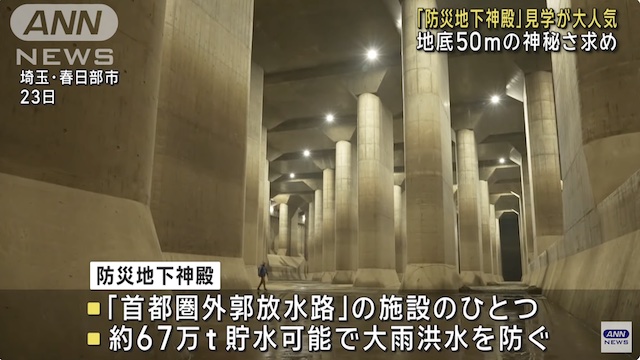
TOKYO - Located in Kasukabe City, Saitama Prefecture, the 'Disaster Prevention Underground Temple' is a key feature of the Metropolitan Area Outer Underground Discharge Channel, one of the largest in the world. This facility, situated 50 meters underground, can store approximately 670,000 tons of water, playing a crucial role in preventing floods caused by heavy rain.
Tours of 'Disaster Prevention Underground Temple'

In June last year, when Typhoon No. 2 caused rivers such as Nakagawa, a tributary of the Tone River, to overflow, this underground temple temporarily stored the excess water, which was later discharged into the Edogawa River in a controlled manner.

A tour participant commented, "It's awe-inspiring to think that such a grand structure exists underground, protecting people from floods."

The "Disaster Prevention Underground Temple" offers general tours, attracting more than 60,000 visitors in fiscal year 2023.

Participants can expect to be awed by the sheer scale and architectural prowess of the facility. The tour includes a walk through the main storage tank, which is supported by 59 massive pillars, each standing 18 meters tall and weighing 500 tons. Visitors are often struck by the temple-like appearance of the structure, which adds to its mystique and appeal.

Tours are available throughout the year, and it is advisable to book in advance due to the high demand. The facility provides safety equipment for visitors, and the tour is suitable for all ages.

Source: ANN

News On Japan
POPULAR NEWS

Typhoon No. 24 (Krovahn) was moving south near Okinawa's main island as of 9 p.m. on September 5, bringing extremely heavy rain exceeding 50 millimeters per hour in some areas north of the storm's center, which the Japan Meteorological Agency estimated to be over waters about 100 kilometers southeast of Naha with a central atmospheric pressure of 992 hectopascals.

Tokyo has unveiled the design for a major redevelopment of the plaza outside Shinjuku Station's west exit, with a landmark tree, water-play area and event space planned as part of a transformation centered on "greenery, light and people" that is scheduled for completion in 2035.

A late former professor at Asahikawa Medical University has won the Ig Nobel Prize in Medicine for scientifically examining the proper way to blow the nose, extending Japan's streak of Ig Nobel winners to 20 consecutive years.

Night trains are making a comeback across Japan, with railway operators introducing new overnight services and even experimenting with overnight Shinkansen trains as demand grows for alternatives that combine transportation, accommodation and the experience of traveling through the night.

Bear sightings and attacks have been reported across Japan throughout the summer, with animals damaging sheds, attacking livestock and injuring people, while experts warn that autumn is the most dangerous season as bears expand their range in search of food.

MEDIA CHANNELS
         

MORE Travel NEWS

Japanese customs authorities blocked a record 19,568 shipments suspected of infringing intellectual property rights in the first half of 2026, up 12% from a year earlier, as the expansion of cross-border e-commerce drove an increase in imported parcels.

Hikone Castle in Shiga Prefecture has been formally selected as Japan's candidate for nomination as a UNESCO World Cultural Heritage site, advancing a campaign that has continued for more than 30 years and aims to secure inscription in the summer of 2028.

Highway service areas around the Kanto region are becoming destinations in their own right, offering travelers everything from freshly harvested vegetables and popular regional restaurant dishes to baths, observation decks and family events during the busy summer vacation season.

Japan's Ministry of Economy, Trade and Industry raised subsidies for aviation fuel used on domestic flights from September 3, doubling the support rate while ending subsidies for international flights.

Night trains are making a comeback across Japan, with railway operators introducing new overnight services and even experimenting with overnight Shinkansen trains as demand grows for alternatives that combine transportation, accommodation and the experience of traveling through the night.

Osaka City plans to tighten regulations on private lodging businesses, or minpaku, by generally prohibiting new operations in wooden and steel-frame apartment buildings where residents already live, following repeated complaints over noise and garbage.

Bear sightings and attacks have been reported across Japan throughout the summer, with animals damaging sheds, attacking livestock and injuring people, while experts warn that autumn is the most dangerous season as bears expand their range in search of food.

Kashima Shrine in Kashima, Ibaraki Prefecture, held its Ofune Festival on September 2, with a spectacular fleet of more than 100 brightly decorated boats sailing along rivers and across lakes in a tradition staged once every 12 years during the Year of the Horse.