News On Japan

Emergency Measures Initiated to Tackle Aviation Fuel Crisis

TOKYO - To address the severe aviation fuel shortage in Japan, a new initiative has been launched as part of an emergency response formulated by the public and private sectors.

According to government officials, efforts are underway to import fuel from South Korea and other overseas sources. Additionally, the government aims to communicate flight schedule increases to oil refineries in advance, so they can adjust their production plans accordingly.

The government is expected to hold a meeting of relevant ministers as early as next week to finalize the emergency measures.

Source: FNN

News On Japan
POPULAR NEWS

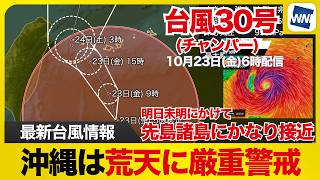
Typhoon No. 30 (Champar) brought widespread transport disruption to Okinawa on October 23, forcing the cancellation of flights and ferry services, closing airports and bridges, and leaving travelers stranded as violent winds and heavy rain swept across the Sakishima Islands, with further disruption expected through October 24.

Large and powerful Typhoon No. 30 was approaching Okinawa's Sakishima Islands at 3 p.m. on October 23, bringing violent winds reaching 51.7 meters per second, rainfall exceeding 300 millimeters and waves forecast to rise above 10 meters, with the storm expected to slow as it changes direction and prolong dangerous conditions across the region.

A critical security flaw discovered in PHP, a programming language used by an estimated 70% of the world's web systems, has triggered widespread disruptions across Japan since October 21, forcing banks, restaurant chains, government agencies and other businesses to suspend online services as a precaution against potential cyberattacks.

A growing wave of cyberattacks across Japan has raised concerns over the possible use of Chinese-developed artificial intelligence in hacking operations, with personal information belonging to tens of thousands of police employees potentially exposed and major companies forced to suspend online services, while cybersecurity experts warn that slow decision-making within Japanese organizations is allowing damage to spread.

Japan's H3 rocket successfully launched the Martian Moons eXploration (MMX) spacecraft from the Tanegashima Space Center in Kagoshima Prefecture on the morning of October 20th, placing the probe into its planned orbit in the first stage of a mission to collect samples from one of Mars' moons and return them to Earth.

MEDIA CHANNELS
         

MORE Business NEWS

Japan's financial markets suffered another sharp setback on October 22 as heavy selling in semiconductor and artificial intelligence-related stocks sent the Nikkei 225 down 1,713.40 points, or 2.65%, to 62,907.84, its lowest closing level since July 30.

Japan's trade deficit nearly doubled in the first half of fiscal 2026 to 2.8184 trillion yen, driven largely by surging crude oil prices following turmoil in the Middle East, while the value of oil imports from the United States increased nearly ninefold as Japan sought alternative sources of supply.

A growing wave of cyberattacks across Japan has raised concerns over the possible use of Chinese-developed artificial intelligence in hacking operations, with personal information belonging to tens of thousands of police employees potentially exposed and major companies forced to suspend online services, while cybersecurity experts warn that slow decision-making within Japanese organizations is allowing damage to spread.

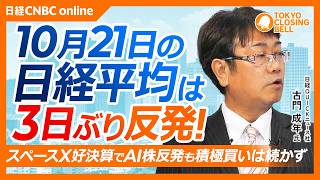
Tokyo stocks rebounded on October 21, with the Nikkei 225 closing 545.82 points higher at 64,621.24, a gain of 0.85%, as stronger U.S. equities, renewed buying in technology shares and encouraging Japanese export figures helped the market recover from two consecutive sessions of losses.

Japanese banks and securities firms are moving to stop using facial photographs from driver's licenses to verify customers opening accounts online, following a series of personal information leaks that have raised concerns about fraudulent account applications.

Japan's Nikkei 225 Stock Average closed at 64,075.42 on October 20th, falling 841.28 points, or 1.30%, as renewed selling in semiconductor and artificial intelligence-related shares, rising oil prices and concerns over inflation pushed Tokyo stocks lower for a second consecutive session.

Nearly one in three large companies in Japan have experienced a data leak or a suspected breach, according to a survey released by Teikoku Databank on October 19th, highlighting growing concerns over corporate information security as unauthorized access incidents continue to affect businesses across the country.

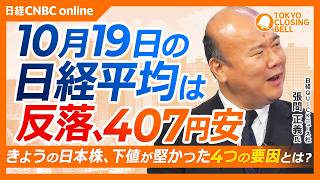
Japan's Nikkei Stock Average closed 407.59 points lower at 64,916.70 on October 19, a decline of 0.62%, recovering from an intraday plunge of more than 1,400 points as concerns over artificial intelligence investment weighed on semiconductor and technology shares, while buying in banks, utilities and other domestic sectors helped the broader TOPIX index finish slightly higher.