News On Japan

Japan's Rice Strategy Fails

TOKYO - Japan’s government plan to flood the market with stockpiled rice to lower prices is facing setbacks, as demand slumps and cancellations from retailers increase. Initially popular, the rice is now piling up on shelves, prompting calls to extend the end-of-August sales deadline. Even discounted imported rice is struggling to sell. Meanwhile, rice prices have unexpectedly risen for the first time in 10 weeks.

Initially launched as part of a campaign to flood the market and drive down prices, the plan is now prompting calls from retailers to extend the looming sales deadline.

Panasonic has just unveiled a new rice cooker designed to cook even aged rice deliciously—an apparent nod to the current oversupply. But despite early enthusiasm, demand for the government-released stockpile rice has sharply declined. At one point, long lines formed before stores opened. Now, shelves are visibly stacked with unsold bags, and purchase limits have been lifted.

"The initial sales were overwhelming, but that was the peak," said Junko Matsui, head of Super Maruyasu. "We expect to sell out by late August, but it’s going to be close."

The same slowdown is affecting imported rice. Aeon began selling U.S.-grown Calrose rice in June, and starting today, the price has been slashed by 700 yen to 1,980 yen (excluding tax) in a bid to stimulate demand.

Despite the market being saturated with rice—from both stockpiles and imports—prices are not falling as expected. On the contrary, the average price for a 5-kilogram bag of rice at supermarkets rose 40 yen from the previous week to 3,625 yen, marking the first increase in 10 weeks.

Some consumers remain hesitant to buy the older rice, with one shopper in her 30s saying, "My family is concerned because it’s aged rice, and the taste is different. Since we have kids, we’ve gone back to regular branded rice."

Agriculture Minister Koizumi revealed that about 29,000 tons, roughly 10% of the 300,000 tons of stockpile rice allocated to supermarkets and food services, have been canceled.

Delays in distribution and processing facilities are believed to be behind the cancellations. The government-set sales deadline is the end of this month, but many businesses are calling for it to be extended.

"Extending the sales period may affect the pricing of newly harvested rice," said Koizumi. "We’ll monitor the situation closely and consider countermeasures as needed."

Source: TBS

News On Japan
POPULAR NEWS

[Updated 5:53 p.m.] A powerful earthquake struck off Mindanao Island in the southern Philippines at 8:38 a.m. (Japan time) on June 8th, generating tsunami waves across parts of the Pacific, causing building collapses and casualties near the epicenter, and prompting the Japan Meteorological Agency to issue tsunami advisories along a wide stretch of Japan's Pacific coastline, which remained in effect as of 5:53 p.m.

A clinic director and a former Peruvian staff member have been referred to prosecutors after the man allegedly performed medical procedures without a license, including an external cephalic version—a procedure used to manually turn a baby into the correct position before birth—at an obstetrics and gynecology clinic in Fukuoka City, raising concerns about patient safety and oversight in maternity care.

A large bear was captured on security camera footage running through a shopping arcade in central Utsunomiya, Tochigi Prefecture, in the early hours of June 7th, as authorities stepped up warnings following a series of bear sightings across the city.

The family of James "Weston" Higginbotham, a 20-year-old Auburn University student who disappeared during a family vacation in Japan, announced on June 7th that he has been found dead after a volunteer search-and-rescue group located his body in a mountainous area outside Kyoto, bringing a week-long multinational search to a tragic end.

Japan's Meteorological Agency announced on June 7th that the rainy season is believed to have begun in the Tokai and Kanto-Koshin regions, marking the seasonal shift to wetter weather across a broad area of the country.

MEDIA CHANNELS
         

MORE Politics NEWS

For several months, Japan has been moving in a more nationalist and conservative direction. The shift has been fuelled by economic challenges at home and growing regional tensions with China.

Prime Minister Sanae Takaichi's administration is facing mounting scrutiny over allegations that members of her campaign were involved in distributing online videos that disparaged rival candidates during the February House of Representatives election, with opposition parties intensifying their questioning in the Diet and demanding further clarification.

The Japanese government approved its 2026 Environment White Paper at a Cabinet meeting on June 5th, warning that a record-high 50,000-plus bear sightings recorded nationwide during fiscal 2025 have become a serious threat to public safety while also highlighting growing concerns over Japan's aging hunting population and the need to train a new generation of hunters.

Prime Minister Sanae Takaichi faced intense questioning in the House of Representatives Budget Committee on June 4th over allegations surrounding defamatory campaign videos, telling lawmakers she had not verified newly released audio published by Weekly Bunshun because she had no intention of becoming a paid subscriber to the magazine's online service.

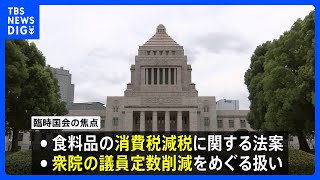
The Japanese government has presented estimates showing how long it would take to implement a reduction in Japan's consumption tax on food products, indicating that cutting the rate to either zero percent or 1 percent would require significant preparation time.

The Japanese government approved a supplementary budget proposal exceeding 3 trillion yen on June 3rd, including the creation of a new contingency reserve aimed at responding to developments in the Middle East and addressing rising energy prices.

The leader of the Democratic Party for the People, Yuichiro Tamaki, suggested on June 2nd that his party may oppose a bill drafted by the Liberal Democratic Party to establish a new criminal offense for desecrating the national flag, arguing that it could unduly restrict freedom of expression.

Japanese Prime Minister Sanae Takaichi held a telephone conversation with Iranian President Masoud Pezeshkian on June 1st, urging Iran to demonstrate maximum flexibility in its ongoing discussions with the United States and expressing hope that an agreement on the nuclear issue can be reached as soon as possible.