News On Japan

Edo-Era Home Reinforced Against Earthquakes

TOKYO - Mitsui Fudosan Group has renovated a 250-year-old traditional Japanese house in Tokyo’s Setagaya Ward to make it earthquake resistant and opened it to the public on August 19th. The small residence, built in the late Edo period, has been preserved with much of its original character intact.

The restoration retained structural elements such as pillars and beams, while installing devices inside the walls to absorb seismic shocks. The roof was replaced with lightweight metal instead of traditional tile, reducing the weight to one-sixteenth and enabling the building to withstand tremors as strong as a lower 6 on the Japanese seismic scale.

By keeping most of the original structure, renovation costs were reduced to about one-third of what a full-scale reconstruction would have required. This is the first time Mitsui Fudosan has restored a residence over 250 years old.

A family considering moving back into the home expressed relief: "Being able to live here again brings peace of mind. The safety is completely different now."

Company representatives also highlighted the broader significance of the project. They noted that such restorations allow dormant assets to be put to practical use, serving as a potential model for addressing the issue of vacant houses. They added that taking on the challenge of reinforcing historically valuable wooden structures could serve as a foundation for future earthquake-resilient renovations.

Source: テレ東BIZ

News On Japan
POPULAR NEWS

Typhoon No. 15 (Chan-hom) is increasingly likely to make landfall between Fukushima and Ibaraki prefectures on the Pacific coast of eastern Japan from the evening through the night of August 11, after moving northwest over waters east of Japan at about 15 kilometers per hour as of 9 a.m. on August 10.

Raccoons are increasingly invading homes across Japan, damaging roofs and wiring, contaminating buildings with large amounts of urine and feces, and raising concerns over agriculture, native wildlife and the spread of disease as their population continues to expand.

Nagasaki marked the 81st anniversary of the U.S. atomic bombing on August 9 with a memorial ceremony near the hypocenter, where Mayor Shiro Suzuki declared nuclear weapons an "absolute evil" and called on the Japanese government to uphold its Three Non-Nuclear Principles.

Transport services were gradually returning to normal on August 9 after Typhoon No. 13 caused widespread cancellations and shutdowns across Okinawa, although air travel remained disrupted as airlines worked to restore schedules and accommodate passengers stranded during the opening days of Japan's busy Obon holiday period.

Typhoon No. 13 was moving slowly west on the night of August 8 and was expected to approach the Chinese mainland by the night of August 9, but Okinawa, Amami and parts of southern Kyushu remained at risk from strong winds, intermittent heavy rain and dangerous seas even as the storm's center moved farther away.

MEDIA CHANNELS
         

MORE Sci-Tech NEWS

Requests for rapidly constructed "instant houses" are growing across areas of Kumamoto Prefecture devastated by the recent earthquake, providing air-conditioned temporary shelter for residents who have been sleeping in tents and vehicles beside their damaged homes.

University students in Shizuoka have designed a future lunar city using the globally popular game Minecraft and educational materials supervised by the Japan Aerospace Exploration Agency, combining programming and spatial design to explore how people could live safely and sustainably on the moon.

Toyota Motor has begun recruiting residents of Shizuoka Prefecture to live in Woven City, its experimental community for developing future technologies, with about 25 households expected to move into the site for two years from March 2027.

A 29-year-old Osaka University researcher is developing technology to produce sugar from carbon dioxide in the air, seeking to create a faster and more sustainable source of livestock feed as population growth, extreme weather and poor harvests raise fears of future food shortages.

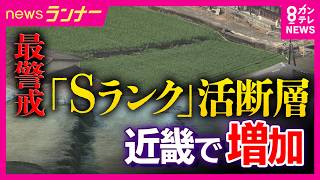
The Kego Fault Zone running through central Fukuoka could produce an earthquake with a maximum seismic intensity of 7, leaving 1,800 people dead, 800 disaster-related deaths and 319,000 evacuees, according to prefectural damage estimates, as experts warn that an unruptured section may remain under stress.

The powerful earthquake that struck Kumamoto Prefecture on July 28 was caused by essentially the same mechanism as the devastating earthquakes that hit the region 10 years ago, according to a leading seismologist, who warned residents to prepare for strong aftershocks and take precautions against heatstroke even during the night.

Multiple rare earth elements essential for high-tech products have been confirmed in mud extracted from the deep seabed off Minamitorishima, Japan's easternmost island.

Low-cost USB drives advertised online with enormous storage capacities are exposing users to the risk of lost data, malware infections and information theft, with tests finding that some products contain only a fraction of the memory shown on their labels.