News On Japan

Sake Brewed on International Space Station Arrives at Kansai Airport

TOKYO - Sake brewed aboard the International Space Station returned from orbit and arrived at Kansai International Airport on March 6th, marking a milestone in a Japanese initiative aimed at eventually producing alcohol on the Moon.

A container carrying the "space-brewed sake" was delivered from the United States to Kansai Airport on the afternoon of March 6th.

The project was launched by a brewery in Yamaguchi Prefecture as part of efforts to develop technology for brewing sake under lunar conditions in the future. In October 2025, brewing equipment and the raw ingredients for sake were transported to the International Space Station, where brewing was conducted inside an experimental module designed to replicate the Moon’s gravity.

Astronauts added water to the brewing device, and after the mixture was automatically stirred over a period of two weeks, approximately 100 milliliters of sake was produced.

After undergoing quarantine procedures, the sake will be sent to the Yamaguchi brewery for further research. One bottle will also be offered for sale for 110 million yen, with the proceeds planned to be donated to space development initiatives.

Source: YOMIURI

News On Japan
POPULAR NEWS

Japan’s World Cup campaign ended in the cruelest possible fashion on June 29, as Gabriel Martinelli scored in the fifth minute of stoppage time to give Brazil a 2-1 victory over the Samurai Blue in their knockout match in Houston. Japan had led in the first half and were still level at 1-1 in the final moments, but Martinelli’s late strike sent Brazil into the Round of 16 and eliminated Japan from the tournament.

Strong earthquakes have continued to shake parts of Japan in recent weeks, with 11 temblors measuring lower 5 or above on the Japanese seismic intensity scale recorded across the country since April 2026.

A Kintetsu Railway train derailed inside Kyoto Station on the morning of June 29, forcing partial suspensions on the Kintetsu Kyoto Line for the rest of the day and causing long delays that hit commuters, students and tourists.

A section of stone wall at Hikone Castle, one of Japan’s few surviving original Edo-period castles and a National Treasure whose main keep remains intact more than 400 years after its construction, collapsed after heavy rain caused by Typhoons No. 7 and No. 8, Hikone city officials said.

Japan advanced to the knockout stage of the World Cup after a 1-1 draw with Sweden on June 25, finishing second in Group F and setting up a Round of 32 clash with Brazil in Houston.

MEDIA CHANNELS
         

MORE Sci-Tech NEWS

Japan is set to begin its first clinical trial of xenotransplantation involving the transplant of pig kidneys into human patients, in a step that could open a new option for people with kidney failure.

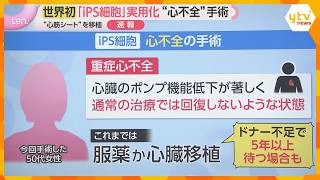
A new treatment that uses healthy tissue from the heart removed from a transplant patient and transplants it into another patient has been approved in Japan for the first time, with the National Cerebral and Cardiovascular Center preparing to carry out the procedure.

For those involved in medical research and biostatistics, understanding the intricacies of recovery processes is crucial.

The KAGRA gravitational-wave research facility in Kamioka, Hida, Gifu Prefecture, was opened to the public on June 20 for the first special viewing in nine years, giving 200 visitors a rare chance to tour the underground observatory with Nobel laureate Takaaki Kajita.

Mosquitoes are appearing earlier than usual this year, raising fears of a major summer outbreak as experts warn that warm May weather and repeated light rain have created ideal breeding conditions across residential areas.

New cases of hand, foot and mouth disease in Fukuoka Prefecture remained at alert level for the third consecutive week, prompting the prefectural government to urge residents to take preventive measures against the infection, which spreads through droplets and physical contact.

A Japanese startup is seeking to transform manufacturing inspections with a world-first lighting technology that eliminates reflected light, making previously hidden defects, contaminants, and irregularities visible to the human eye.

You likely interact with Japanese innovation daily without realizing it. Walk through any modern facility, and you encounter systems where hardware and software fuse flawlessly.