News On Japan

Japan Launches First Personal iPS Cell Storage Service

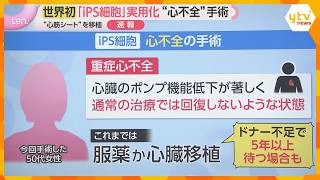
TOKYO, Mar 17 (News On Japan) - A new service enabling individuals to preserve their own cells for future medical treatment is set to launch in Japan, marking the country’s first offering of long-term iPS cell storage for personal use.

Teijin Regenet, a regenerative medicine company under the Teijin Group, announced that it will begin a new service called Bio Resource Reserve (BRR), which will manufacture and store induced pluripotent stem (iPS) cells.

The service involves creating iPS cells from somatic cells found in a customer’s blood and preserving them under ultra-low temperatures so they can be used in future treatments or surgeries if illness occurs. The project will be operated jointly with life sciences company iPS Portal.

Cell quality is believed to decline with age, and the company says that producing iPS cells while individuals are still young and healthy could provide advantages in future medical treatments.

The cost is expected to exceed 10 million yen, making it a high-priced service.

This is the first service of its kind in Japan targeting individual customers, with applications set to open on April 1st.

Source: FNN

News On Japan
POPULAR NEWS

Rain affected parts of Japan on Tuesday morning as a low-pressure system and front moved through, bringing heavier downpours in some areas. Skies are expected to clear across much of the country this afternoon. However, yellow sand drifting in from the Asian continent is forecast to spread over a wide area, raising concerns over reduced visibility and worsening health conditions.

Japan's weather agency and the Cabinet Office issued a 'Hokkaido-Sanriku Offshore Subsequent Earthquake Advisory' after an earthquake measuring upper 5 on Japan's seismic intensity scale struck off Sanriku.

JR East has launched a preview version of its new online Shinkansen booking platform, JRE GO, promising reservations in as little as one minute and easier handling of sudden schedule changes.

A bear that had remained in a residential area in central Sendai since early Sunday morning was euthanized last night in an emergency cull. No injuries were reported.

Police investigating the death of an 11-year-old boy whose body was found in a forest in Kyoto Prefecture believe his father moved the remains between several locations over a number of days in an apparent attempt to conceal the crime.

MEDIA CHANNELS
         

MORE Sci-Tech NEWS

Japan's logistics sector is struggling with a severe driver shortage, driving efforts to develop autonomous trucks as a potential solution to a growing freight transport crisis.

The fleet of 190 EV buses introduced for the Osaka-Kansai Expo has been withdrawn from plans for reuse on regular routes, with Osaka Metro abandoning efforts to redeploy the vehicles after the event.

Chinese smartphone maker OPPO announced it will release its foldable smartphone “OPPO Find N6” in Japan on April 15th, marking the company’s first entry into the country’s foldable device segment.

An event aimed at bringing the mysteries of the deep sea closer to the public was held in Nago City, where a researcher who has explored oceans around the world delivered a talk.

The Japan Maritime Self-Defense Force will withdraw from Antarctic research vessel operations after nearly six decades, with private-sector entities expected to take over following the retirement of the icebreaker Shirase in fiscal 2034.

As temperatures rise, concerns about body odor return, drawing attention to a lesser-known scientific field that examines the invisible gases emitted from human skin, with Tokai University professor Yoshika Sekine leading research that could even help detect disease and stress levels.

Five years have passed since Japan’s flagship supercomputer Fugaku, based in Kobe, began full-scale operations, achieving a series of breakthroughs by simulating complex phenomena on a massive and highly precise scale, ranging from the formation of galaxies to the behavior of nerve cells.

Rising tensions in the Middle East are raising concerns over potential disruptions to medical supplies in Japan, particularly due to uncertainty surrounding naphtha used in products such as gloves and gowns, with hospitals warning that a halt in supply could significantly impact medical care while authorities move to reassure that stockpiles are sufficient for the time being.