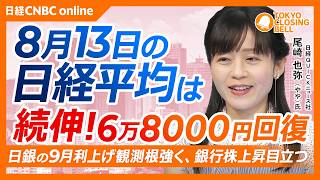
TOKYO - Japanese stocks rebounded sharply on June 12th, with the Nikkei Stock Average closing back above the 66,000 level for the first time in a week as easing concerns over tensions in the Middle East and a strong rally in U.S. technology shares fueled broad buying of AI-related stocks.
The Nikkei climbed as much as 2,800 points during morning trading, briefly recovering the 67,000 mark before ending the day at 66,064.99, up 1,847 points from the previous session. The TOPIX also advanced, closing at 3,881.96. Trading value on the Prime Market reached 11.48 trillion yen, while 943 stocks rose and 570 declined.
Leading the rally was memory chipmaker Kioxia Holdings, whose market capitalization exceeded 44 trillion yen, allowing it to surpass Toyota Motor for the first time as Japan's most valuable listed company. At one point, Kioxia's market value briefly topped 45 trillion yen.
Market participants described the development as symbolic of a shift in leadership within Japanese equities, with AI and semiconductor-related companies increasingly driving market performance.
Kioxia shares rose 8.6%, while other semiconductor-related stocks including Advantest, Tokyo Electron, Ibiden, and Disco posted strong gains. Disco surged 13%, and Tokyo Electron climbed to another record high.
Kioxia, which listed in December 2024, has seen a dramatic rise in valuation. At the time of its debut, its market capitalization was below 10 trillion yen. Since then, enthusiasm surrounding artificial intelligence and memory demand has propelled the company to the top of Japan's corporate rankings.
Despite the stock's rapid ascent, market analysts noted that Kioxia's price-to-earnings ratio remains below 10, suggesting investors continue to anticipate further earnings growth. Several analysts have reportedly raised their target prices above 100,000 yen per share.
The rally followed a strong rebound in U.S. markets. Falling oil prices, which touched their lowest level in two months as expectations grew for a reduction in hostilities between the United States and Iran, helped improve investor sentiment. Lower long-term interest rates also supported risk assets.
In the United States, semiconductor stocks staged a powerful recovery, with the Philadelphia Semiconductor Index rising nearly 8%. Companies including AMD, Intel, Micron, Qualcomm, and Applied Materials gained sharply. Micron jumped about 11%, aided by analyst upgrades and higher price targets.
While semiconductor shares dominated trading, Toyota's stock continued to struggle. Although the automaker rose modestly for the first time in three sessions, its gains lagged the broader market.
Toyota's price-to-book ratio recently fell to around 0.81 times, its lowest level since November 2011, a period marked by the aftermath of the Great East Japan Earthquake, severe flooding in Thailand, and a historically strong yen. Some market observers argue the stock now appears deeply undervalued, but concerns over Middle East instability, supply-chain disruptions, and uncertainty surrounding future earnings continue to weigh on investor sentiment.
A June survey of market participants found no respondents recommending an overweight position in the automotive sector, highlighting the contrast between enthusiasm for AI-related stocks and caution toward traditional manufacturers.
Space-related stocks also attracted attention. Shares of companies involved in satellite development and space debris removal advanced after the successful launch of Japan's H3 rocket by the Japan Aerospace Exploration Agency on June 12th. Investor interest was further boosted by expectations surrounding the upcoming public listing of SpaceX, which is expected to become one of the largest initial public offerings in history.
Despite the market's strong recovery, investors remain focused on developments involving Iran over the weekend. Analysts noted that previous expectations of a breakthrough between Washington and Tehran have repeatedly failed to materialize, making market participants cautious about assuming a lasting resolution.
Even so, the resurgence of AI-related stocks once again proved to be the dominant force behind Japanese equities, with Kioxia emerging as the clearest symbol of the market's growing focus on artificial intelligence and semiconductors.
Source: TBS