Buying car insurance can already feel complicated without also worrying about whether you have the “right” payment method.
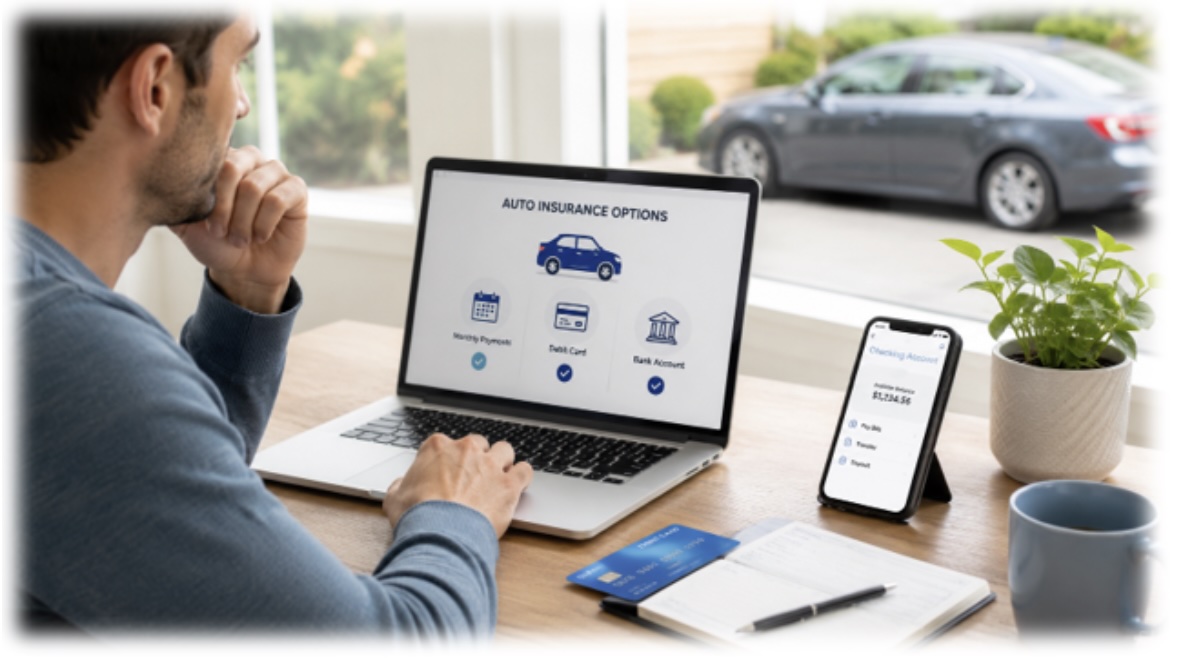
Some drivers do not have a credit card, while others prefer not to use one because they want to avoid carrying a balance, paying interest, or mixing insurance expenses with other purchases.
In many cases, a credit card is not required to purchase auto insurance. Depending on the insurer, drivers may be able to pay with a debit card, checking account, electronic funds transfer, prepaid card, money order, or cash through an authorized local office.
However, accepted payment methods vary by insurer, billing system, policy term, and location. Before selecting a policy, drivers should confirm how the initial payment and future installments can be made, what fees may apply, and what happens if a scheduled payment is unsuccessful.
Can You Buy Car Insurance Without a Credit Card?
Yes, many drivers can purchase car insurance without using a credit card. Insurers generally need a valid method for collecting the first payment and any future installments, but that method does not always need to involve borrowed credit.
Common alternatives include:
- A debit card connected to a checking account
- Automatic withdrawals through ACH or electronic funds transfer
- Manual payments from a bank account
- Prepaid cards, when accepted
- Money orders or checks
- Cash payments through selected local agencies or insurer offices
For monthly installment plans, an insurer may prefer automatic bank withdrawals because they create a predictable billing schedule. Drivers considering this option can review this guide to paying for car insurance through a checking account for additional information about using bank payments instead of a credit card.
Acceptance is not universal. An insurer may allow a debit card for the initial payment but require a bank account for recurring billing. Another company may accept electronic checks but not prepaid cards. It is best to verify the payment requirements before completing the application.
Payment Method, Credit Checks, and Initial Payments Are Different Issues
Buying insurance without a credit card does not necessarily mean that the insurer will ignore credit-related information. Depending on state law, an insurance company may use a credit-based insurance score or other financial information when calculating a premium.
The method used to pay the bill is separate from the method used to determine the rate. A driver could pay from a checking account while the insurer still considers credit-related information during underwriting. In other situations, state rules may restrict or prohibit the use of that information.
Car insurance without a credit card also does not automatically mean:
- No credit-related review
- No initial payment
- No installment fees
- Guaranteed approval
- No-deposit insurance
- The lowest available premium
Drivers should ask how much is due to activate the policy, whether the initial amount is part of the premium, and how the remaining balance will be divided.
Why Some Drivers Prefer Not to Use Credit Cards
There are several reasons a driver may prefer another payment method. Some people do not have a credit card, while others are working to reduce debt or keep their credit utilization low. Others simply prefer paying household expenses directly from available funds.
Using a debit card or checking account can make budgeting more straightforward because the payment comes directly from the account balance. It also avoids creating a separate credit card balance that must be paid later.
However, direct bank payments still require careful planning. If the account does not contain enough money when an automatic withdrawal is attempted, the driver could face:
- An overdraft charge
- An insufficient-funds fee
- A returned-payment charge from the insurer
- A late-payment fee
- A cancellation notice
- A possible interruption in coverage
Drivers using automatic payments should confirm the withdrawal date and keep enough money in the account. Paying from a checking account avoids carrying a credit card balance, but it does not eliminate the possibility of banking or payment-processing fees.
Common Ways to Pay for Auto Insurance
| Payment method | How it is commonly used | Potential advantage | Possible limitation |
|---|---|---|---|
| Debit card | Initial and recurring payments | Easy to use and connected directly to available funds | Payments may fail if the account balance is too low |
| Checking account or ACH | Automatic monthly installments | Convenient for recurring billing | Returned-payment or overdraft fees may apply |
| Prepaid card | Sometimes accepted for the first payment | May work without a traditional credit card | Some cards do not support recurring or verified payments |
| Check or money order | Mail, local office, or agency payments | Useful for drivers who do not want electronic billing | Slower and less suitable when immediate coverage is needed |
| Cash | Selected local offices or agencies | Does not require a card or bank transfer | Limited availability and a receipt should always be obtained |
A payment method that works for the initial purchase may not necessarily be accepted for later installments. Drivers should confirm both parts of the billing arrangement before starting the policy.
Can a Prepaid Card Be Used?
Some insurers may accept prepaid cards, especially for an initial payment. However, prepaid cards can be less dependable for recurring billing because the insurer or payment processor may require additional account verification.
A prepaid card could also be declined if:
- The available balance is insufficient
- The card does not permit recurring transactions
- The billing address cannot be verified
- The insurer requires a traditional bank account
The card expires before a future payment date
Drivers planning to use a prepaid card should ask whether it is accepted for both the first payment and future installments. They should also confirm whether another payment method must remain on file.
Are Weekly Car Insurance Payments Available?
Most standard auto insurance policies are not billed every week. Insurers commonly offer monthly installments or require payment for a six-month or twelve-month policy term.
The phrase “weekly car insurance” may sometimes describe:
- The weekly equivalent of a monthly premium
- A personal budgeting strategy
- A short-term insurance arrangement
- A monthly policy promoted using a smaller weekly figure
Drivers who are paid weekly can create their own budgeting schedule by setting aside part of every paycheck for the monthly insurance bill. This does not change the insurer’s official billing date, but it can make the payment easier to manage.
Before relying on an advertised weekly amount, consumers should determine whether it represents an actual billing option or simply divides the monthly premium into smaller figures for marketing purposes.
Review the Total Policy Cost
A low initial payment can make a policy easier to start, but it does not necessarily make the insurance inexpensive overall.
The total cost may include:
- The initial payment
- Remaining installments
- Installment or processing fees
- Automatic-payment discounts
- Late-payment fees
- Returned-payment charges
- Reinstatement fees
Before purchasing coverage, ask for the complete payment schedule in writing. It should show how much is due immediately, the amount and date of each remaining installment, the length of the policy term, and the total premium.
Two policies with similar monthly payments can have very different total costs. One may include lower fees or better coverage, while another may require a smaller first payment but considerably larger installments afterward.
Do Not Compare Payment Plans Without Comparing Coverage
Payment flexibility is useful, but it should not be considered separately from the protection provided by the policy.
When comparing quotes, review:
- Bodily injury liability limits
- Property damage liability limits
- Uninsured and underinsured motorist coverage
- Collision and comprehensive deductibles
- Medical payments coverage or personal injury protection
- Rental reimbursement
- Roadside assistance
- Exclusions and limitations
A policy may be easier to start because it has a low initial payment, but it could also contain lower coverage limits or higher deductibles. Drivers should compare equivalent coverage whenever possible.
Ask What Happens When a Payment Fails
A declined debit card or unsuccessful bank withdrawal should not be ignored. An insurer may charge a returned-payment fee and issue a cancellation notice if the balance is not resolved.
Drivers should not assume that every policy includes the same grace period. Cancellation procedures can depend on the insurer, policy terms, payment method, and state requirements.
Before enrolling in automatic billing, ask:
- When will each payment be withdrawn?
- Will the insurer attempt the payment again if it fails?
- Is there a returned-payment fee?
- How will cancellation notices be delivered?
- Can the billing date be changed?
- What is required to reinstate a canceled policy?
A lapse in insurance can create more serious problems than a late fee. It may leave the driver uninsured, violate lender requirements, affect vehicle registration, and make future coverage more expensive.
Tips for Buying Insurance Without a Credit Card
Drivers can make the process easier by preparing before requesting quotes.
- Decide which payment methods are realistically available.
- Ask about accepted methods before completing a lengthy application.
- Confirm the amount required to activate the policy.
- Review the entire payment schedule, not only the first installment.
- Compare multiple insurers using similar coverage limits.
- Ask whether automatic withdrawals are required.
- Check for installment, processing, and returned-payment fees.
- Keep written confirmation and receipts for every payment.
- Monitor the bank account even when autopay is enabled.
- Review cancellation and reinstatement rules before purchasing.
The easiest policy to activate is not necessarily the best policy to keep. Affordability matters, but so do appropriate coverage, manageable deductibles, reliable claims service, and a payment schedule the driver can maintain.
Final Thoughts
A credit card is not always necessary to purchase auto insurance. Many drivers can use a debit card, checking account, electronic bank withdrawal, or another approved method to start and maintain coverage.
The available options depend on the insurer and its billing requirements. Before choosing a policy, drivers should confirm how the initial and recurring payments will be processed, review the full premium, and understand what may happen if a payment is unsuccessful.
The best payment method is one that is accepted by the insurer, fits the driver’s budget, and helps keep the policy continuously active. Payment flexibility can be valuable, but it should always be considered alongside the coverage, deductibles, fees, and overall reliability of the insurance policy.